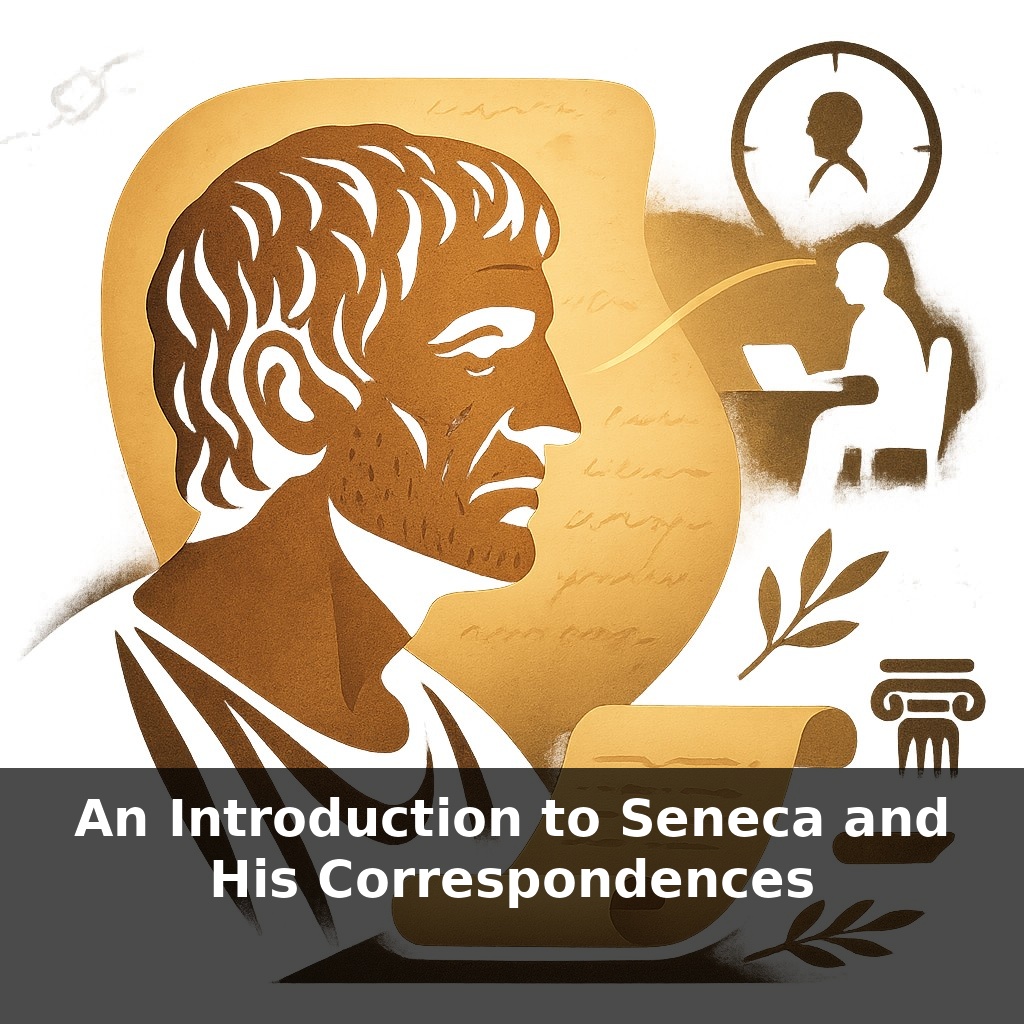
An Introduction to Seneca and His Correspondences
📝 Transcript
A man worth the modern equivalent of many millions once wrote, “It is not the man who has too little, but the man who craves more, who is poor.” Now place that voice in a dangerous imperial court—writing private letters that were never meant for us to overhear.
Seneca’s letters drop us into an ongoing conversation, not a polished textbook. We’re eavesdropping on a mentor coaching a younger official through fatigue, frustration, and the creeping sense that life is slipping past the inbox. One day he’s urging Lucilius to reclaim his mornings from distraction; another, he’s dissecting anger the way a careful mechanic lays out the pieces of a broken engine to see where the fault truly lies. The topics feel oddly familiar: time pressure, status anxiety, difficult colleagues, fear of sudden reversals. What turns these scattered notes into philosophy is Seneca’s insistence on testing every insight against experience. He asks: Does this belief actually make you calmer, braver, more just? If not, try another approach—adjust, refine, iterate—until character, not circumstance, sets the tone of your day.
Seneca writes from the vantage point of someone who has already played the highest-stakes game Rome could offer—and paid the price. The Letters to Lucilius are late work, shaped by years of watching power turn on itself. Each note is short, almost casual, yet together they map a complete training program for the inner life. He moves from big themes—mortality, fear, friendship—to specific drills: how to end the day, which voices to let into your mind, what to do when anger surges. It’s less like reading a rulebook and more like scrolling a long DM thread where every reply nudges you a bit closer to who you claim you want to be.
Seneca doesn’t start by laying out a “Stoic system.” He starts with a friend. Lucilius is a working administrator in Sicily, far from Rome, juggling responsibilities and ambitions. The letters we have are one side of a conversation, but you can reconstruct the back‑and‑forth: Lucilius sends worries, drafts, questions; Seneca replies with a mix of sympathy, teasing, and carefully sharpened arguments.
Across 124 letters, a pattern emerges. Seneca keeps steering Lucilius from abstract debates back to self-scrutiny. Lucilius asks about a philosophical school; Seneca asks what kind of person he’s becoming. Lucilius wants reading recommendations; Seneca wants him to stop collecting quotes the way some people collect apps they never use—installed, admired, but rarely opened with intent. Philosophy, in this exchange, is less a worldview to adopt and more a discipline to practice.
The scope of topics is wide. Some letters probe fear of public disgrace; others drill into friendship and how to choose people who actually improve you. There are letters on dealing with flattery, on keeping your temper when provoked, on aging without sliding into bitterness. Seneca frequently returns to the role of attention: what you repeatedly look at, you become. So he pressures Lucilius to curate inputs—books, conversations, even scenery—with the same care an engineer uses choosing components for a fragile circuit.
Historically, these aren’t casual scribbles dashed off between errands. The polish of the Latin, the careful arrangement of themes, and the way some letters generalize Lucilius’s situation all suggest Seneca knew others might eventually read them. They sit at a crossroads: part genuine mentorship, part crafted literary project. That double nature is why they still work. You overhear specific advice to a particular man in a risky career, yet the phrasing is clear enough that a modern reader can lift the principle and plug it straight into, say, a tense project meeting or a late‑night bout of scrolling.
Your challenge this week: treat one short passage from Seneca as a live correspondence to you. Pick a single letter, read it once each day, and after every reading adjust one concrete decision—not a mood, a decision—in light of it. At week’s end, note what actually changed.
Seneca often answers Lucilius with something closer to a code review than a pep talk: he inspects one “bug” in his friend’s habits, not his entire operating system. Letter by letter, he tweaks how Lucilius reads, writes, eats, walks, even how long he lingers in bed. Modern readers can mirror this granularity. One person might take his remarks on anger and test them only in rush‑hour traffic; another might use a line on friendship as a filter before accepting the next networking invite. In that sense, the letters work less like a single grand theory and more like modular plugins you install where your life actually crashes. A product manager might borrow Seneca’s nightly review ritual to debrief failed launches; a doctor might adapt his comments on fear into a pre‑surgery briefing script. Over time, those tiny patches accumulate. The aim isn’t to become “Stoic” in the abstract, but to repeatedly choose saner defaults in the specific rooms, inboxes, and conversations you already inhabit.
Seneca’s letters may soon function less like static “classics” and more like interactive tools. Scholars are beginning to tag each passage by emotional tone and practical theme, so a future reading app could surface a relevant letter the way a calendar pings you before a meeting. Faced with a tough decision, you might query Seneca like a search bar and receive a cluster of targeted replies—short, situation‑specific nudges instead of a single, abstract doctrine.
Treat these letters less as relics and more as prompts queued in your inbox. Each one nudges you to revise a tiny “setting” in how you respond to the day—like adjusting notification filters until only what matters breaks through. The experiment isn’t to escape the world, but to test whether a clearer inner script can rewrite how you move through it.
Here’s your challenge this week: choose one person in your life and write them a “Letter 1–style” note, just like Seneca does with Lucilius—pick a single theme (for example, time, anger, or simple living) and share one concrete insight you’re trying to live by. Before bed each day for the next 7 days, add one short “Senecan postscript” to that same note: a sentence on how you actually handled that theme in real life that day (e.g., “Today I lost my temper in traffic—here’s how I could have practiced Seneca’s calm instead”). At the end of the week, send the full letter to that person—or, if that feels too vulnerable, read it aloud to yourself—and decide on one specific habit you’ll keep (like a 2-minute evening reflection on how you used your time, just as Seneca urges Lucilius to do).
From this course

Daily Stoic Wisdom: Seneca’s Letters to Lucilius
7 episodesUnlock all episodes
Full access to 7 episodes and everything on OwlUp.
Subscribe — $1.99/monthLess than a coffee ☕ · Cancel anytime