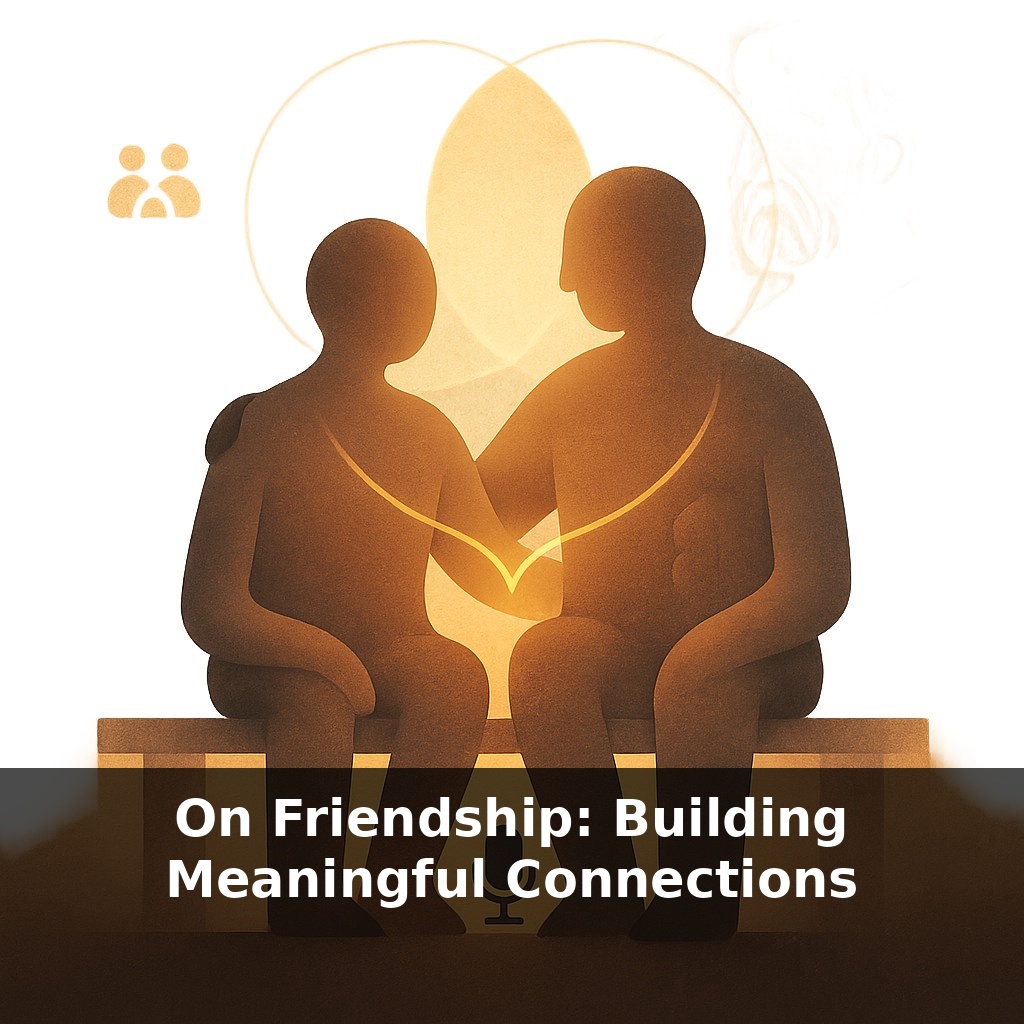
About half of what keeps you healthy in old age isn’t diet or exercise—it’s the quality of your closest friendships. Think of two people: one with hundreds of contacts, one with three rock‑solid friends. This episode is about why the second person is often far richer in what counts.
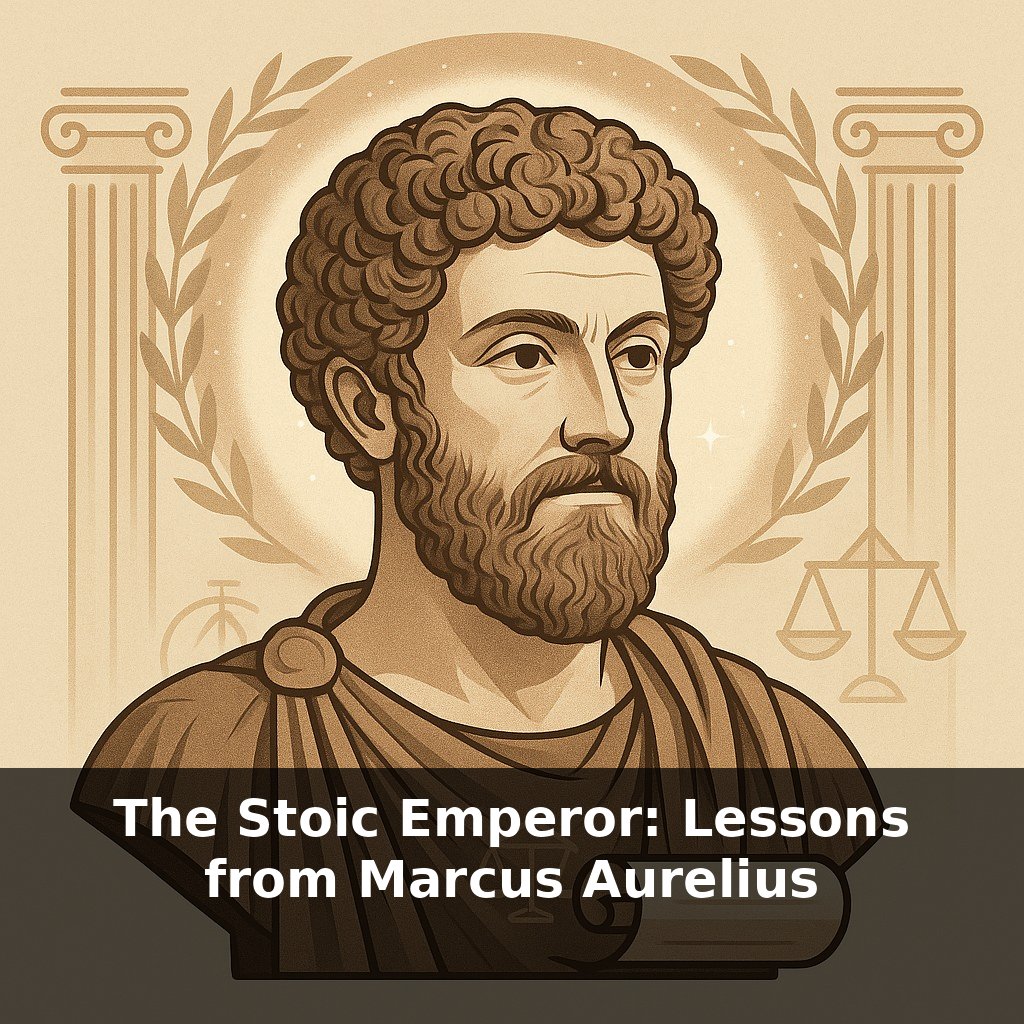
Seneca pushes this even further: he doesn’t just praise friendship, he sets a bar most of us never consider. He claims you should choose a friend with the same seriousness you’d choose a business partner who can sign for your life savings. Not because of status or usefulness, but because their character will quietly steer your own.
Modern data backs this rigor. Robin Dunbar’s research suggests that while you might recognize 500+ faces and message 150 people in a year, only about 15 count as “good friends,” and just 3–5 truly shape your inner world. Seneca would tell you: those 3–5 are your real “inner senate.”
So the question shifts from “Do I have friends?” to “Who am I consciously allowing to co‑author my character, my habits, my future?”
Seneca’s test for these few people is blunt: could you entrust them with your worst mistakes and your biggest decisions? If not, they’re not in the innermost circle. Modern research gives this a sharp edge: in one study, people who said they had zero close confidants rose from 3% in 1985 to nearly 25% today. At the same time, we check our phones over 150 times a day. The risk isn’t being alone; it’s being crowded and still unsupported. To live wisely, you can’t leave your closest ties to convenience or habit—they must be chosen, tested, and actively maintained.
Seneca adds a second hard requirement: a true friend must be someone you actively *help* become better—and who is allowed to do the same for you. In Letter 6 he boasts, not that he has many allies, but that he is “learning from one whom I have invited to be my friend.” The direction is two‑way. If only one person is growing, that’s mentorship or dependence, not friendship in his sense.
Modern data shows why this mutuality matters. In couples where both partners say, “My spouse helps me become a better person,” the odds of reporting high life satisfaction are roughly double those where only one partner feels that way. In workplace studies, employees with even one colleague who challenges them kindly but firmly show performance bumps in the 10–20% range and are far less likely to burn out. The pattern is consistent: relationships that combine warmth with honest feedback change behavior in measurable ways—lower alcohol relapse rates, higher adherence to medical plans, more stable moods under pressure.
Seneca would say: this is what “second self” looks like in practice. You begin to internalize the other person’s standards. Before sending the angry email, you pause and think, “How would she respond?” That micro‑pause can be the difference between escalation and resolution. Over months and years, hundreds of such micro‑decisions compound.
This is also why he warns against “friendship on approval”—ties that last only as long as you agree or entertain. In modern terms, that’s the group chat where no one can say, “You’re drifting,” without being iced out. Studies of adolescent peer groups show that in clusters where any criticism is taboo, risky behaviors spread up to 2–3 times faster than in groups where pushback is normal but respectful.
Tending this kind of bond is less like collecting followers and more like maintaining a secure codebase: you run regular checks, patch vulnerabilities with frank conversations, and refuse to ship features—habits, decisions—you know would crash the system you share.
Instead of asking, “Who do I like hanging out with?” try: “Who, specifically, has changed the way I *act* in the last 12 months?” Make it concrete. Maybe one friend convinced you to start therapy; you’ve gone to 18 sessions and finally slept through the night. Another nudged you to quit doom‑scrolling after 10 p.m.; that reclaimed 7 extra hours of sleep a week—over 350 hours a year.
Look for behavioral fingerprints like: - You stopped answering work email on Sundays after seeing how they protect family time. - You cut your monthly drinking in half because they were honest about how you sounded the last time you were out. - You saved your first $1,000 because they walked you through setting up an automatic transfer.
The reverse matters just as much. Who can point to a habit they’ve upgraded because of *you*? If you can’t name at least one concrete shift on each side, the bond is probably pleasant—but not yet in the “second self” tier Seneca pushes you toward.
Remote work means many of your key connections now happen through a screen. That’s not neutral. Tools either nudge you toward depth or toward constant shallow contact. In the next decade, expect “relational design” to matter as much as UX: platforms that cap group sizes at, say, 12 to keep discussions real; apps that prioritize 1–3 high‑signal check‑ins a day over 200 low‑effort likes; and teams scored not just on output, but on how many people report having at least one “second self” at work.
Make this practical: audit your calendar and messages from the last 30 days. How many hours went to your top 3 people versus to casual contacts and scrolling? If it’s under 10 focused hours, you’re underinvesting. Redirect just 2 hours a week—one long call and one shared activity—and you’ll log over 100 high‑quality hours in a year.
Before next week, ask yourself: 1) “Which one friend in my life do I actually feel most ‘seen’ by, and what would it look like to deepen that connection this week—maybe by inviting them into something a bit vulnerable I’d normally keep to myself?” 2) “Where am I accepting ‘situationship’ friendships (surface-level, convenience-based) instead of the kind of mutual, dependable friendship the episode described—and what’s one boundary or honest conversation I’m willing to have to shift that?” 3) “If I treated friendship like a long-term craft instead of something that ‘just happens,’ what specific ritual could I start this week (a weekly check-in call, a standing coffee, a shared walk) that would make at least one relationship feel more intentional and alive?”