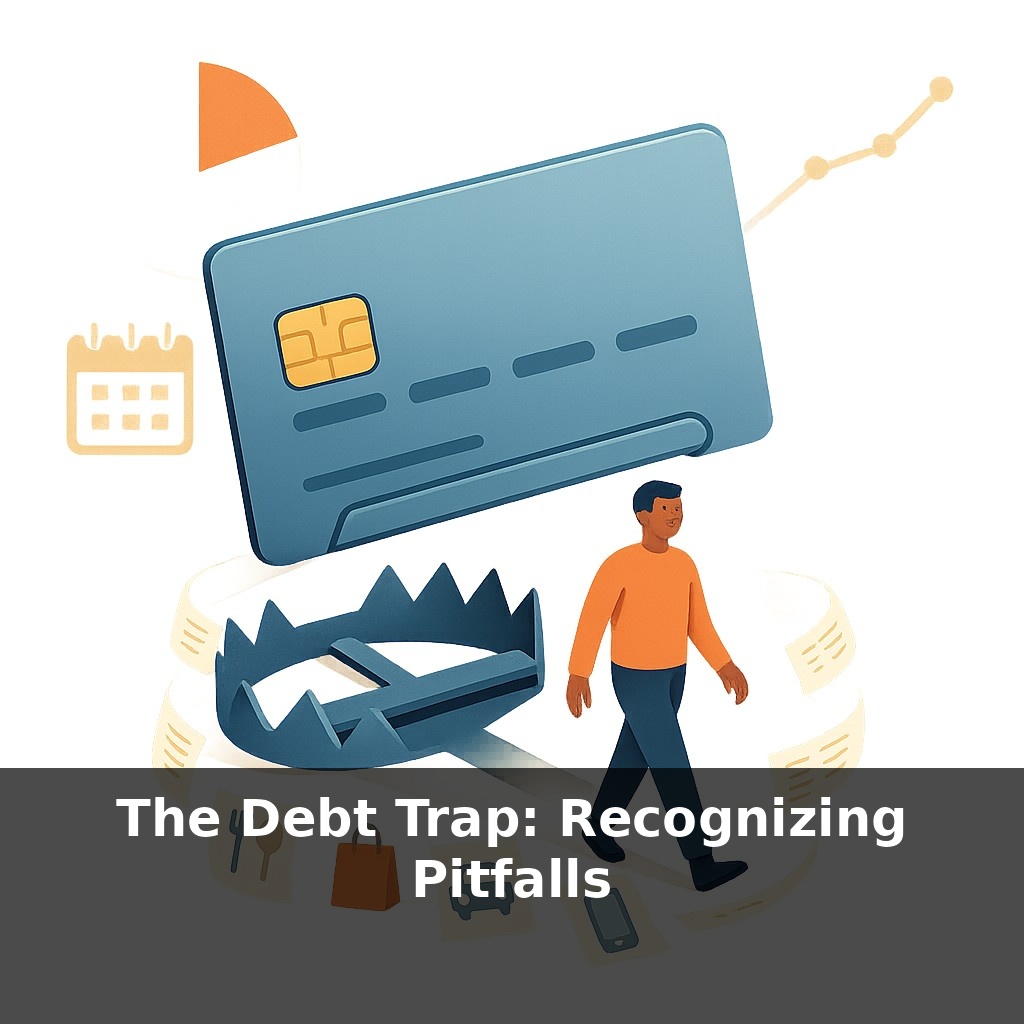
Your bank might think you're risky if your debt takes up just over a third of your income—long before you feel anything is wrong. You’re getting raises, making payments on time… yet month by month your balance quietly grows. How does “doing everything right” still end in a debt trap?
Here’s the twist: numbers alone rarely “feel” dangerous in real time. A $50 dinner split on a card, a buy-now-pay-later gadget, a small top‑up on a car loan—each choice is easy to justify. The trap forms when these tiny, comfortable decisions start stacking in the same direction. Think of your monthly cash flow as a busy freeway: every new payment is another car entering. One or two extra cars? No big deal. But add a few more, then a few more, and suddenly traffic slows, exits get harder to reach, and one stalled vehicle (a missed paycheck, a medical bill) can gridlock everything.
What makes this especially tricky is how optimism and habit team up. You expect future you to earn more, to “tighten up next month,” to finally use that balance transfer wisely. Meanwhile, lenders design offers to feel painless now and foggy later—teaser rates, low minimums, loyalty perks that reward spending, not stability.
Here’s where the math turns from background noise into a warning siren. High‑interest debt doesn’t just sit there; it compounds, quietly adding layers each month. A 22% APR on a card or a triple‑digit payday rate means yesterday’s interest can start earning its own interest, even if you never swipe again. Variable‑rate loans add another twist: a single rate hike can bump your payment enough to crowd out groceries or savings. And when emergencies hit with no cash buffer, the “temporary” swipe or short‑term loan becomes a regular guest, claiming a permanent seat at your monthly table.
Here’s where the “I’m still managing” feeling can be most misleading: the signals that you’re slipping toward a trap don’t usually look dramatic at first. They show up as small patterns in how your money moves each month.
Start with how your payments behave over time. If your total balances stay flat—or rise—despite you sending money every month, the engine isn’t moving the car; it’s just idling. This often looks like paying a card, then using that freed‑up limit for everyday spending, or taking a personal loan to “wipe the slate clean” while keeping the old card open for “just in case.” On paper you only see a few lines of credit. In practice, you’re stacking layers of obligation on the same income.
Watch the quality of your payments, too. When “minimum due” quietly becomes your default instead of your backup plan, you’re signaling that the budget is already tight. Add one more stressor—a surprise bill, a seasonal expense—and you might plug the gap with new borrowing instead of adjusting spending. That habit can harden quickly, especially when autopay makes it painless to ignore the growing total.
Another subtle marker: how often your debt strategy changes under pressure. Balance transfer, then another card “just for rewards,” then a top‑up loan to “simplify things.” Each move can be rational in isolation, yet frequent reshuffling usually means the underlying numbers don’t truly work. Fees, longer payoff periods, and small rate differences can quietly erase any advantage you thought you gained.
Behavior plays a bigger role than most people want to admit. Present‑focused choices—“I’ll sort this out when the bonus hits,” “I deserve this after the week I had”—turn short‑term comfort into long‑term cost. Optimistic forecasts about future income or discipline make it easy to say yes now and trust that tomorrow’s version of you will handle the fallout.
The earlier you catch these patterns, the more options you keep. Before creditors start calling or payments bounce, you can still renegotiate terms, redirect spending, and build a small safety buffer. Wait until every bill feels urgent, and the menu narrows to more drastic moves that often add new layers of cost.
Think about three friends with the same salary but very different debt patterns.
Alex uses a card for travel, then locks in a payoff plan: US$400 a month until it’s gone, no new charges. Each month the balance falls in a straight line; their statement looks like a staircase going down.
Bri pays the same US$400—but keeps putting groceries and small treats on the card. Their balance hovers in the same range, maybe even inching up. The effort is real, but progress is mostly an illusion.
Casey consolidates two cards into a personal loan with a lower rate and longer term. Monthly payments drop, cash feels looser, so a new “rewards” card joins the mix. For a while, nothing feels worse than before—yet total obligations quietly stretch over more years.
The pattern to notice: Are your moves shrinking future commitments, or just rearranging them? Are you creating an exit ramp, or just building a prettier on‑ramp back onto the same road?
Tech will raise the stakes. Apps already watch your spending like a fitness tracker, nudging you to “keep your streak” or “unlock” higher limits. That feedback loop can train discipline—or overspending—depending on how it’s designed. As algorithms learn your weak spots, offers may appear the moment you feel pressure, like a pop‑up escape hatch on a tough video game level. Helpful if it buys you time; dangerous if it just respawns the same problem with a new costume and fee structure.
Treat this less like “being good with money” and more like running a season of experiments. Small tweaks—like timing payments right after payday or setting a cap on how many subscriptions you allow—can reveal fragile spots you didn’t know you had, the way a stress test exposes weak beams in a bridge before it fails.
Your challenge this week: For the next 7 days, note every time you *almost* reach for credit—online carts, tap‑to‑pay, BNPL buttons. Don’t judge it; just write what you were feeling and what you told yourself. At week’s end, look for your top two emotional triggers and plan one concrete way to interrupt each.