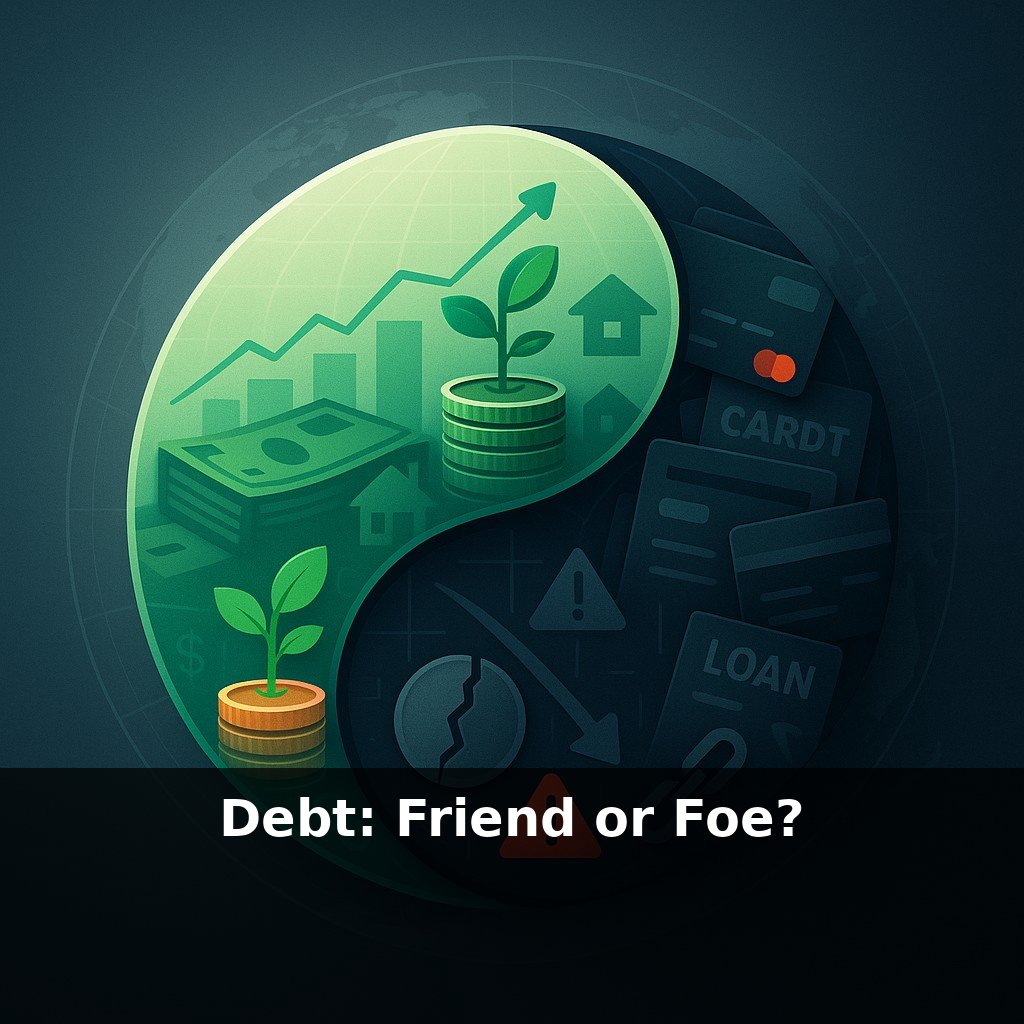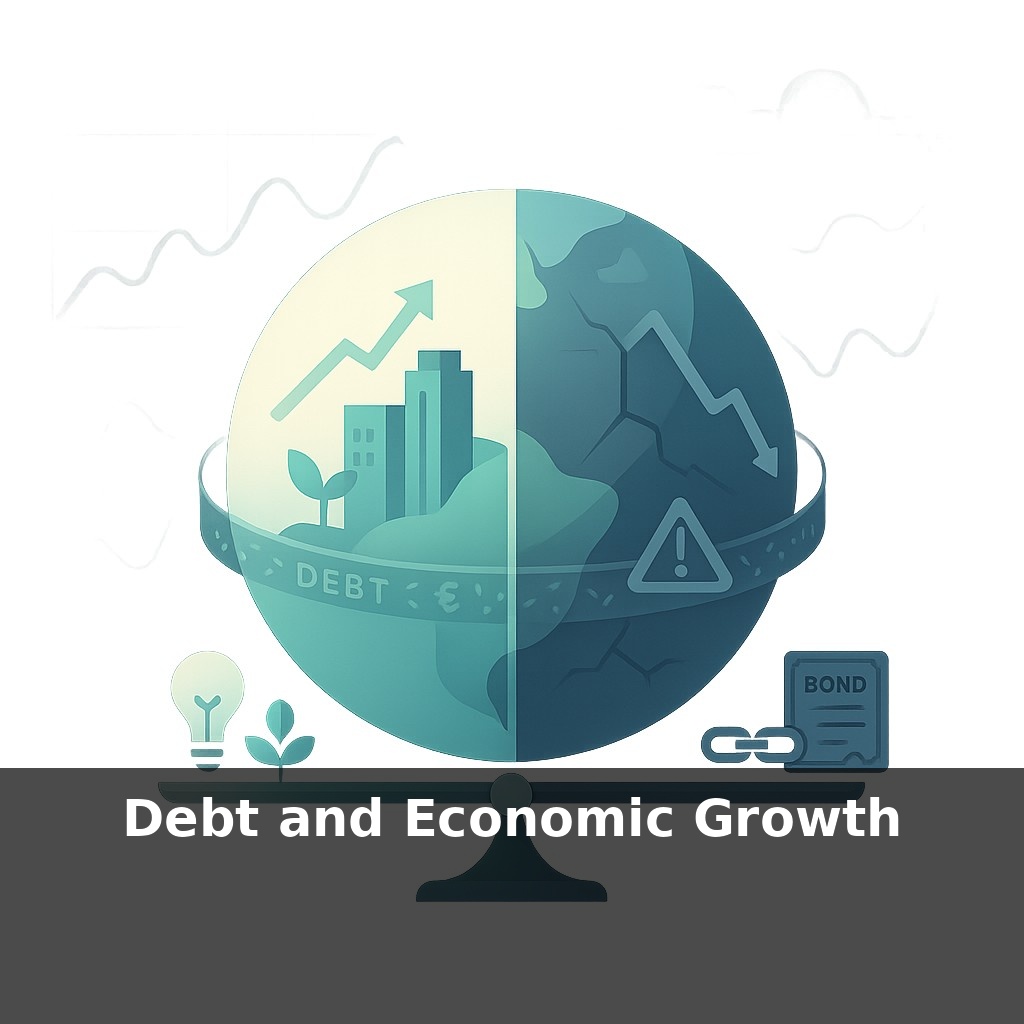
“Debt levels worldwide are now roughly the same size as the entire global economy—yet many countries are still borrowing more. In one scenario, that borrowing funds new jobs and innovation. In another, it quietly sets the stage for the next crisis. Which path are we on?”
Japan’s government owes more than double what its economy produces in a year—yet markets aren’t panicking, and interest rates are still near zero. Meanwhile, some countries hit trouble with far less on the books. So the real puzzle isn’t “Is debt good or bad?” but “Under what conditions does it help or hurt?”
A key clue: what the borrowed money is *used for* and how the bill is ultimately paid. When funds go into things like transport networks, public health, or new technology, they can raise future incomes enough to cover today’s borrowing. When they prop up unproductive spending, the numbers swell without strengthening the engine underneath.
Your challenge this week: notice headlines about government or corporate borrowing and ask one extra question: “What exactly are they financing—and will it likely grow future income or just shift problems forward?”
Central to that impact is *who* is doing the borrowing and *how* the loans are structured. Households, firms, and states all face different rules of the game. A tech company issuing bonds to fund a data center faces investors who can demand higher yields or walk away. A government rolling over its obligations may rely on a central bank, foreign creditors, or pension funds that *must* hold its bonds. That mix shapes how risky rising balances really are, and whether new lending expands capacity—or just shuffles claims within the system, raising fragility without adding strength.
“Japan’s public debt is about 263% of GDP, yet the government still borrows at rock-bottom interest rates.” That single fact exposes how incomplete the usual “high debt = danger” story really is.
To see why, zoom in on *who* holds the debt and *in what currency*. Japan’s obligations are mostly owed to its own citizens and institutions, in yen, with a central bank that can buy bonds if markets wobble. Contrast that with countries that borrow heavily in foreign currencies: if growth slows or confidence slips, they can’t print dollars or euros to bridge the gap, and refinancing risk spikes.
This is where the inverted‑U idea for debt and growth gets nuanced. At low to moderate levels, borrowing can help economies climb that curve by allowing big, lumpy investments that private savings alone couldn’t fund. But as debt accumulates, sensitivity to interest rates, capital flows, and political shocks increases. A mild rate hike that’s manageable at 40% of GDP can be destabilizing at 150%, especially if much of that debt is short‑term or foreign‑held.
Reinhart & Rogoff’s famous 90% threshold tried to pin down the point where the curve bends downward. Later work showed there isn’t one clean cliff; instead, growth tends to fade as debt loads rise, with outcomes highly dependent on context—demographics, productivity trends, institutional strength, even tax capacity. Two countries at 100% debt‑to‑GDP can face very different futures.
Firms play a parallel game. Corporate debt equal to 98% of global GDP means balance sheets are heavily leveraged. For some tech giants, bond issues finance data centers or AI research that expand earnings power. For overextended real‑estate developers, the same leverage can lock in fragility: one downturn in prices, and rollover becomes a scramble.
The paradox: the same instrument that smooths shocks and funds progress can also amplify downturns when pushed too far. The real task for policymakers and investors isn’t to avoid debt entirely, but to stay on the beneficial side of that curve—and to recognize how quickly conditions can move them off it.
Consider two roads a country might take. On one, it issues “green bonds” to retrofit buildings, expand clean transit, and upgrade power grids. The upfront borrowing is large, but future energy savings, new industries, and lower health costs improve its ability to repay. On the other, it racks up similar amounts rolling over subsidies, tax breaks, or prestige projects that don’t raise long‑term productivity. The numbers on the debt clock look alike; the growth paths diverge.
You see a similar split inside corporations. A semiconductor firm that sells bonds to build a cutting‑edge fab is effectively pre‑paying for tomorrow’s cash flows. If demand holds, its larger scale makes the balance sheet safer over time. A property developer that borrows heavily to flip near‑identical luxury towers is betting on ever‑rising prices; when sales stall, lenders suddenly care not just *how much* is owed, but *what* stands behind it.
Debt’s next chapter may hinge on *who* gets to borrow more than on *how much* they owe. Climate projects, aging‑care systems, and digital infrastructure will compete for scarce fiscal space, while investors scrutinize whether balance sheets can adapt to shocks, not just survive them. Your challenge this week: spot one news story about “sustainable” or “green” debt and ask, “What concrete future cash flows or savings make this promise believable?”
Think of this less as a verdict on “good” or “bad” and more as a map you’re still sketching. The missing piece is how shocks—pandemics, wars, climate hits—can suddenly redraw that map, shifting what once looked safe into risky terrain. Watching how rules, institutions, and transparency evolve will tell you where the next fault lines are likely to form.
Try this experiment: For the next 7 days, track every single use of your credit card and label each charge as either “growth debt” (e.g., tuition, tools for your business, relocation for a better job) or “consumption debt” (e.g., takeout, clothes you don’t need, subscriptions). At the end of the week, total each column and calculate what percentage of your new debt is actually tied to future income growth. Then, commit for just the next 7 days to freeze all new “consumption debt” (no exceptions) while allowing only pre-approved “growth debt” and see how your stress level, spending awareness, and feelings about your financial future change.