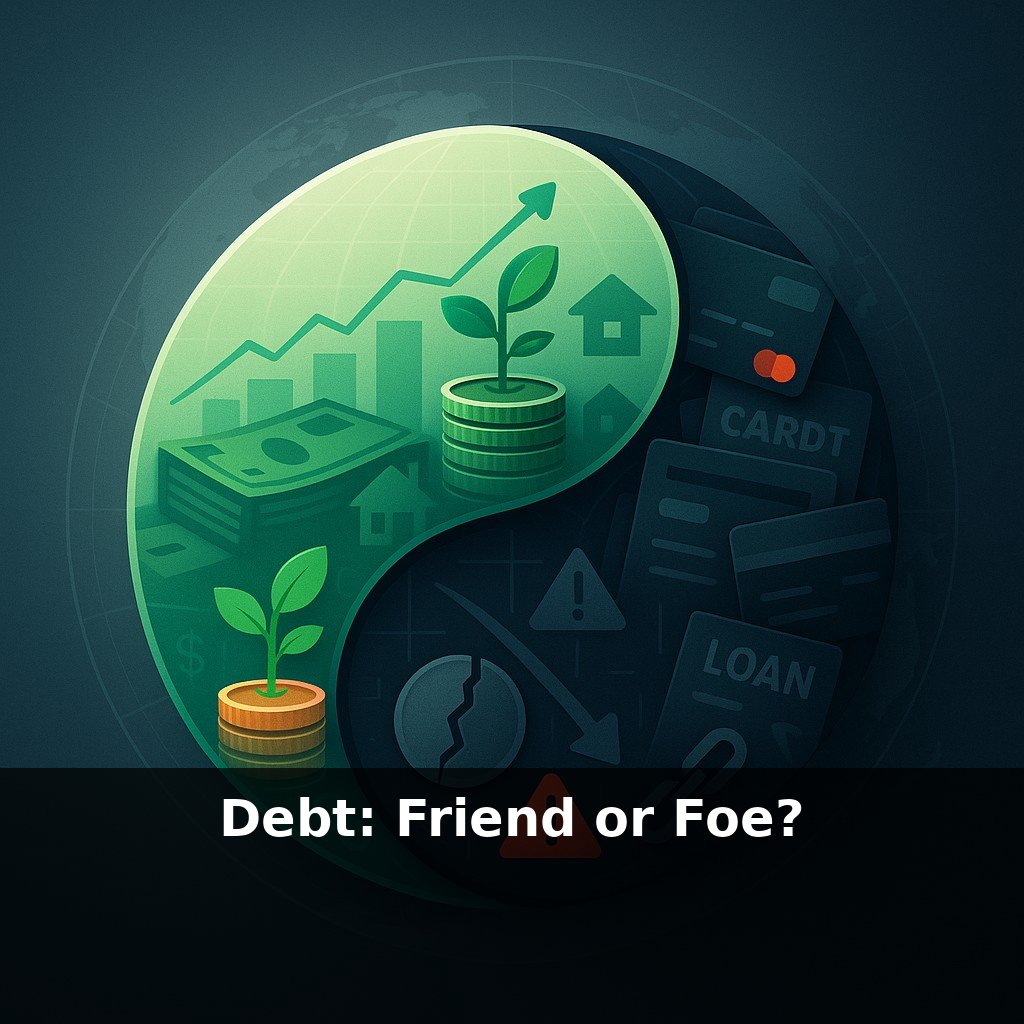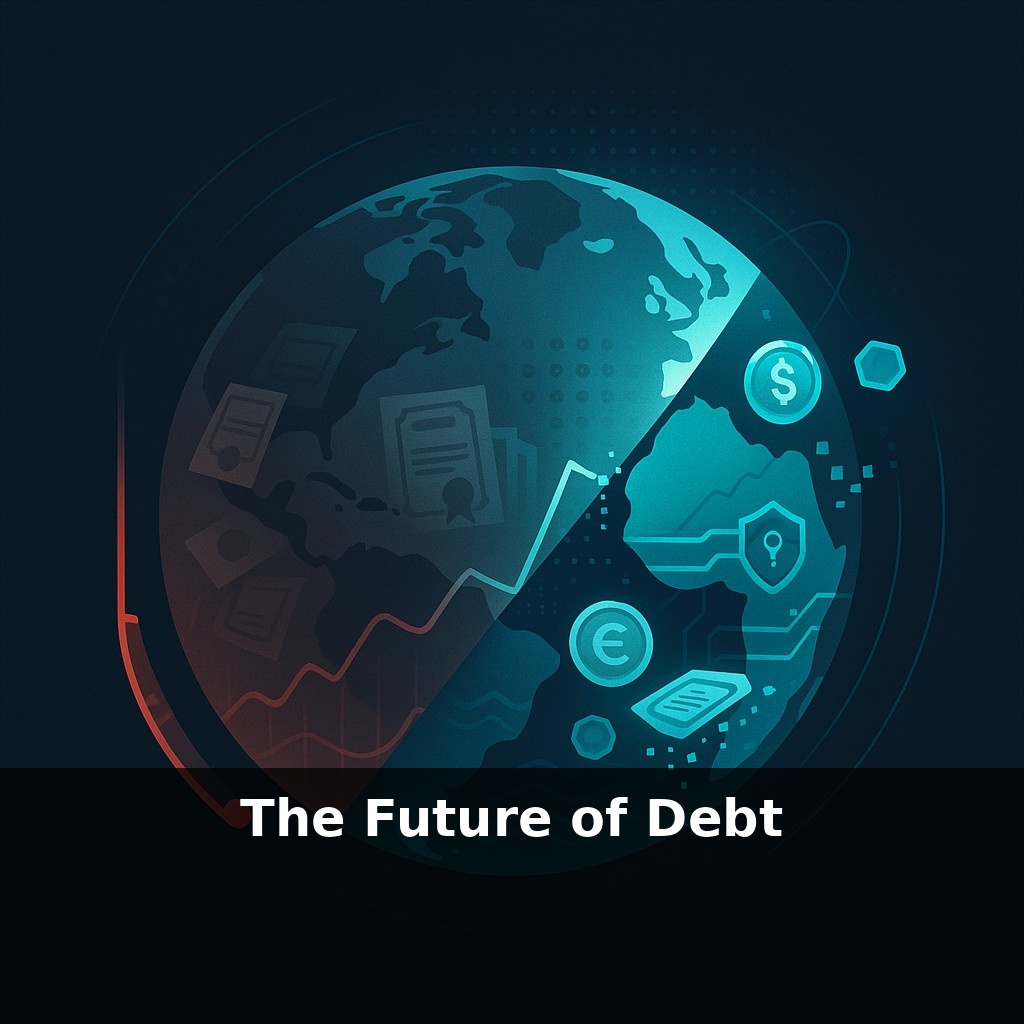
Global debt is now larger than the entire world economy. Yet at the very same time, apps are handing out credit lines in minutes, and countries are erasing old IOUs in exchange for protecting oceans. In this episode, we’ll step inside that tension: more debt, but also smarter debt.
Global debt is swelling, but the plumbing underneath it is changing even faster. Bonds are no longer just dense PDFs bought by a handful of big institutions; they’re starting to appear as tokens on blockchains, traded in minutes instead of days. Algorithms are scanning thousands of data points—your phone bill, your delivery history, your energy use—to decide who gets to borrow and at what price. Governments are experimenting with deals where they cut fossil subsidies or protect coral reefs in exchange for cheaper financing. And regulators are racing to catch up, trying to decide who is allowed to issue what, to whom, and on which digital rails. In this episode, we’ll explore how these shifts could open doors for millions who’ve been locked out of credit—and why they might also create new fault lines we don’t yet see.
The stakes are high: over 60% of low‑income countries are already in or near debt distress, and households everywhere are juggling rising borrowing costs with stagnant wages. At the same time, entirely new forms of IOUs are emerging. Some debts are tied to carbon emissions or social outcomes; others live as programmable tokens that can change their own terms when conditions shift. A few even disappear faster if you hit climate or education targets. In this episode, we’ll look at how these experiments could rewrite who gets relief, who gets punished, and who gets left out.
The next phase of debt is less about “more or less” and more about “what kind, for whom, and under what rules.”
On one side, technology is slicing debt into far smaller, more flexible pieces. Instead of a big, one‑time loan, you get streams of micro‑credit that turn on and off with your behavior. Miss a payment? Your limit shrinks automatically. Hit six months of on‑time repayments? Your rate drops without you begging a bank manager. Retail platforms already do early versions of this, but the deeper shift is that repayment history, utility usage, and even inventory turnover for small shops can be turned into living credit profiles that update hourly, not yearly.
That could be a lifeline for people and small businesses with thin or non‑existent traditional credit files. Think of street vendors, gig workers, or farmers who’ve always been “too informal” for banks. When a few days of good sales can nudge a credit line higher, opportunity doesn’t have to wait for a quarterly loan committee.
But there’s a catch: who owns and audits the data feeding these systems? If the model is trained mostly on customers from rich neighborhoods, it may quietly punish everyone outside that bubble. The risk isn’t just unfair scores; it’s entire communities priced out of future borrowing because an opaque model decided they were “too risky” based on patterns they never chose.
At the sovereign level, a different experiment is unfolding. Debt‑for‑nature and debt‑for‑development swaps show that obligations can be renegotiated around outcomes, not just cash. A country agrees to protect a rainforest, expand clinics, or electrify schools, and in return, old, expensive debt is replaced with cheaper, longer‑dated obligations. Done well, this doesn’t just ease the budget; it ties a government’s borrowing costs to the health of its people and ecosystems.
Markets are also testing “use‑of‑proceeds” and “sustainability‑linked” structures that reward or penalize borrowers when they hit—or miss—specific targets. A company might pay lower interest if it cuts emissions or raises wages at the bottom. Miss the mark, and the rate ratchets up. The design problem is making sure targets are real, not marketing, and that investors also accept lower returns when positive change actually happens.
A future loan to a small shop could feel less like a scary bank meeting and more like a ride‑sharing app for money: you tap into a pool of investors worldwide who can see your daily sales, supplier ratings, even customer reviews, and bid to fund your next inventory batch for a week or a month. Their offers compete in real time; your cost falls if your performance data stays strong. At the other end of the spectrum, a city might issue a tokenized “climate resilience” note where the coupon steps down only if specific flood defenses are completed and independently verified by satellite data, not by a glossy brochure. For households, credit‑builder products could be woven into everyday platforms: your rent payments, streaming subscriptions, and prepaid phone top‑ups silently build a portable reputation score you can carry to a different country or bank, so one setback or move doesn’t erase years of financial discipline.
Debt’s next twist is who gets to write the rules of the game. Platforms that host your income streams or transactions could quietly become gatekeepers, deciding which behaviors unlock cheaper borrowing. Work history from gig apps, community savings circles, even in‑game economies may start to count as proof you can handle a promise. Your challenge this week: notice every non‑bank place where you “keep a streak” and ask, “If this were scored, would it help or hurt my future borrowing?”
The open question is who gets to steer this system as it mutates: citizens, platforms, or a handful of funds. Debt could become a scaffold for shared projects—rewiring power grids, restoring rivers, retraining workers—or a treadmill of extraction hidden inside sleek apps. Our role is shifting from passive borrowers to co‑designers of the promises we’re willing to live with.
To go deeper, here are 3 next steps: 1) Plug your own numbers into a free AI-driven payoff simulator like Undebt.it or the “Debt Payoff Planner” app, and compare how your timeline changes under snowball vs. avalanche vs. “refinance + invest the spread” strategies (the exact tradeoffs they debated in the episode). 2) Read the sections on leverage and risk in Morgan Housel’s *The Psychology of Money* or the chapter on “good vs. bad debt” in Ramit Sethi’s *I Will Teach You to Be Rich*, then decide—today—one concrete boundary for your future borrowing (e.g., max % of income you’ll ever allow toward debt payments). 3) Explore the “future of credit” by checking your actual data profile on Credit Karma or Experian, then sign up for one fintech tool they mentioned (or a similar one, like Tally for card management or Upsolve if you’re near bankruptcy) and use it to automate at least one improvement to your current debt setup.