The ocean, a vast and often overlooked force, absorbs most of the extra heat trapped by our planet, silently moderating our global climate. Not the forests. Not the ice. Something far larger, moving in slow, powerful currents, reshaping storms, seasons, and coastlines—without a sound.
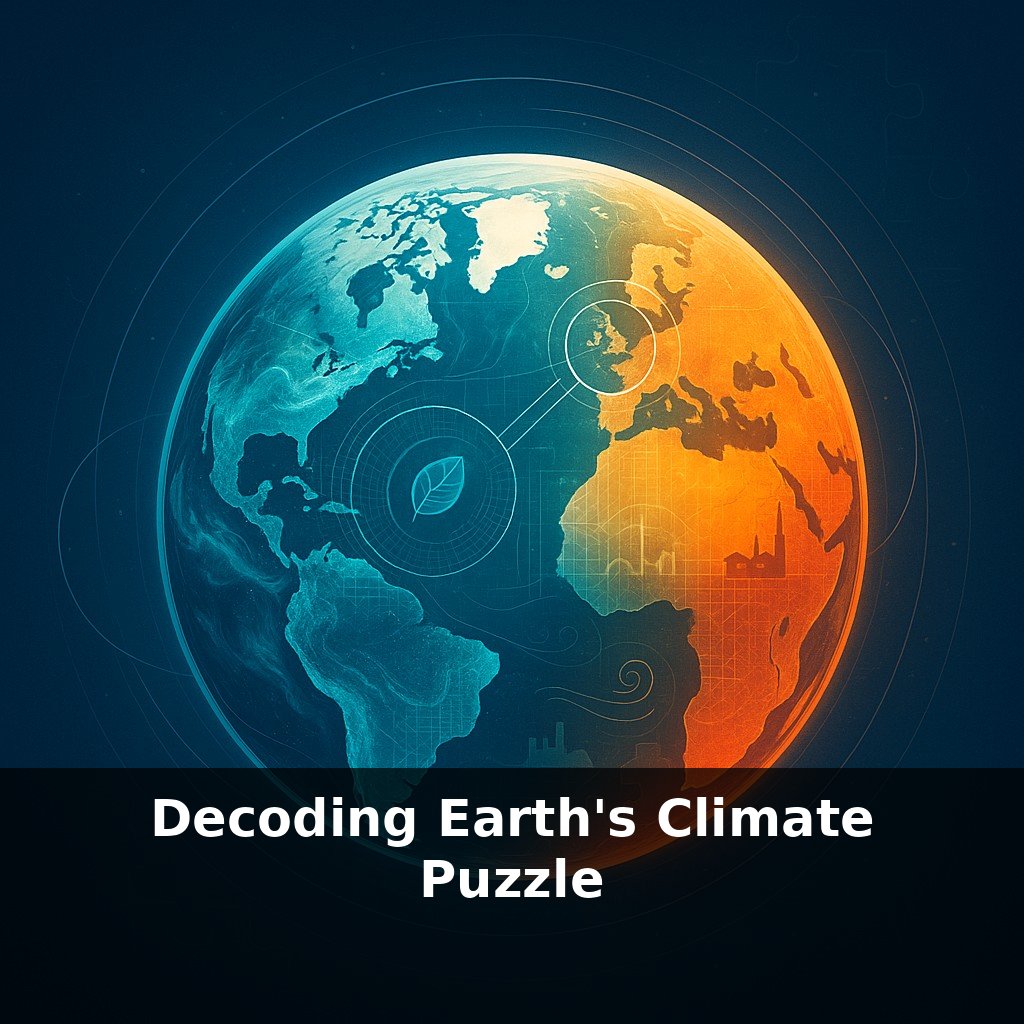
That giant is the ocean, and it’s doing far more than most school textbooks ever hinted at. Spread like a dark, restless skin over most of the planet, the sea is constantly trading energy and gases with the air above it. Heat leaves the water as vapor, rises, and later crashes back down as rain halfway across the world. Carbon slips from the atmosphere into the surface, then is ferried downward by drifting plankton and sinking particles, like confetti after a parade slowly disappearing into the depths. These exchanges don’t just tweak the weather; they set the baseline conditions for life on land—how intense monsoons become, how long droughts last, how far storms can reach. When we talk about “global” climate, we’re really talking about how the oceans quietly decide what kind of planet the continents get to live on.
Yet the ocean’s role in climate runs even deeper than steering storms and seasons. Its vast volume lets it tuck away staggering amounts of heat and carbon, shifting them between surface waters and cold, dark depths over years, decades, even centuries. That slow, quiet shuffling buys us time on land, muting temperature spikes that would otherwise arrive much faster. But it also means today’s choices don’t just affect next summer’s weather; they echo through systems that respond on human, historical, and geological timescales, overlapping like the movements of a long, unfolding symphony.
Beneath the surface, three big climate jobs dominate the ocean’s workload: storing heat, moving it, and reshaping chemistry.
First, storage. More than 90 percent of the excess warmth from greenhouse gases is ending up in seawater rather than in the air we walk through. Since the 1970s, measurements show this adds up to roughly 233 zettajoules of extra heat—an amount so large it’s easier to track through rising ocean temperatures than to picture directly. This hidden reservoir changes sea level in two ways: water expands as it warms, and it melts land-based ice by eroding glaciers from below where they meet the sea. Together, those processes now rival the contribution from ice sheets themselves.
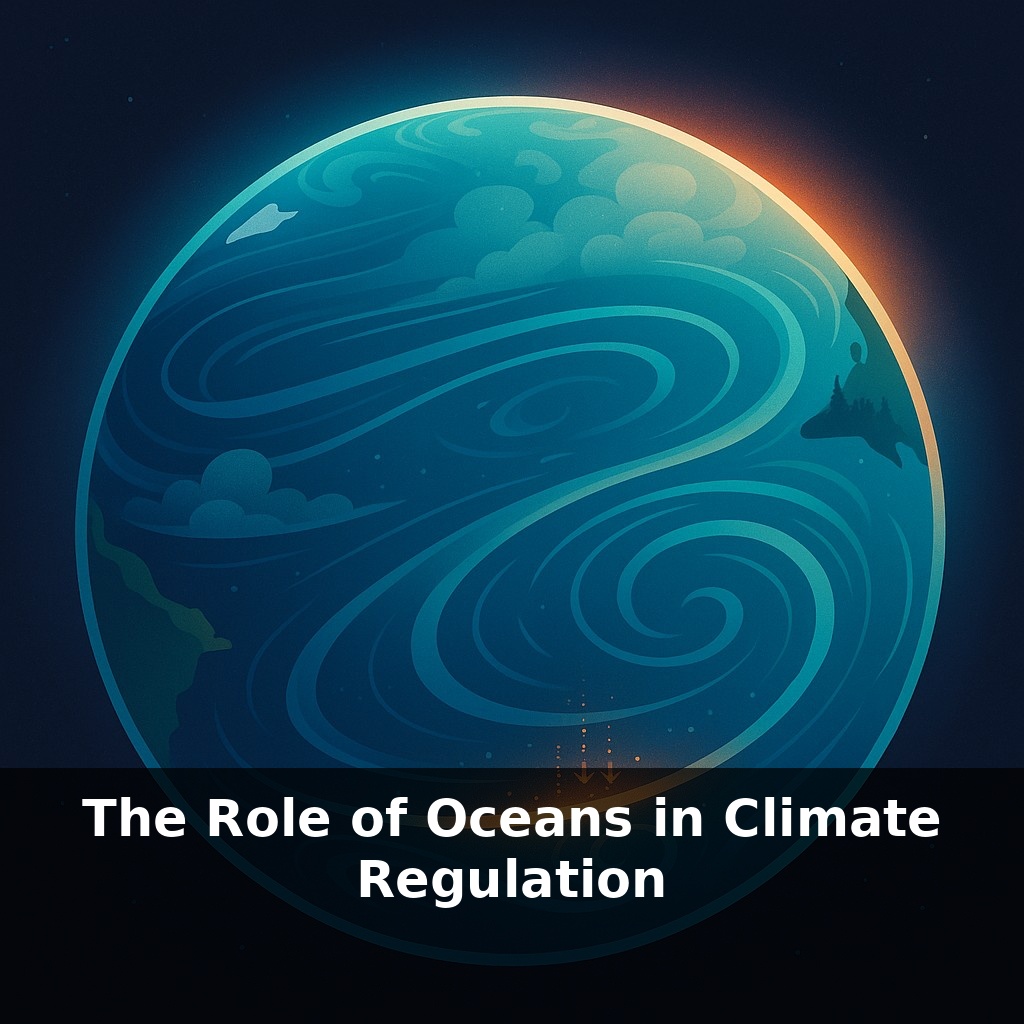
Second, movement. Warm tropical waters don’t stay put; they’re pulled poleward by vast current systems, then cooled and pushed back at depth. These circulations—such as the Atlantic overturning that includes the Gulf Stream—carry as much energy as all of humanity’s power generation many times over. Slow them down, and winters in parts of Europe could become harsher even as the planet as a whole keeps warming. Speed them up or shift their paths, and rainfall belts can drift, reshaping where crops thrive or fail.
Third, chemistry. The oceans are taking up around a quarter to a third of the carbon dioxide we release each year. That uptake slightly blunts the pace of atmospheric warming, but it alters seawater pH in the process. The measured drop from about 8.2 to 8.1 may sound tiny, yet it represents roughly a 30 percent jump in acidity. Shell-building organisms—corals, some plankton, shellfish—find it harder to pull the minerals they need from more corrosive water, especially in colder regions where CO₂ dissolves more readily.
All of this plays out over different timescales. Surface layers react on the order of days to years, deeper layers on decades to centuries. That lag creates a tension: even if emissions stopped tomorrow, the system would keep adjusting as stored heat and carbon slowly work their way through ocean layers. Like a long train braking after the engine stops pulling, the climate system keeps moving, and the length of that train is written in water.
Think of three snapshots that reveal how deeply this watery system shapes daily life.
First: a farmer in West Africa watching the date of the first reliable rain slowly drift. Subtle shifts in sea-surface temperatures hundreds of kilometers away can nudge where and when monsoon clouds form, quietly rewriting planting calendars and harvest odds.
Second: a Pacific island community noticing that “normal” high tides now push into streets a little more each year. Part of that creep comes not from distant ice, but from local waters expanding as they warm, stacking centimeters into ankle‑deep floods.
Third: a coral reef guide in Australia canceling trips because the vibrant reef has turned ghostly white again. A brief burst of warmer water—what scientists call a marine heatwave—can stress corals past their limit, especially when layered atop long‑term changes in pH and temperature.
Across these scenes, choices about emissions in cities far away are quietly scripted into rainfall, shorelines, and living seascapes.
Coastal cities, fisheries, and even inland farms are quietly becoming test cases in how far we can push this system. Heat‑stressed fisheries may shift poleward, tourism seasons could flip as seaside summers grow stifling, and insurance markets might treat low‑lying neighborhoods like bad bets. Your challenge this week: follow one headline about seas or coasts, then trace how that story could ripple to food, jobs, or culture where you live.
We’re still early in learning how this watery system will respond to decades of emissions; in many ways, the data record is a half‑finished novel. As scientists stitch together satellite views, deep‑ocean sensors, and centuries‑old ship logs, the picture sharpens: each choice now nudges not just tomorrow’s forecast, but the background climate your grandchildren treat as normal.
Before next week, ask yourself: How does knowing that the oceans absorb about 90% of excess heat and a quarter of our CO₂ change the way I think about my own energy use today (e.g., driving, heating, streaming)? When I look at something I’m buying or eating today—especially seafood or products shipped long distances—how might its journey have depended on shipping routes and port infrastructure that directly affect ocean health and emissions? If I had to explain to a friend, in two sentences, how ocean circulation (like the Atlantic overturning) helps keep our climate livable, what would I say—and what’s one gap in my understanding I want to look up before the end of the day?