Right now, more than forty countries still have kings, queens, or emperors—and most of them don’t actually rule. A royal wedding can stop traffic, while a prime minister quietly signs the real laws. How did raw, divine-right power shrink into polished ceremony yet still survive?
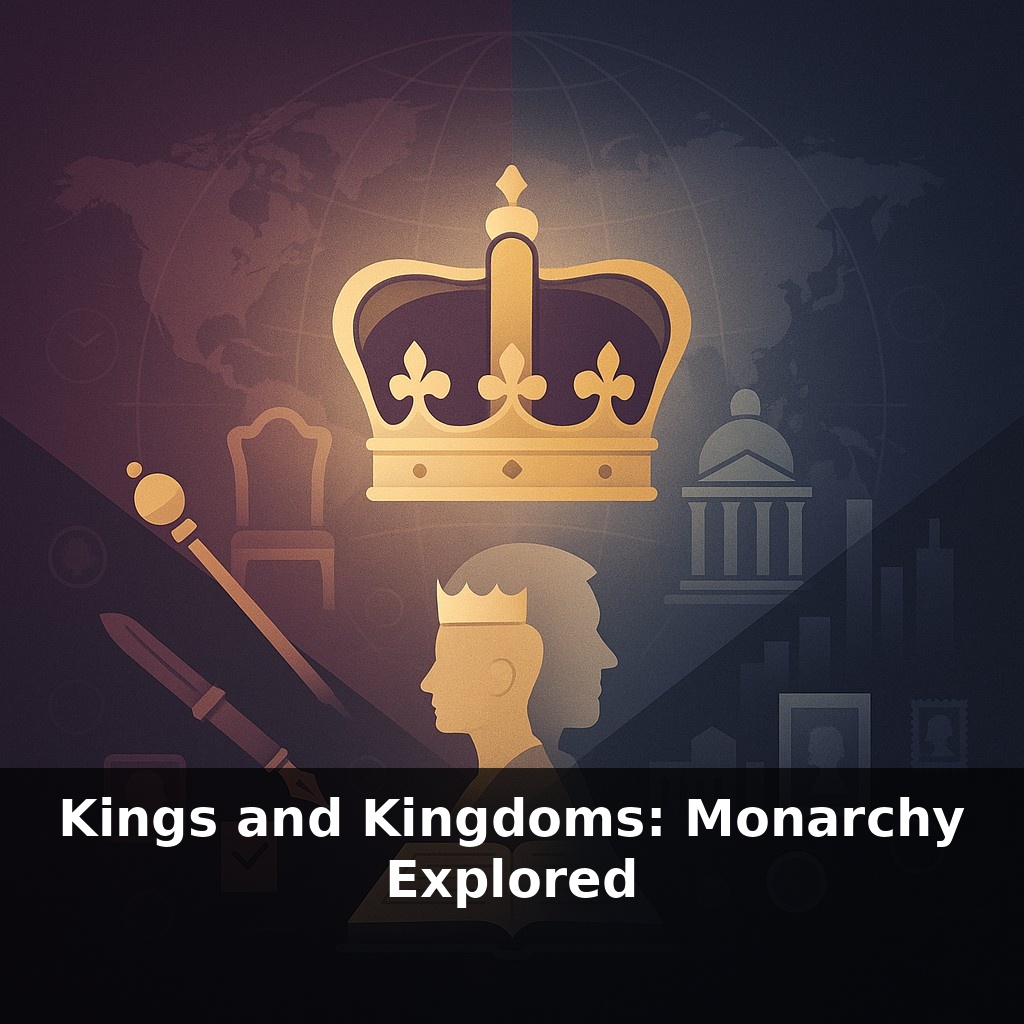
Some monarchies still sign decrees with real consequences; others cut ribbons and pose for photos, yet their faces sit on coins, passports, and in school textbooks. That’s the puzzle of modern kingship: enormous visibility, wildly different levels of power. To untangle it, we’ll look at three broad species of crowns: absolute monarchies that still write the rules, constitutional monarchies that share the stage with elected politicians, and nearly ceremonial monarchies that survive as national mascots. Along the way, we’ll meet oil-rich kings who double as CEOs, emperors whose family trees read like epic sagas, and royals whose every move is tracked like a blue-chip stock. Underneath the pageantry lies a serious question: why do some societies keep betting on a single family as a stabilizing symbol when almost everything else in politics has gone democratic?
To see how different these monarchies really are, we need to zoom in on what kings and queens *do* all day. Some approve cabinet appointments that can reshape economies; others spend more time reviewing charity briefings than defense reports. Think of it like a software update: the core “crown” code stays, but each country rewrites the permissions—who can click what, and when. We’ll look at three layers: legal powers on paper, political influence behind closed doors, and cultural pull in public life. Often, the real story sits in the gaps between those layers.
Start with the hard-edged end of the spectrum: places where a royal signature can redirect an entire economy overnight. In today’s absolute systems, kings in states like Saudi Arabia or Qatar don’t just approve policies—they often sit at the center of giant sovereign wealth funds, reshuffle ministers at will, and personally arbitrate between rival elites. Laws may mention councils or consultative assemblies, but when crises hit—oil price crashes, regional wars, pandemics—the decisive meeting still happens in a palace, not a parliament. This centralization can make responses fast, but it also means politics is often conducted through family dynamics, not party debates.
Shift to constitutional setups and the picture changes. Here, monarchs work within tightly choreographed routines: weekly meetings with prime ministers, carefully neutral speeches, and quiet arbitration when coalition talks stall. They’re briefed on everything from cyber threats to trade disputes, yet they’re expected to leave no overt fingerprints on the final choices. Their influence, when it appears, tends to be subtle: a raised eyebrow in a private audience, a phone call urging compromise, a decision about whom to invite first when forming a government. In polarized times, that “stand above the fray” role can matter more than any formal power.
At the near-ceremonial end, daily life looks closer to permanent public relations than politics. Schedules are full of factory openings, disaster-site visits, and cultural festivals. These aren’t trivial: showing up in a flood zone or at a memorial can redirect media attention, fundraising, and even how a nation narrates a trauma. The job becomes a constant negotiation over symbolism—whose languages are spoken, which regions get visited, which historical wounds are acknowledged.
Across all types, money threads through the story. Some royal households draw clear lines between public funding and private wealth; others blur them in opaque court budgets and sprawling property portfolios. Think of it like a layered financial system: personal investments, crown estates held “in trust,” and taxpayer-funded institutions all interlock, shaping everything from foreign investment pitches to domestic resentment.
Think of monarchies as a kind of legacy software that countries keep “patching” instead of uninstalling. In Eswatini, for instance, the king’s role extends into the choreography of social life: traditional festivals double as mass political signals, where attendance—or absence—by elites is read like a vote. In Jordan or Morocco, kings sometimes launch reform drives or anti-corruption pushes that look technocratic on the surface but quietly rebalance power among rival factions. Meanwhile, Japan’s emperor embodies a different logic: his postwar role centers on carefully scripted acts of remorse and remembrance, especially around World War II, which function almost like national debugging—rituals designed to prevent old errors from repeating. And in Europe, smaller monarchies such as the Netherlands or Belgium experiment with transparency—publishing royal budgets, trimming titles, or allowing abdication at planned moments—using openness and voluntary exit to keep a hereditary institution compatible with 21st‑century expectations.
A quiet shift is underway: future kings may be judged less on ancestry than on performance metrics—approval ratings, digital presence, crisis visits logged. Some courts already track social media sentiment the way governments track inflation. As climate shocks grow, expect royals front‑lining flood zones and drought talks, turning palaces into staging hubs for NGOs. Where they fail to connect, “royal unfollow” movements—online and at the ballot box—will pressure states to reboot the system entirely.
Monarchies, then, are less fossils than living beta tests: some will crash under scandal, others quietly update their “user interface” through transparency, philanthropy, or digital savvy. Your challenge this week: scan one current headline about a royal family and ask, “If this were an elected office, would we judge this behavior differently?”