 2min preview
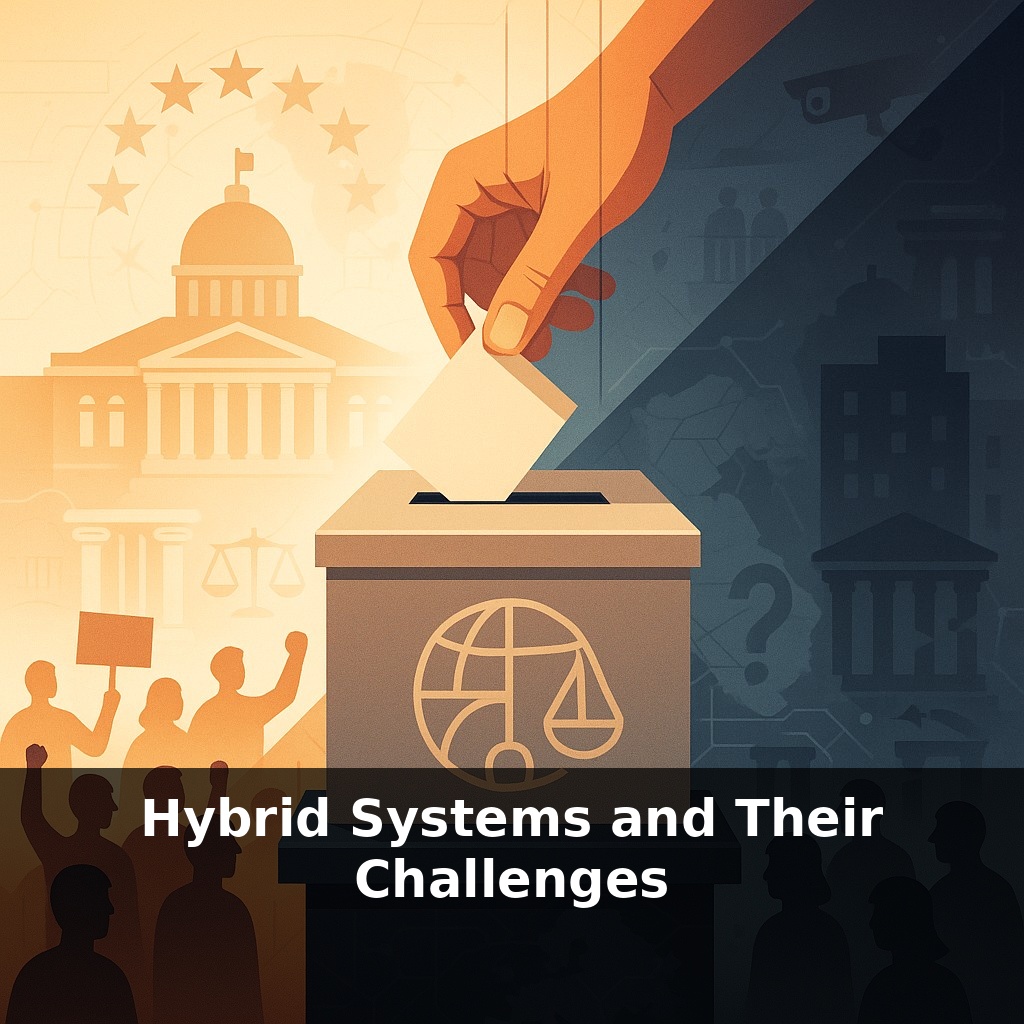
Hybrid Systems and Their Challenges
📝 Transcript
About half the world now lives under governments that are neither full democracies nor open dictatorships. You vote, courts exist, protests happen—yet power shifts suddenly, rules feel negotiable, and no one’s quite sure who’s really in charge, or for how long.
Nearly half the countries Freedom House tracks now sit in the murky “Partly Free” middle. On paper, many of them look impressively modern: written constitutions, elected leaders, glossy anti‑corruption agencies, even ombudsmen with official seals and press conferences. But when you zoom in, the pieces don’t always fit together. Courts block a president one month, then green‑light dubious decrees the next. Parliaments pass reforms that quietly never take effect. Protesters force out a leader, only to watch the same networks reassemble around a new face.
Since 1990, more than 90 constitutions have tried to tame this complexity with semi‑presidential setups: two executives meant to share and balance authority. In practice, this often works less like a smooth partnership and more like an uneasy coalition kitchen—too many cooks, overlapping recipes, and constant battles over who really controls the heat.
Subscribe to read the full transcript and listen to this episode
Subscribe to unlockSubscribe for $1.99/month to unlock the full episode.
From this course
Decoding Political Systems: From Monarchy to Democracy
5 episodesUnlock all episodes
Full access to 5 episodes and everything on OwlUp.
Subscribe — $1.99/monthLess than a coffee ☕ · Cancel anytime