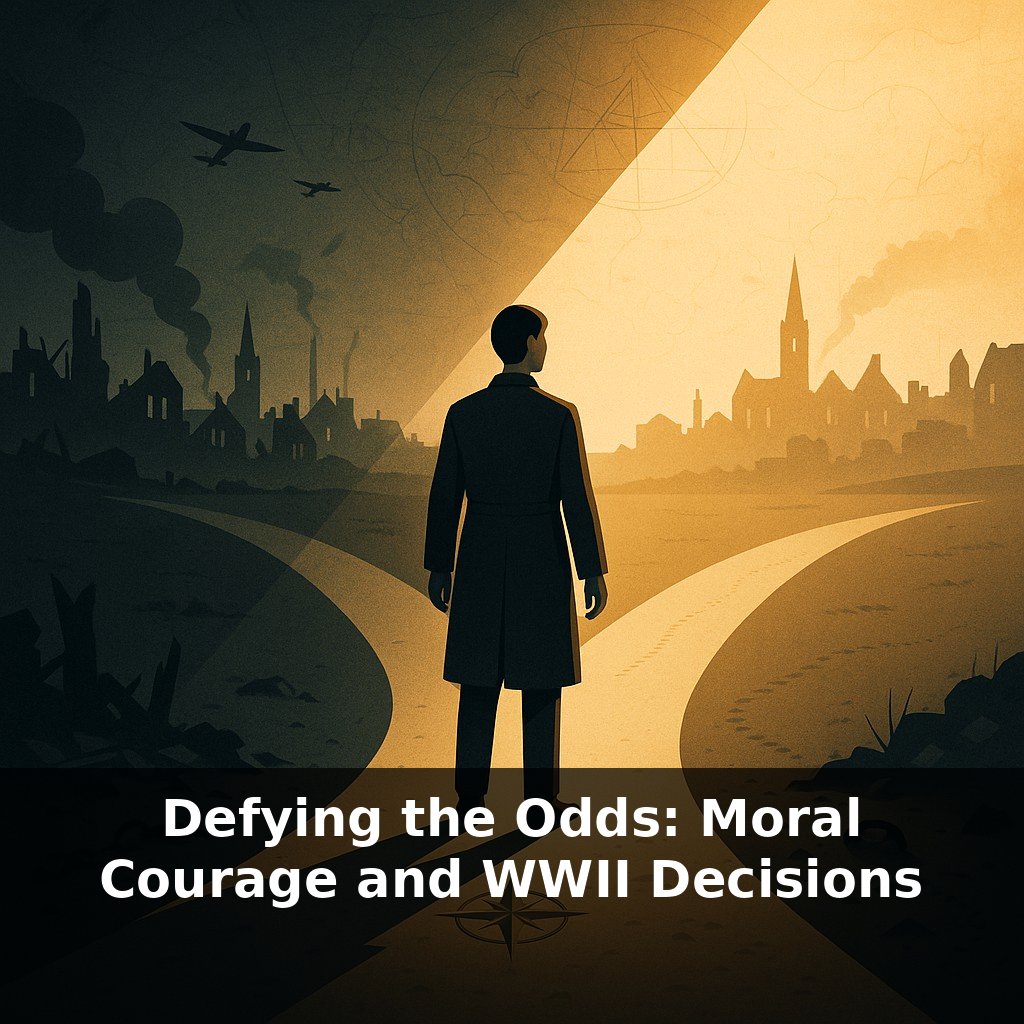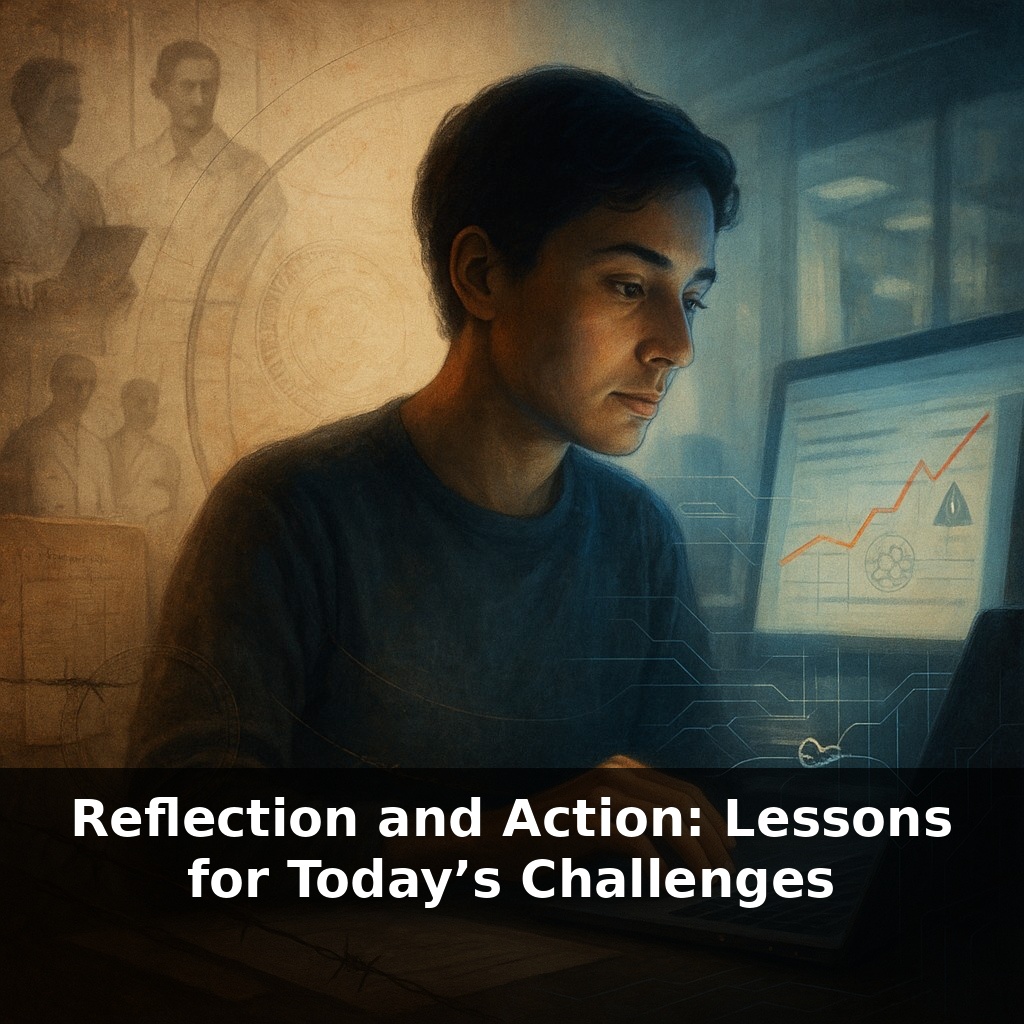
“Never again” was promised after World War Two—yet today, workers who speak up about AI weapons or climate risks still lose their jobs in most reported cases. A young engineer opens an email, sees a new project brief, and feels it: that quiet, creeping sense that something isn’t right.
The same quiet doubt that stopped some doctors from following Nazi orders—and drove others to resist—shows up today in conference rooms and code reviews. A researcher spots data being massaged to please investors. A product manager is told, “Legal signed off; just ship it.” A junior doctor sees a trial consent form written in dense jargon no patient can really understand. These are not movie-level crises; they’re small, ordinary moments where our internal alarms flicker, then get buried under deadlines, loyalty, or fear of standing out. The lessons carved into law after World War II—the Nuremberg Code, human rights declarations, and the insistence on personal responsibility—were built precisely for these “normal” days. The question now is less “What is right?” and more “How do we stay awake enough, long enough, to do it?”
Ethical danger today rarely looks like a villain’s monologue; it feels more like a slow slide. Psychologists call part of this “moral fading”: the way profit, innovation, or team loyalty quietly push the ethical part of a decision into the background. Add cognitive shortcuts—trusting authority, going with the group, sticking to the familiar—and even good people drift. That’s why modern models of moral psychology matter: they don’t just ask what we believe, but track four fragile steps—seeing a problem, caring about it, taking responsibility, and actually following through. Miss one, and the moment passes.
Here’s the uncomfortable twist: knowing the history and the psychology is not enough. Most of us can explain why past atrocities were wrong; far fewer can spot the early-stage version of those patterns in our own inboxes, product roadmaps, or research pipelines.
This is where two strands meet: the post‑war insistence on human dignity, and the cognitive‑science insight that our minds run on two tracks. One is fast, associative, and eager to please; the other is slower, effortful, and easily tired. In routine situations, the fast track is a feature. Under pressure, it becomes a liability.
Rest’s model helps us see how that liability shows up in practice. Take a tech team evaluating a lucrative contract for predictive policing. No one says, “Let’s build an unjust system.” Instead, early meetings talk about accuracy metrics, integration timelines, and edge cases. The ethical stakes shrink to a side note. That first step—clearly recognizing, “We are helping the state decide whom to target”—never fully lands.
Or consider a hospital deciding who gets access to an experimental therapy. The forms are compliant, the protocol approved, the timelines brutal. A junior clinician worries that non‑native speakers won’t truly grasp the risks. But schedules are packed, seniors sound confident, and the concern dissolves into, “I’m probably overthinking this.”
The post‑war frameworks were designed to push against exactly this drift by hard‑coding friction: explicit consent, clear rights, individual liability. They act like speed bumps—forcing the slower, more deliberate track of thinking to engage when stakes are high. The problem is that organizations learn to route around those bumps: legal reviews become rubber stamps, “ethics boards” meet after the critical design choices are made, whistle‑blower channels exist mostly on paper.
So the real challenge is translation: turning abstract principles into small, repeatable practices that interrupt the slide in real time. A product review that must include one “rights risk,” not just business risks. A research meeting where someone is explicitly assigned to argue the human‑impact case. A leadership norm that any employee can pause a project once for a serious ethical concern—with no penalty for being wrong. These aren’t grand gestures; they’re modest design choices in our procedures and cultures that nudge us from quiet unease toward clear sight and, eventually, action.
A concrete example: at Google, thousands of employees walked away from a defense contract after internal debate surfaced unease about weaponized uses of their tools. The contract was modest—about US$9 million a year—but the choice signaled that some lines weren’t for sale. In another domain, climate scientists have quietly refused funding tied to conditions that would bury inconvenient findings. They rarely make headlines, but their refusals shape which truths reach the public record.
You can see quieter echoes in routine office life. A manager removes a “stretch” sales target that would all but guarantee deceptive promises to clients. A data scientist insists on a plain‑language summary for participants in a study, even when marketing prefers upbeat spin. Each move is small, but they work like a carefully placed rest in a piece of music: a deliberate pause that changes how everything around it is heard. Over time, these pauses train teams to listen differently—to notice tension, name it, and adjust the score before dissonance becomes harm.
Boards, labs, and start‑ups are starting to treat ethics less like a fire alarm and more like ventilation: built in, always on, quietly shaping the air. Rotating “ethics sentry” roles on teams, red‑team drills for moral blind spots, and cross‑border review panels are early prototypes. As AI and biotech scale, expect CVs to list “ethical incident leadership” the way they list major projects—signals that navigating moral storms is now core professional craft.
Courage here is less a heroic leap and more like tending a small fire: feeding it scraps of doubt, bits of evidence, and voices unlike your own so it doesn’t go out when the room heats up. Your challenge this week: notice one moment of unease at work, name it aloud as a question, and watch how the conversation—and your own role in it—shifts.