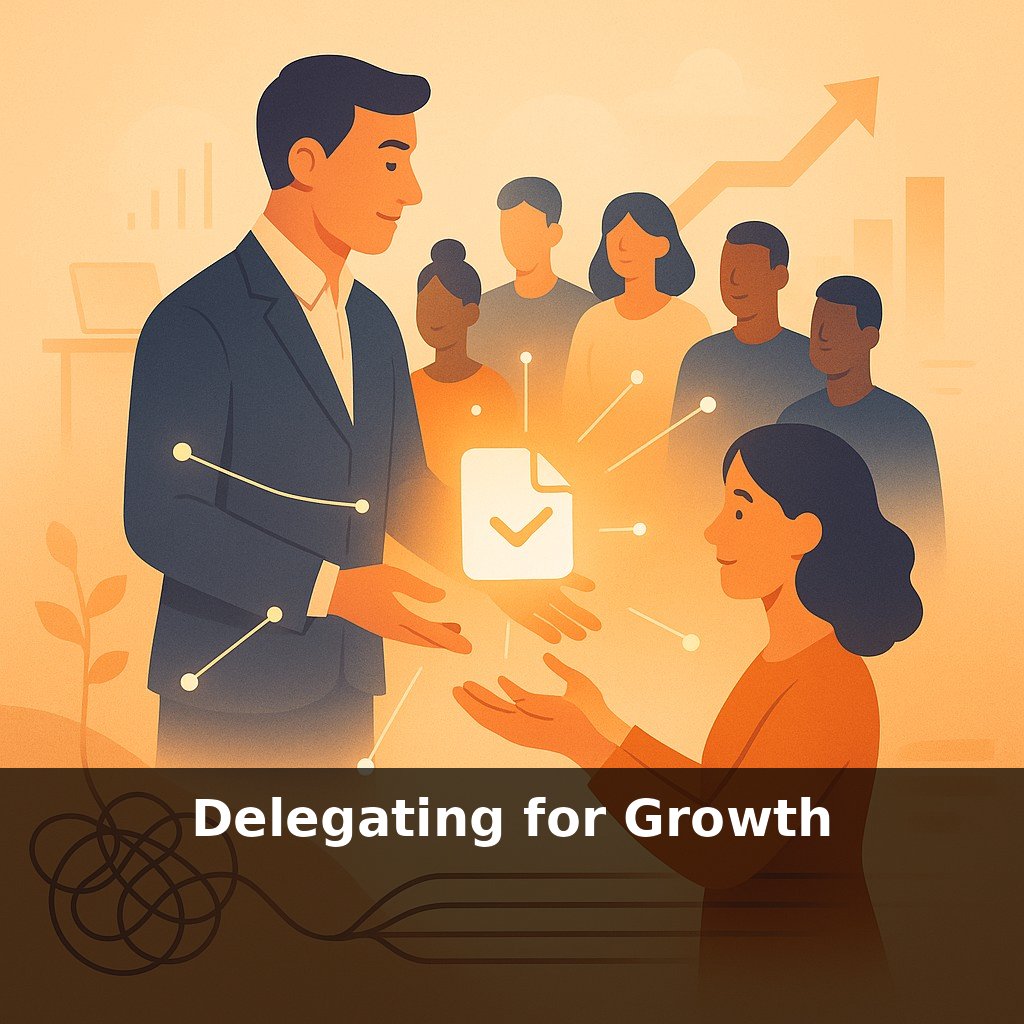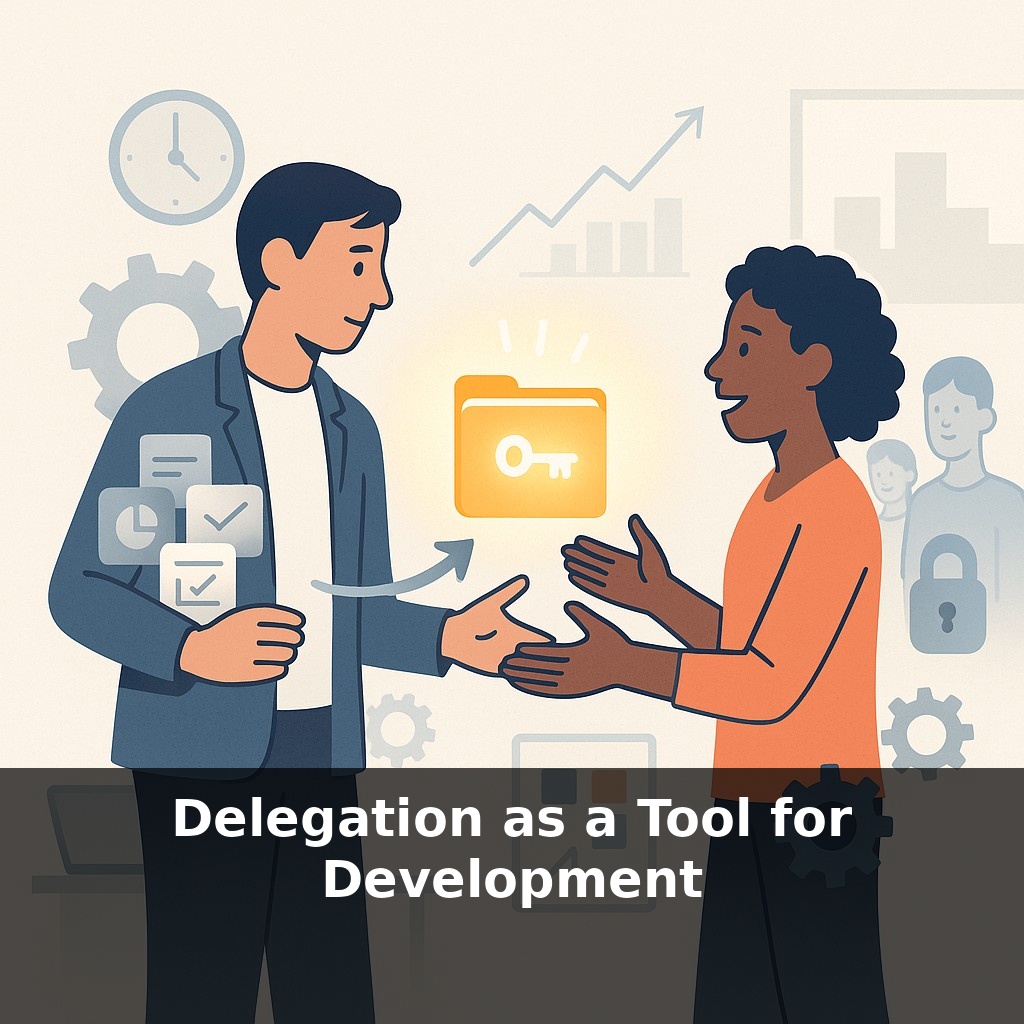
Most managers lose almost a full workday every week doing tasks someone on their team could handle. Yet those same managers say they don’t delegate because it’s “faster to do it myself.” In this episode, we’ll pull apart that paradox—and turn delegation into your strongest growth tool.
Here’s the twist: the tasks you’re clutching the tightest are often the exact ones that could unlock the next level of someone on your team. Not the low-stakes admin work, but the projects that feel just risky enough that your instinct is to say, “I’ll handle it.” That instinct protects your standards, but it can quietly cap your team’s potential—and your own ceiling. Research shows that when managers hand over not just tasks but also thinking and decision rights, their teams don’t just “keep up”; they start to anticipate, innovate, and own outcomes. Think of those moments when you’re the bottleneck in your inbox or approvals queue. Each delay is a signal: this is a place where someone else could be learning, stretching, and eventually operating without your constant oversight.
So where do you start? Not by dumping your least favorite work, but by zooming out on your calendar like you’d zoom out on a city map. Look for “landmarks”: recurring projects where you’re always in the middle, high-judgment calls that arrive predictably, or cross-functional work that exposes people to new partners. Research suggests these “edge-of-comfort” responsibilities are where confidence compounds fastest. The goal isn’t to abandon them—it’s to intentionally share them, with enough context, guardrails, and support that someone else can navigate the route without you riding shotgun forever.
Here’s where deliberate delegation gets nuanced: not every task you hand off develops people in the same way. Some build judgment, some build visibility, some build resilience. Treating them as interchangeable is like handing everyone on your team the same “development weight” at the gym and hoping they all get stronger in the right places.
A more intentional approach starts with three lenses:
First, *skill-building* delegation. These are tasks where the work itself stretches a concrete capability: running a client debrief, building a forecast model, leading a retrospective. You’re delegating so someone can practice a muscle they’ll need repeatedly. The risk is moderate; the primary upside is speed of learning.
Second, *scope-building* delegation. Here, the task expands someone’s surface area: owning a small product line, shepherding a cross-team initiative, representing the function in a leadership forum. The work may not be technically harder, but the stakes, stakeholders, and visibility are higher. You’re delegating so they can learn to navigate complexity and politics, not just mechanics.
Third, *sense-making* delegation. This is where you hand off a question instead of a solution: “Map where our onboarding is breaking” or “Design a lightweight way to hear from our silent customers.” The product is insight and recommendation, not just execution. You’re delegating so they can learn to frame problems, weigh trade-offs, and propose paths forward.
The developmental punch comes from matching the lens to the person and timing. Someone early in role may need mostly skill-building with tiny slices of scope. A plateauing high performer might be starving for sense-making work that lets them shape direction, not just deliver output. Research on motivation shows people stay engaged longest when challenge rises just ahead of ability, with support calibrated to the stretch.
Support is the second half of the equation. High-development delegation pairs *freedom* with *scaffolding*: clear intent, explicit boundaries, and pre-agreed check-in points that are about learning, not surveillance. Instead of, “Send me everything before it goes out,” try, “For the first two weeks, bring me two examples you’re unsure about and your recommended approach. We’ll refine your judgment together, then reduce the touchpoints.”
Over time, your aim is to deliberately “upgrade” what you delegate: from tasks to outcomes, from outcomes to problems, from problems to opportunities they identify before you do.
Handing off work looks different at different levels. At Zoom, a senior PM might first let an associate run a post-launch review (skill-building), then later own a small feature area (scope-building), and eventually ask them to propose where churn data suggests the next experiment should be (sense-making). Each step shifts the “center of gravity” of responsibility a bit further toward them.
A practical test: before you delegate, finish this sentence in one line—“If this goes well, this person will be better at ______.” If you can’t answer, you’re probably just unloading.
One more nuance: developmental work doesn’t always map to hierarchy. A junior engineer can lead a bug bash across squads (scope) while a senior engineer experiments with a new logging strategy (skill). Your job is to “cast” opportunities like a director: who needs range, who needs depth, and who needs a completely new genre to stay engaged and growing?
Delegation’s future impact will sneak up on careers that look “safe” today. As AI absorbs routine analysis, the stretch work left over will look more like field research than factory work: interviewing stakeholders, sensing weak signals across cultures, debating trade-offs in messy rooms. Leaders who practice developmental delegation now will quietly build a portfolio of people who can walk into undefined territory, set up camp, and map it for everyone else.
Your challenge this week: run a live experiment with the three lenses—skill-building, scope-building, and sense-making.
1) Choose one direct report (or collaborator) and one upcoming piece of work that *matters* but won’t sink the business if it stumbles.
2) Decide which lens you want to emphasize. Complete this sentence before you delegate: “If this goes well, this person will be better at ______.” Make it specific (e.g., “handling senior stakeholder pushback” or “turning a vague request into a concrete plan”).
3) When you delegate, say the developmental intent out loud: “I’m giving you this because I want you to get practice in X.” Then agree on: - What “good” looks like - Decisions they own vs. escalate - 2–3 check-in moments focused on learning, not status
4) After the work is done, debrief *together*: - “Where did you feel over-supported?” - “Where did you feel dropped?” - “What would you like more of next time: skill, scope, or sense-making?”
Run the same experiment with a *different* person and a *different* lens next week. In a month, you’ll start to see patterns in who grows fastest with which kind of delegation—and you’ll be much closer to using it as an intentional development engine, not just a way to clear your plate.
You’ll know this experiment is working when your 1:1s shift from “status updates” to real puzzles you’re solving side by side. Like rearranging furniture in a small apartment, small moves—who owns prep, who closes the loop, who synthesizes learnings—can open surprising space. Stay curious: which shift gives your team the most unexpected room to grow?
Try this experiment: For the next two weeks, pick one recurring task you usually own end-to-end (like preparing the weekly metrics deck or running the Monday standup) and delegate the *whole* thing to a team member, including decision-making within agreed guardrails. Before you hand it over, spend 20 minutes walking them through your usual thinking process, then ask them to propose how they’ll do it differently from you—and commit to letting them run with their version. After each instance (each deck or standup), schedule a 10‑minute debrief where *they* start by telling you what they learned, what they’d change next time, and where they want more responsibility. Keep a simple score for yourself after each round: “Did I intervene unnecessarily? Did they stretch a bit more than last time?” and adjust your level of guidance for the following week.