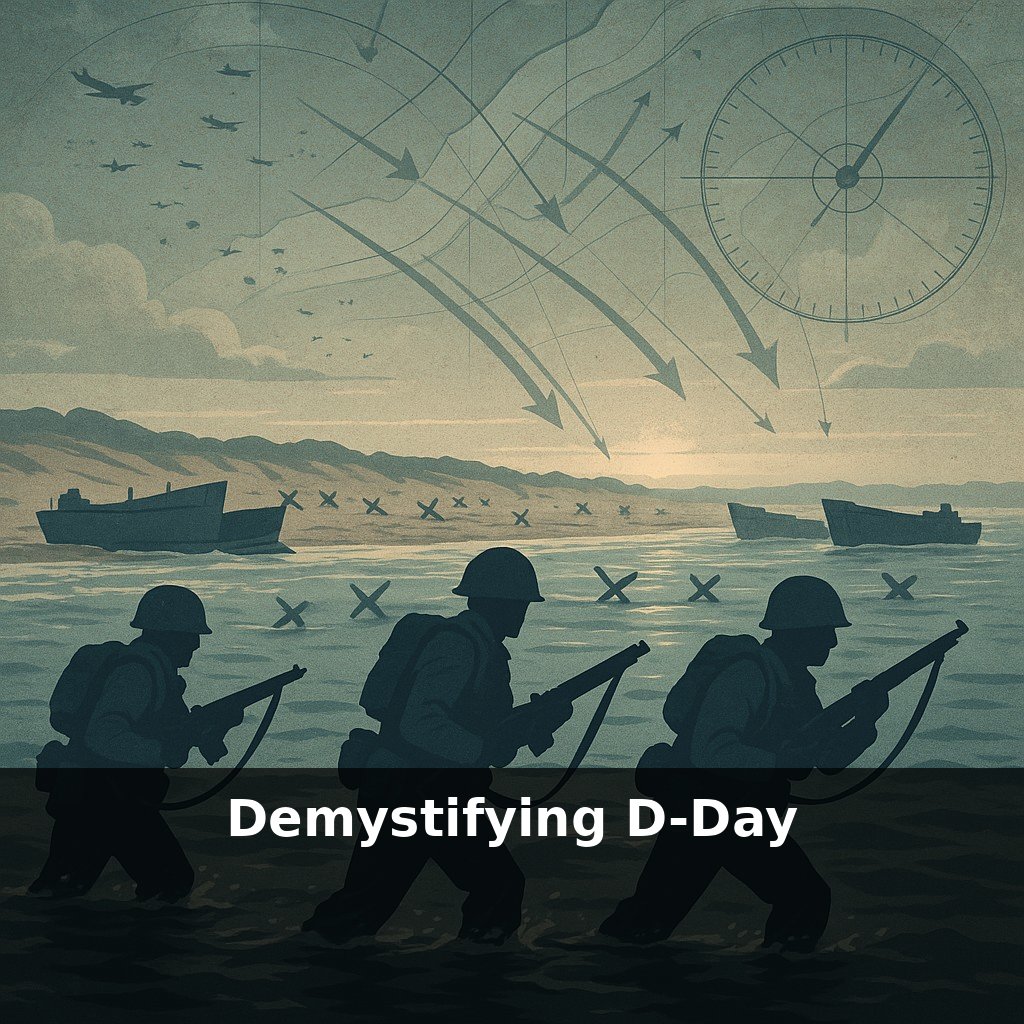
Before sunrise on D‑Day, German commanders still believed the “real” invasion was yet to come. Within hours, that illusion cracked. In this episode, we’ll step into those command rooms and trace how a single day’s miscalculation began to unravel an entire war.
By late summer 1944, the question was no longer *whether* the Allies could stay in France, but *how fast* they could exploit their new position. What began as a desperate gamble on hostile beaches was already reshaping the entire European battlefield.
Think of the Western Front now as a massive logistics and pressure system: every ship unloading crates at Cherbourg, every airstrip carved into French fields, every convoy rolling east wasn’t just moving supplies — it was quietly rewriting the timetable of the war.
In this episode, we’ll zoom out from individual units and beaches to the broader map. We’ll trace how that narrow coastal foothold grew into a deep corridor of power that:
- Pulled critical German forces away from the East - Brought Allied bombers within striking distance of key factories - Turned Hitler’s defensive assumptions into liabilities overnight
By early July, that corridor wasn’t just expanding on the map; it was starting to bend German decision‑making. Berlin now had to answer a brutal question every week: *where do we risk being weak* — in France, in Italy, or against the Soviets? Each new Allied airfield in Normandy tightened the screw, because it shortened flight times, increased sortie rates, and made surprise attacks on German rail lines more practical. Think of Allied planners tuning a complex soundboard: with every adjustment, German commanders heard fewer “options” and more “alarms” across their front lines.
The turning point isn’t just that Allied troops *got* onto French soil; it’s what that presence *forced* Germany to do next.
First, the manpower squeeze. Within weeks, German high command had to divert division after division westward. Many of these units weren’t fresh reserves—they were pulled from quieter sectors or rushed from other theaters. Every trainload of infantry and armor heading toward France meant fewer troops facing the Red Army’s summer offensives. Soviet commanders didn’t need a memo from Berlin to feel the shift; they saw it in thinner defensive lines, slower counterattacks, and gaps that were suddenly exploitable.
Second, the supply problem flipped direction. While the Allies were steadily increasing what they could push into France, Germany was struggling to *feed* its own forces there. Allied aircraft, now operating closer to key rail junctions, began wrecking bridges, marshalling yards, and fuel depots that once felt relatively safe. A panzer division on paper might look formidable, but if half its tanks sat idle for lack of gasoline or spare parts, it became a brittle force—dangerous locally, but unable to redeploy quickly or sustain prolonged fights.
Third, the psychological and political shock inside the Axis camp was profound. Mussolini had already fallen; now, with Allied troops advancing inland, occupied states and collaborationist regimes watched the map nervously. Underground movements grew bolder. German allies had to ask: do we keep tying our fate to a partner now stuck in a multi-front struggle? Even if they didn’t switch sides outright, hedging and hesitation crept into diplomatic and military coordination.
Finally, Hitler’s own approach hardened at precisely the wrong moment. Convinced that holding ground was paramount, he resisted flexible withdrawals that might have traded space for time. This rigidity turned local setbacks into larger calamities, as units were ordered to stand fast until encircled or destroyed. Over the summer, the cumulative effect was a gradual hollowing-out of experienced formations that Germany could not easily rebuild.
Your challenge this week: when you hear about a “decisive” event—whether in history, business, or politics—try tracing not the moment itself, but the chain of forced decisions it created for each side. Notice how often the real turning point is not a single day, but the costly choices that follow.
Now zoom in on what those abstract “forced choices” looked like on the ground. In July, German staff officers weren’t staring at a neat map; they were arguing over which crisis to underfund. Reinforce a crumbling sector near Caen, and you leave a vital rail junction exposed to the next bombing raid. Shift flak guns to protect fuel depots, and your infantry must face fighter‑bombers with little cover. Each “solution” quietly planted the seed for the next emergency.
A single railway bridge knocked out near Le Mans didn’t just delay a train; it meant ammunition arrived late to one division, which then cut short a counterattack, which in turn left a neighboring unit’s flank open. That vulnerability might force a nighttime withdrawal, abandoning heavy equipment that couldn’t be towed out in time. Step by step, material shortages translated into thinner lines, shorter reserves, and commanders who began planning around what they *couldn’t* do, rather than what they hoped to achieve.
Within months, planners were already treating Normandy less as a triumph than as a template. The lesson wasn’t “storm beaches,” but “reshape the board.” Today, exercises in the Baltic or Indo‑Pacific quietly mirror that logic: pre‑position fuel like laying fiber‑optic cables, obscure real intentions in a fog of decoys and cyber noise, and lock allies into habits of cooperation before any crisis. The question is no longer who has more tanks, but who can rearrange reality faster than the other side can adapt.
Normandy’s aftermath hints at a broader pattern: durable change comes from quietly rearranging constraints, not just winning set‑piece clashes. Leaders who study those months don’t just count divisions; they watch how options narrowed, like lanes closing on a highway. In our next episode, we’ll follow how that squeeze reshaped choices in Berlin, London, and Moscow.
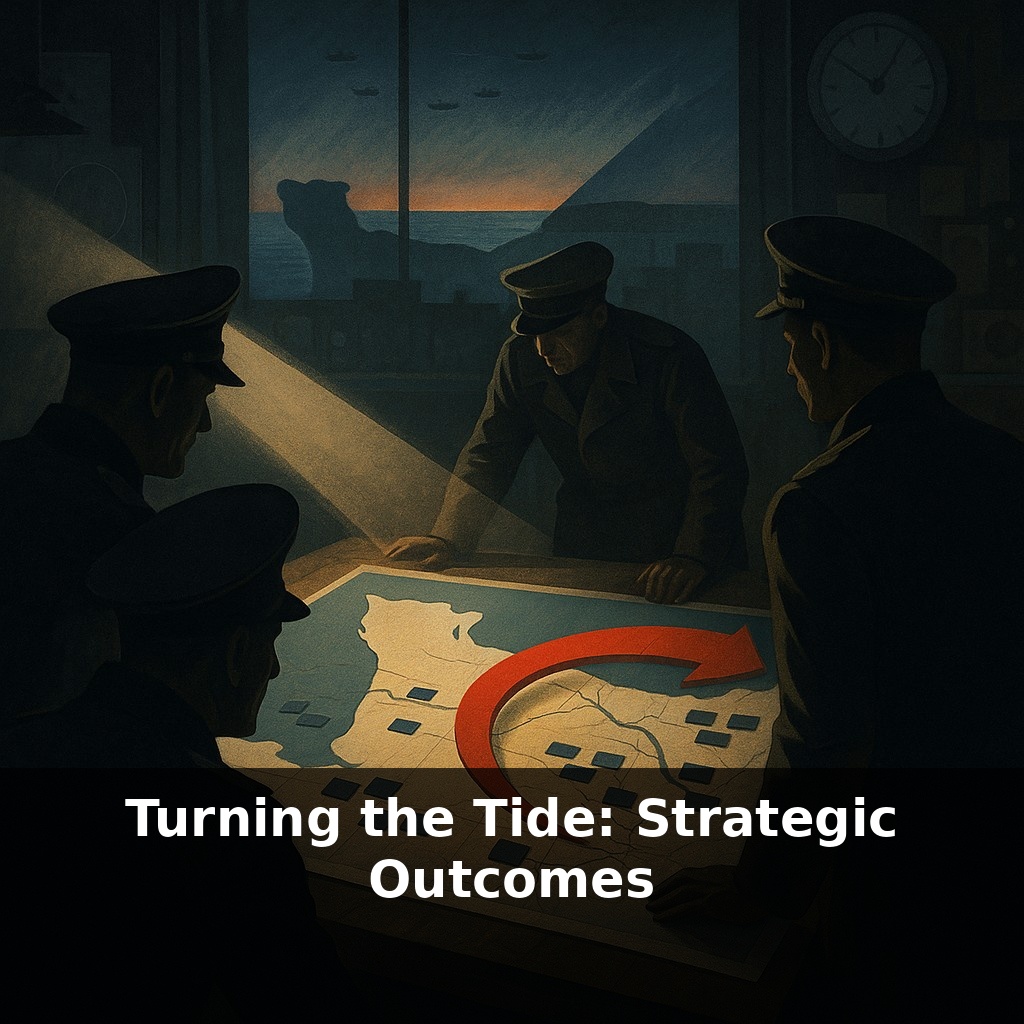
To go deeper, here are 3 next steps: (1) Download the *Turning the Tide: Strategic Outcomes* companion worksheet (or recreate it in Notion/Excel) and map one real initiative against the episode’s three lenses: desired outcome, current constraints, and measurable tide-turning indicators. (2) Block 45 minutes to read the “Objectives and Key Results” chapter from *Measure What Matters* by John Doerr, then rewrite one vague goal from your team into a sharp strategic outcome with 2–3 specific “tide” metrics. (3) Install and explore a strategy execution tool like Cascade or Perdoo, and set up a simple dashboard that visually tracks your top strategic outcome from the episode—so you can watch the “tide” move weekly instead of just hoping it will.