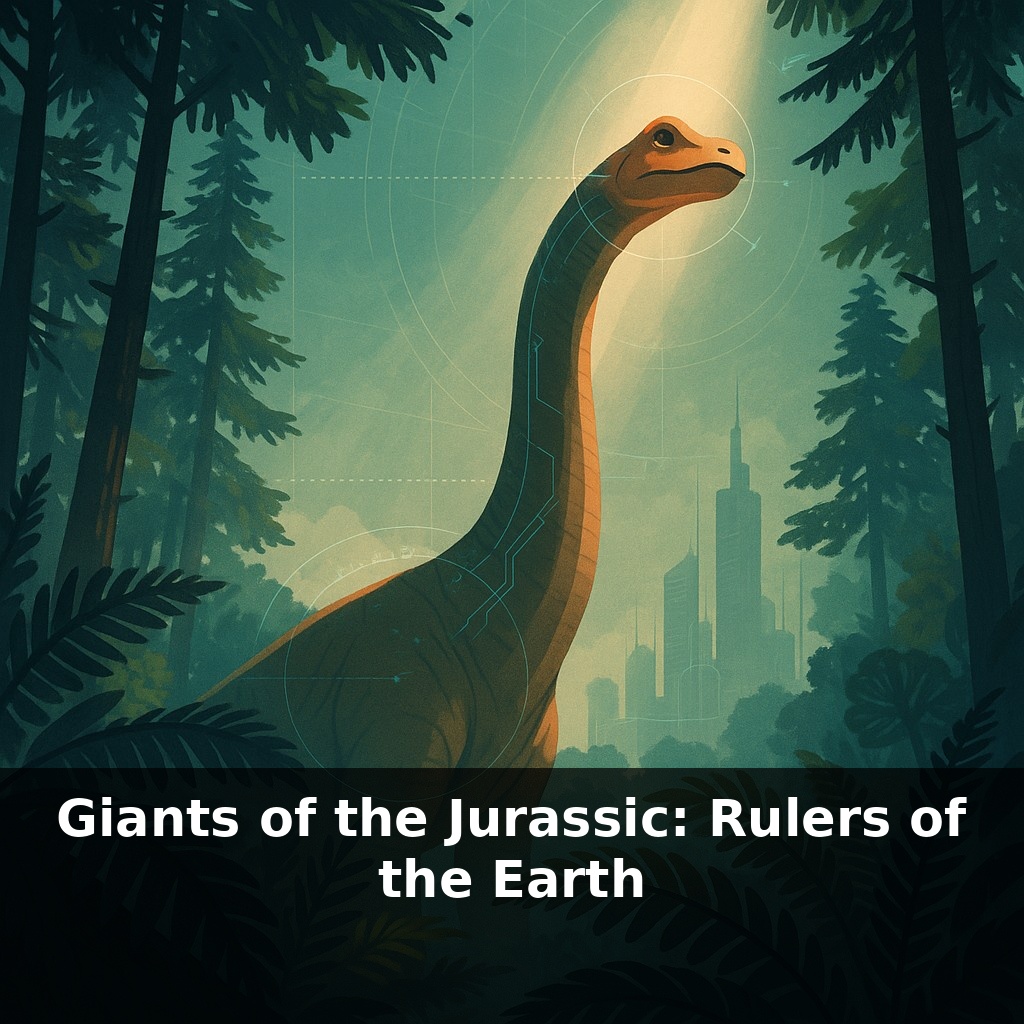
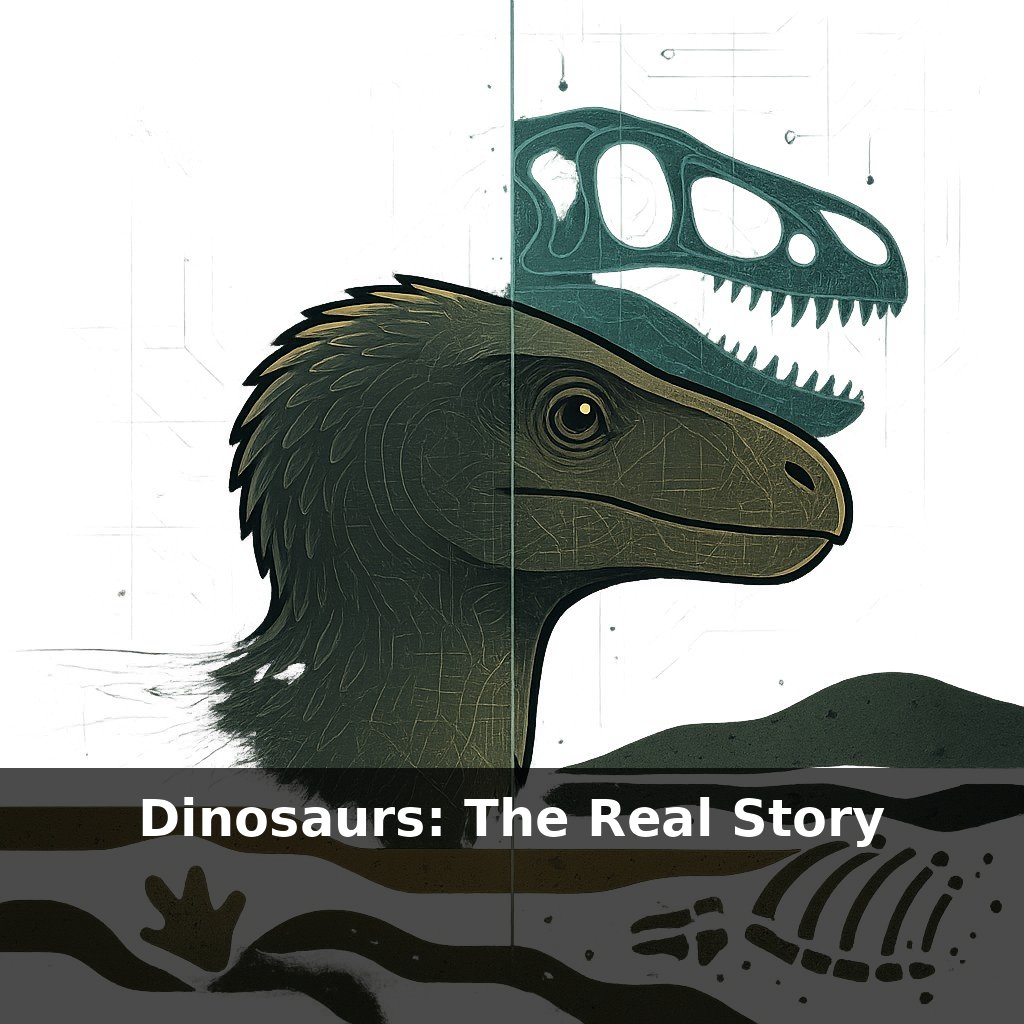
The sprawling canopies of ancient Jurassic forests were an engineer's daydream, teeming with colossal creatures that dwarfed today's tallest skyscrapers. In this episode, we step into those forests where these titans reshaped the landscape and survival was a dance of adaptation. In this episode, we step into forests where these giants ruled the ground, reshaped the plants, and forced predators to adapt.
By the middle Jurassic, those air‑boned giants weren’t just surviving in their ecosystems—they *were* the ecosystems’ main architects. Forests grew taller and denser, understories thinned, and whole plant lineups shifted under the constant, sweeping pressure of their feeding. Their herds likely moved like mobile construction crews, stripping foliage in some regions while leaving “green refuges” in others, creating a patchwork of habitats that smaller animals could exploit. At the same time, their own bodies hosted thriving micro‑worlds: insects in their skin folds, parasites in their blood, gut microbes churning through tons of leaves the way industrial composters work through city waste. To understand Jurassic Earth, you can’t just track where sauropods walked—you have to trace where their shadows fell, and how life evolved inside those shifting zones.
As these herds spread across Jurassic continents, the world itself was rearranging under them. Plate tectonics was tearing apart the supercontinent Pangaea, opening new seaways, shifting coastlines, and carving out long inland plains where sauropods could roam and breed in vast numbers. Monsoon‑like climates waxed and waned, turning some regions into seasonal buffets, others into drought traps that only the biggest, widest‑ranging plant‑eaters could endure. In this moving maze of rivers and rift valleys, size wasn’t just protection; it was a passport to entire landscapes smaller creatures could never reliably cross.
By the late Jurassic, these herds weren’t just big; they were running on some of the most extreme biological engineering vertebrates have ever evolved. To power a body weighing as much as a small truck fleet, sauropods grew fast, started early, and rarely stopped. Bone growth rings show that many hit bus‑sized dimensions in just a couple of decades—closer to the growth tempo of modern large birds than slow‑maturing mammals like elephants.
That speed came with a trade‑off: you can’t afford to waste time chewing. Sauropods mostly didn’t. Their peg‑ or spatula‑shaped teeth were built less for grinding than for clipping and raking foliage straight down the throat. The real processing happened deep inside, where vast stomachs and intestines—fermentation vats on a colossal scale—gave microbes days to wring energy from tough plant fibers. Replace the constant jaw work of a cow with a strategy closer to industrial batch‑processing.
Different lineages pushed that basic plan in contrasting directions. Brachiosaurus carried its neck high, front legs longer than hind, probably raiding treetops other herbivores couldn’t touch. Diplodocus kept its neck more horizontal, with a long, narrow snout ideal for sweeping low branches or leaf‑stripping like a rake along hedges. Supersaurus stretched body and tail into an ultra‑long, relatively lean frame, trading outright bulk for reach and maneuverability in packed herds.
Those tails, once pictured dragging uselessly, now look more like precision tools. Some diplodocids had whip‑like tips made of tiny vertebrae that might have cracked the air as sound weapons or visual signals. Farther forward, the massive base of the tail anchored muscles that helped balance the front‑loaded neck, stabilizing each step so a 30‑meter animal could still turn without toppling.
Living at that scale also meant facing specialized threats. Apex predators like Allosaurus and Torvosaurus rarely targeted healthy adults; instead, they likely harried juveniles at the edges of herds, or gnawed at carcasses when droughts claimed the weakest. The safest place on Jurassic Earth may have been the middle of a sauropod crowd, shielded by a wall of legs thicker than tree trunks and swinging tails that turned any approach into a calculated risk.
In a world dominated by these herds, “traffic management” became a survival skill. A single sauropod trackway can show parallel paths that barely intersect, as if invisible lanes were painted across floodplains. In places like the Morrison Formation, overlapping prints at different depths hint that lighter juveniles sometimes walked on firmer ground beside the deeper‑sinking adults, preserving family spacing the way cyclists and trucks sort themselves on a busy road. Bonebeds with many individuals of different ages suggest multi‑generation groups rather than lone wanderers.
The air‑soaked neck vertebrae weren’t just about reach; they opened space for powerful muscles and blood vessels without turning the neck into dead weight, helping these animals swing feeding zones across wide arcs. One medical‑style comparison: just as surgeons reroute blood flow around a damaged artery, evolution appears to have reorganized sauropod respiratory and circulatory pathways to keep oxygen and nutrients flowing efficiently through such unwieldy distances.
Fossil sites in under‑sampled regions hint that our roster of Jurassic giants is incomplete, more like a teaser trailer than the full feature. As neutron scanners reveal hidden details in old bones, models of growth, airflow and energy budgets will sharpen. Those numbers feed into climate simulations, testing how herds this massive stirred carbon and heat. Your challenge this week: whenever you see a skyscraper crane, try to picture a neck that size quietly reshaping a continent.
Even now, we’re only sketching rough outlines of these rulers of the Jurassic. Future quarries, CT scans, and biomechanical tests may reveal giants stranger than any museum mount—species that browsed in monsoon forests, strolled along polar shores, or pushed size limits in ways we haven’t modeled yet. The real story of how big life can get is still being written.
Try this experiment: Turn your living room (or a sidewalk chalk area) into a Jurassic “trackway” and test how different dinosaur body plans might have moved. Mark out the stride length of a sauropod, a theropod predator, and a small feathered dinosaur using the approximate scale mentioned in the episode (for example, a sauropod’s steps might be 1.5–2 meters apart, a raptor-sized dinosaur much shorter and quicker). Now walk, jog, or lunge along each track the way that animal’s posture and tail balance would require, timing yourself and noting which “dinosaur body” feels most stable, fast, or awkward. Compare your times and sensations, then tweak the stride length or body angle to see how small changes would have affected these Jurassic giants’ hunting, migrating, or escaping abilities.