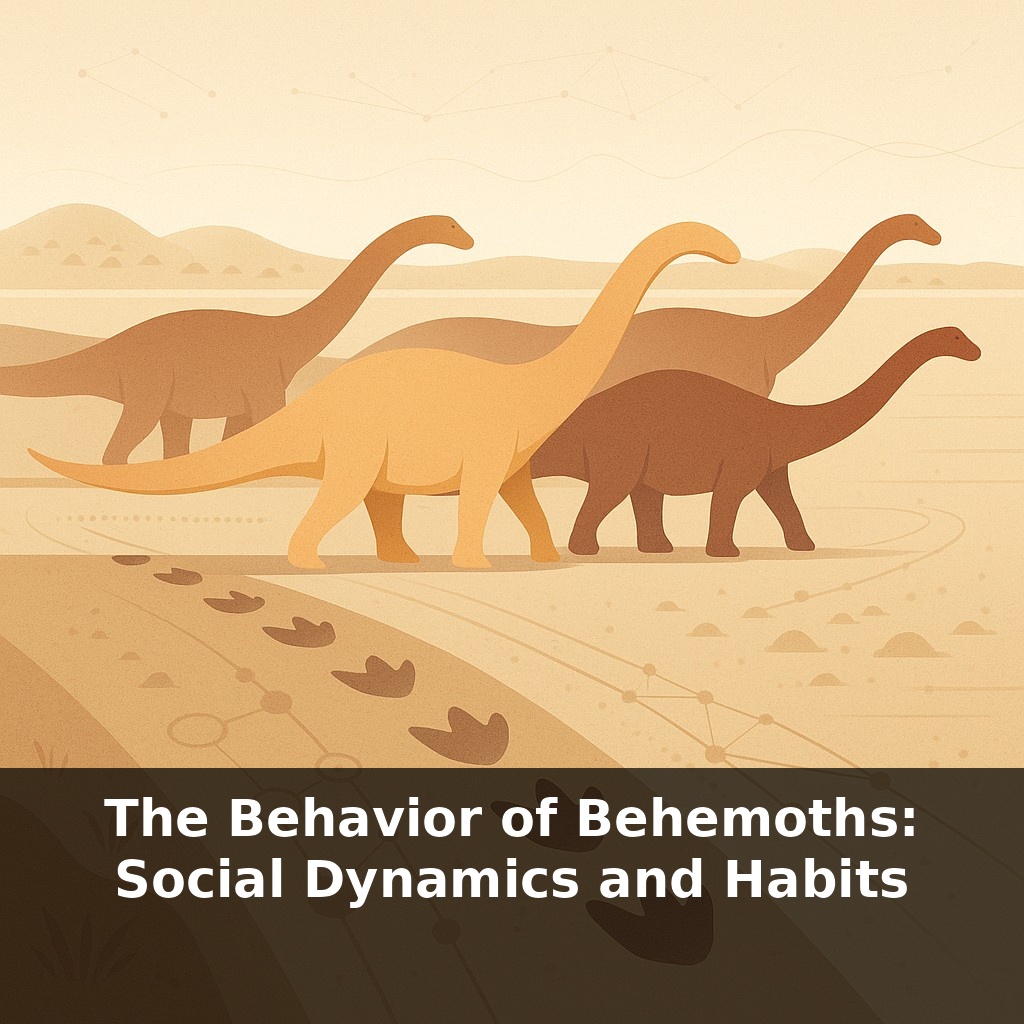
A hundred-ton giant thunders across ancient mud—not alone, but in step with a dozen neighbors. Another scene: miles of packed dinosaur nests, as dense as a busy seabird cliff. If dinosaurs were “dumb, lonely lizards,” why does the fossil record look more like rush hour?
Sixteen sauropods once walked in parallel for more than half a kilometer, their footprints in Bolivia’s ancient mud still holding the rhythm of a shared journey. Elsewhere in time and space, herds of hadrosaurs moved like living weather fronts across Cretaceous floodplains, their passage reshaping vegetation, soil, even local climates. These weren’t just crowds of big animals; they were mobile ecosystems, with rules, roles, and long-term routes.
In this episode, we’ll follow those routes. We’ll look at how isotope chemistry in teeth exposes seasonal migrations rivaling today’s caribou, how growth rings in bone hint at teenage “gangs” of predators, and how computer models reveal the math behind safety in numbers. Think of it as shifting the camera from isolated skeletons to something closer to a time‑lapse of traffic patterns across an ancient continent.
Those traffic patterns weren’t just about where dinosaurs went, but how they moved together and shared space. Trackways show tight bunching in places and neat spacing in others, hinting at shifting formations—like fans leaving a stadium versus runners in a race. Some bonebeds preserve multiple species side by side, suggesting mixed communities rather than single‑species crowds. And nesting grounds sometimes overlap with feeding areas, raising questions: did adults commute between “nursery” and “pasture,” or did whole groups slow down and reorganize their routines during breeding seasons?
Some of the clearest clues about dinosaur social lives come from who shared space with whom—and at what age. In several sites, juveniles vastly outnumber adults, hinting that growing animals sometimes peeled off into their own cohorts. A Jurassic bonebed in North America, for example, preserves mostly sub‑adult predatory dinosaurs with only a sprinkling of older individuals. That imbalance is hard to explain if every hunter was a lone wanderer. It fits better with temporary age‑graded groups, where animals with similar size, speed, and needs clustered together, while the biggest adults ranged more widely.
Herbivores show a different pattern. In some Cretaceous localities, you find a full spread of sizes, from hatchlings to giants, all jumbled in the same deposits. That mix suggests looser, multi‑generation herds, where youngsters stayed within sight of experienced adults. But even here, spacing matters: tight clusters of small tracks on the margins of larger ones imply that the youngest often kept to the edges, close but not underfoot.
Nesting grounds add another layer. At some sites, egg clutches are remarkably uniform in size and layout, as though multiple females followed a shared template. Others show more variation, with overlapping nest rims and trampled edges, implying repeated use of the same “real estate” over years. That kind of fidelity to place hints at social traditions—routes and breeding spots passed along not through culture as we know it, but through inherited instincts tuned by group success.
Predators had to navigate this social landscape too. Trackways of large carnivores occasionally run parallel for long stretches, suggesting at least short‑term coordination. Yet kill sites rarely show clear evidence of shared meals, raising the possibility that cooperation might have centered more on movement and territory defense than on dramatic pack attacks.
Across all these cases, the striking thing is how flexible the patterns look. Behavior seems to stretch from loose aggregations around water or nesting sites to tightly organized formations on the move—more like a spectrum of crowd behaviors than a single “dinosaur lifestyle.”
A Camarasaurus tooth that grew during a long, thirsty walk carries a different chemical “accent” from one formed during a lush season. Line those teeth up, and you don’t just get a migration route—you get something like a timetable of when different age groups moved, stalled, or split off. In some formations, big individuals seem to have shifted ranges earlier than small ones, hinting that size, not just species, shaped who led and who followed.
Predators show their own quirks. At certain sites, smaller carnivores cluster around the same horizons as mid‑sized plant‑eaters, while the biggest hunters appear in thinner, more widely spaced layers. That pattern suggests staggered use of the same landscapes, like overlapping shifts in a 24‑hour hospital: juveniles, agile and numerous, “work” the busy times; heavyweights dominate briefer, high‑impact intervals.
Even river channels record crowd behavior. Parallel trackways sometimes tighten, then fan out near ancient crossings, implying moments where groups compressed into tense bottlenecks, then relaxed once danger passed.
Stress bands in future bone scans could reveal not just when dinosaurs moved, but how groups coped with droughts, eruptions, or sudden freezes. Drone‑mapped trackways, stitched together by AI, may show trails splitting and rejoining like subway lines at rush hour—evidence of flexible leadership and fallback plans. Your challenge this week: observe a group of animals or people and consider the social dynamics and behaviors that might mirror those found in the ancient past.
In the end, these traces hint at more than strategy; they whisper personalities. Some individuals limped, others strode ahead; some nesting grounds show quirks in layout like signature brushstrokes on a canvas. As new sites surface and tools sharpen, the question shifts from “Did dinosaurs live in groups?” to “How many different ways could they?”
To dig deeper into dinosaur social dynamics, try these specific steps: (1) Watch 'Walking with Dinosaurs' and take notes on the social behaviors depicted, comparing them with insights from this episode. (2) Visit a local museum's dinosaur exhibit to focus on herd displays; discuss these social interactions with a fellow visitor. (3) Organize an online discussion around a specific paleontological research article focused on dinosaur herd behavior and compare it to modern social structures of birds or reptiles.