The same dog labeled “unadoptable” for biting was later a certified therapy dog—without a single shock collar or leash pop. In this episode, we’re stepping inside those turn-around stories to ask: what exactly changed, and how can you copy it with your own dog?
The label on the kennel card didn’t change first—the training did. Tiny, evidence-based tweaks in how humans responded to that dog started a chain reaction: calmer body language, fewer outbursts, more chances to succeed. In this episode, we’re zooming out from any one dramatic makeover to look at the pattern behind hundreds of them: what reward-centered methods actually look like in real shelters, homes, and service programs when the stakes are high.
Think of this as walking into a busy training “hospital” during rounds. We’re going to visit different “departments”: aggression, anxiety, and everyday manners. In each, we’ll track what was tried, what failed, and what finally worked—plus how those choices showed up in hard numbers like adoption rates and service-dog graduations, not just feel‑good anecdotes. Then we’ll translate those lessons into practical moves you can start testing today.
Some of the clearest lessons come from settings where there’s no room for wishful thinking: guide-dog schools tracking graduation rates, municipal shelters counting returns, families logging every incident on the calendar because they’re one bite away from giving up. Patterns pop out when you zoom across dozens of these stories. The dogs who improve fastest aren’t the “easy” ones; they’re the ones whose humans switch to clear markers, generous paychecks, and tiny, safe challenges. Progress ends up looking less like a Hollywood makeover and more like a playlist: repeated tracks, small remixes, and carefully timed volume changes.
In those “rounds” across shelters and service programs, three patterns show up again and again.
First, the teams who win don’t start by asking, “How do we stop this behavior?” They ask, “In what exact moment is this dog still okay?” That might be three feet from another dog, or five seconds alone, or one quiet knock instead of a doorbell. They treat that tiny window as gold and work there, not at the full, scary version of the problem. When progress stalls, they don’t argue with the dog; they shrink the challenge.
Second, the most effective trainers are obsessed with timing, not tools. They mark the instant a dog glances at a trigger and *doesn’t* explode, the half-step of loose leash *before* pulling, the first ear flick toward a recall cue. One guide-dog instructor described it this way: “We stopped waiting for perfect; we started paying for ‘heading in the right direction.’” That shift turns training sessions from corrections about the past into feedback about the present.
Third, the environment quietly does half the work. In successful aggression cases, doors are rearranged, baby gates appear, and visitors follow scripts. For anxious dogs, exit routes are clear, hiding spots are allowed, and predictable routines replace “testing” them. In service-dog programs, apprentices practice complex tasks in low-distraction rooms long before they ever set paw in a mall. The common thread: the world is edited so the dog can rehearse the right answer far more often than the wrong one.
Real data backs this up. Programs that tracked incidents noticed a simple ratio predicting outcomes: how many times per day the dog practiced the problem behavior versus the replacement behavior. When the replacement won by sheer repetition—twenty calm check-ins for every lunge, dozens of quiet crate entries for every frantic one—relapses dropped sharply.
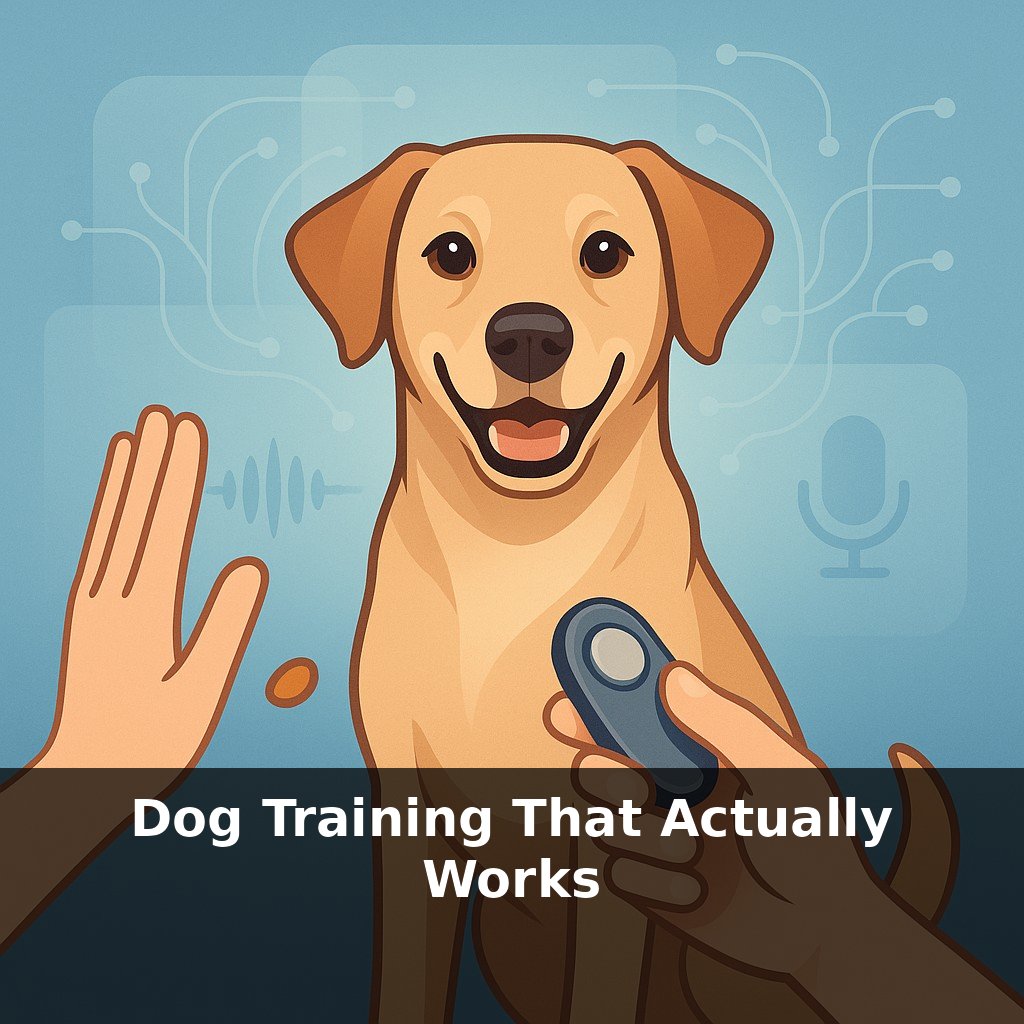
Training with a clicker is like using the camera’s shutter sound: the click ‘captures’ the exact moment worth keeping, making the subject repeat it willingly.
Your challenge this week: run your own “rounds” at home. Pick one nagging behavior and, for seven days, change only two things: shrink the difficulty to where your dog can succeed 8 times out of 10, and capture *every* tiny success with precise timing and pay. At the end, don’t just ask, “Is it fixed?” Ask, “Did I change the ratio of good rehearsals to bad?”
A useful way to think about the pattern behind these case studies is to zoom in on the “boring middle” rather than the dramatic before-and-after. In one shelter, staff started treating each kennel row like a series of “levels” in a video game. Barking at the first pass? Too hard—drop back a level. Quiet for three passes? Level up: add a slow walk, a brief pause, then a second handler. Instead of ranking dogs as “good” or “bad,” they ranked environments from easiest to hardest and matched each dog to the right level for that day.
Another program borrowed from music rehearsal. Reactive dogs were given “scales” instead of “concerts”: three-minute sessions where the only goal was to practice one tiny skill—like turning away from a distraction—over and over until it felt automatic. Only when that sounded “in tune” did trainers add the next “note,” such as a moving trigger or a new location.
Across dozens of stories, the big wins came from this quiet layering, not one heroic session.
Shelters and service programs are starting to log behavior data the way fitness apps track steps—day by day, trend by trend. As wearable collars begin streaming heart rate and movement into shared dashboards, trainers may soon “see” stress rising before a snap or shutdown. Laws phasing out harsher tools will likely push funding and insurance toward programs that can show calm graphs, not just cute before-and-after clips, turning welfare metrics into a kind of behavioral credit score.
In the end, these case stories aren’t miracles; they’re more like carefully written sheet music that any caring owner can learn to play. The notes are simple: clear criteria, generous pay, and an environment tuned for easy wins. Follow that score with curiosity, and your dog’s “success rate” stops being a number and starts feeling like a shared rhythm.
Before next week, ask yourself: 1) “Which single case study or success story from this episode feels closest to my situation, and what *exact* move did they make (a decision, experiment, or shift in strategy) that I could realistically try in my own work this week?” 2) “If I had to reverse‑engineer that person’s result, what 3 concrete steps did they likely take in order—outreach, testing, tracking metrics, asking for feedback, changing their offer—and which one can I start *today* before the end of the day?” 3) “What specific metric did their story highlight (conversion rate, client retention, revenue per customer, response time, etc.), and how can I quickly measure my own version of that number right now so I can compare where I am to where they ended up?”