What is Ikigai and Why It Matters
📝 Transcript
A small village in Okinawa has more people over 100 than many cities have in an entire neighborhood—and locals say the secret isn’t a superfood or a workout. It’s a quiet, daily reason to get out of bed. Today, we’re stepping right into that mystery of why purpose keeps us alive.
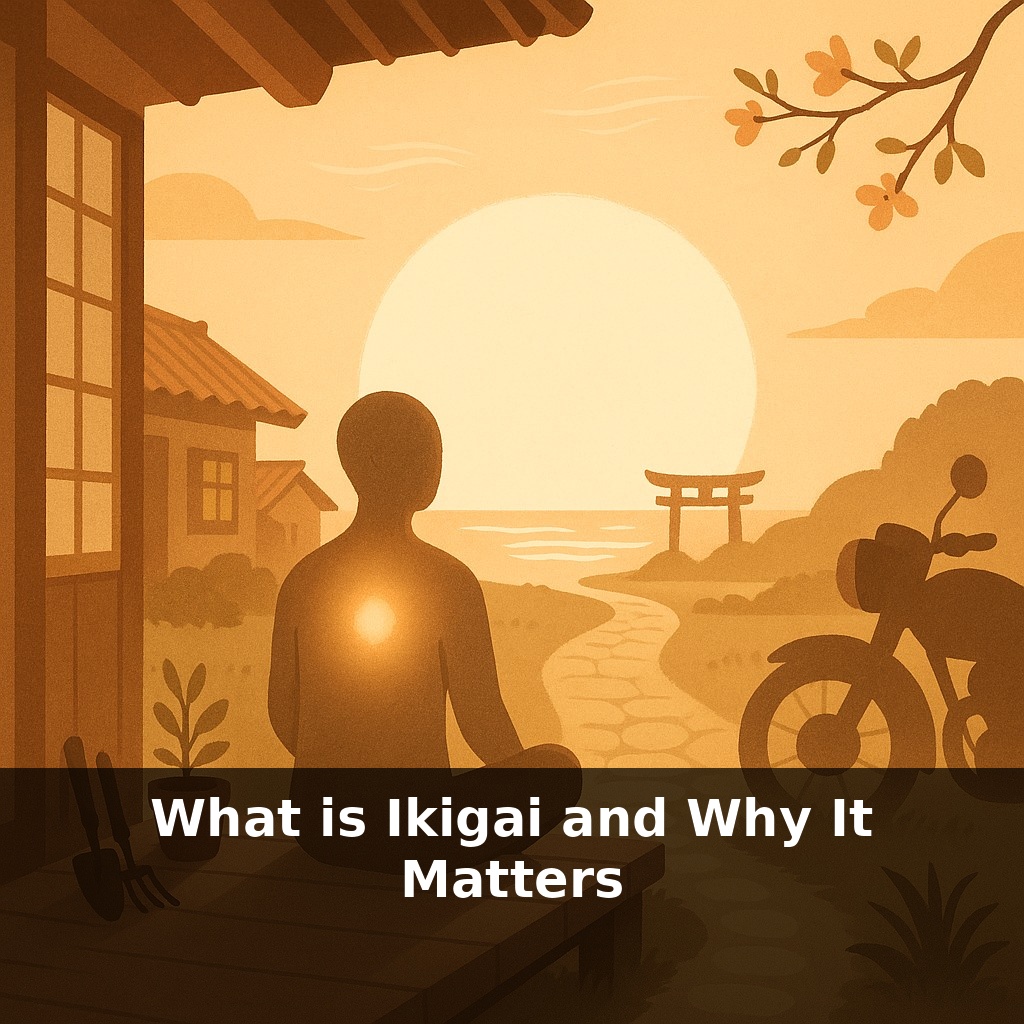
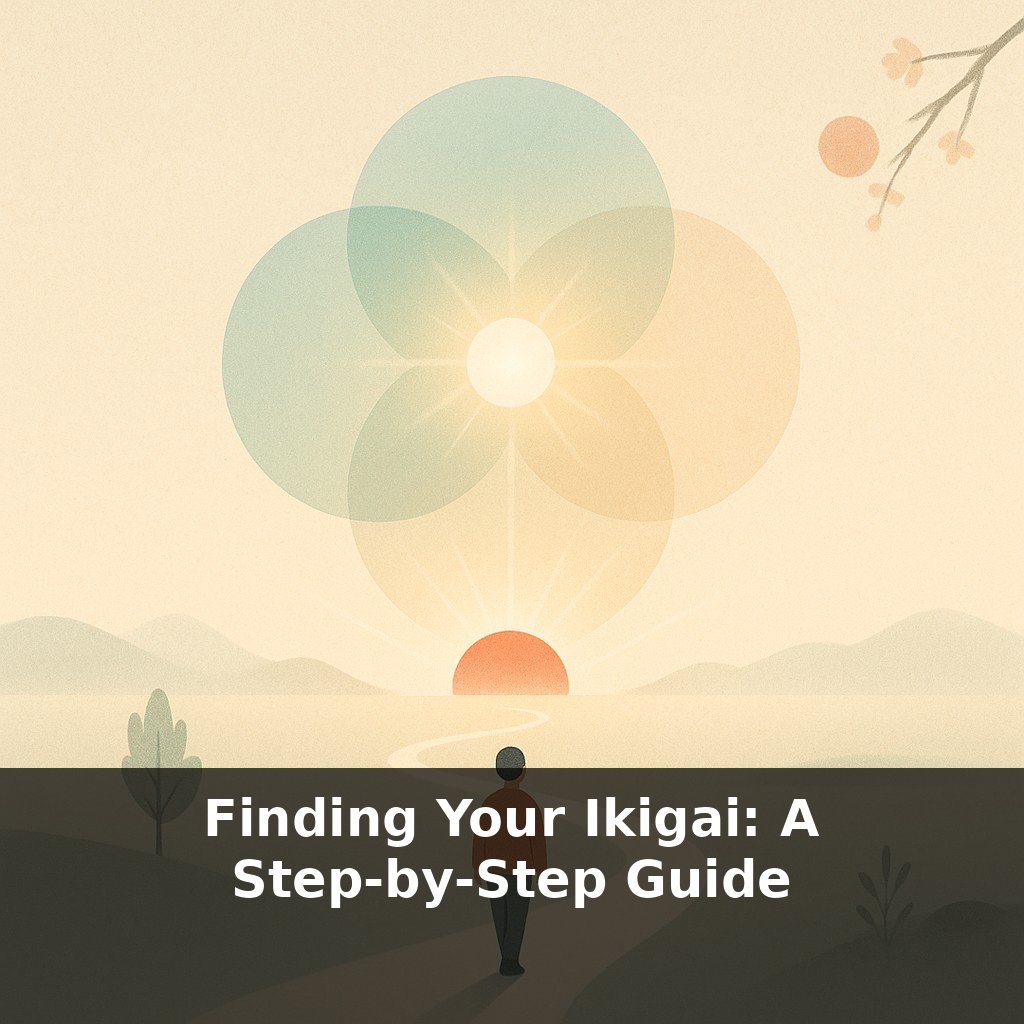
In Japan, there’s a quiet word for that “this is why I’m here” feeling: ikigai. Not a grand life mission carved in stone, but the small, steady current that runs under your days. For some, it’s restoring old motorcycles after work; for others, it’s tutoring one kid in math every Thursday night. It often hides in ordinary routines—like the barista who learns regulars’ orders by heart and treats each cup as a tiny act of care. Ikigai isn’t about having the “right” job or a perfectly balanced life; it’s about where four forces in your life happen to overlap. Researchers are finding that people who can name even a modest thread of ikigai tend to stay mentally sharper, more resilient, and physically healthier over time. In this episode, we’ll unpack what those four forces are, how they quietly shape your days now, and why clarifying them might add both depth and years to your life.
Researchers in Japan noticed something curious: people with even a modest sense of ikigai were less likely to develop depression, and more likely to recover faster after setbacks like illness or job loss. Not because their lives were easier, but because they had a thread to hold onto when things frayed. In Okinawa, that thread might be a morning tai‑sō group in the park. In your life, it could be as quiet as walking the dog at 6 a.m., or sending one thoughtful message a day. The twist is that ikigai often shows up where you’re not looking—between calendar events, in tiny choices you barely register.
So how do people actually live this out—not as a poster on a wall, but between breakfast and bedtime?
Let’s start with something subtle: scale. In most Western self‑help books, “finding your why” sounds like a once‑in‑a‑lifetime revelation. In Japan, ikigai is often much smaller and more fluid. A retiree in Sapporo might describe it as “my tomatoes this summer” or “teaching my grandson shogi.” It can shift with seasons of life rather than staying fixed like a job title. That flexibility seems to protect people when roles change—after a layoff, a move, or kids leaving home.
Culturally, it also stretches far beyond work. Surveys in Japan show people naming everything from weekend baseball teams to calligraphy circles to neighborhood safety patrols. None of these are glamorous, and many are unpaid, yet they’re described in the same breath as “this keeps me going.” This runs directly against the idea that you’ve failed if your paycheck doesn’t match your passion.
The research reflects that breadth. In a large study published in the Journal of Psychosomatic Research, adults who reported a clear sense of “something to live for” were less likely to die from cardiovascular disease over several years of follow‑up. The protective effect held even after controlling for smoking and income. What counted wasn’t whether that “something” was a startup, a side hustle, or a volunteer shift—it was that it felt personally meaningful and socially connected.
Tools from outside Japan have tried to simplify this with tidy diagrams and career‑focused quizzes. Those can be useful starting points, but scholars like Gordon Mathews and Akihiro Hasegawa warn they miss a key nuance: ikigai is often embedded in community. Think of a local cycling club where an older member unofficially mentors newcomers. He’s not “optimizing a personal brand”; he’s just showing up, week after week, in a role that quietly fits him and serves others.
There’s also a temporal element. Many Okinawans talk about daily and weekly rhythms—radio exercises at dawn, shared meals, tending family altars—rather than distant five‑year goals. Instead of chasing a single, perfect calling, they curate a pattern of small commitments that together feel right. For you, that might look less like overhauling your career and more like gently re‑weighting where your time, attention, and energy go, so they lean closer to what matters.
A practical way to see this in action is to zoom in on ordinary days. Think of a software engineer who quietly organizes a weekly “debug lunch” at work. The code reviews are routine, but what really lights her up is watching a junior teammate finally crack a concept. Her calendar says “lunch meeting”; her experience is “this part of the week feels right.” Or consider a bus driver who has turned his route into a moving ritual: same jokes at the same stop, saving a front seat for the elderly woman who rides every afternoon. The job description didn’t change, but the way he inhabits it did.
Sometimes it appears outside work entirely. A new parent, drained by diapers and deadlines, starts a Sunday pick‑up soccer game at the park. No uniforms, no rankings—just a loose group that somehow keeps growing. He’s not thinking about fulfillment frameworks; he just notices he sleeps better on the nights after they play.
Ikigai often first shows up as a small, recurring “I’m glad I made time for this” moment you almost skip past—until you start paying attention.
Soon, “purpose design” may sit alongside financial planning and fitness coaching. Cities might test libraries that double as matchmakers between local problems and residents’ quirky talents, the way dating apps pair people. In schools, students could graduate with a “meaning portfolio”: projects, collaborations, and values they’ve actually stress‑tested. As AI offloads routine work, the scarce skills may be reflection, discernment, and choosing work that feels worth your limited days.
Instead of hunting for a perfect label, treat this as ongoing fieldwork in your own life. Notice which tasks quietly absorb you, which people you feel lighter around, which problems you’re weirdly willing to wrestle with. Your challenge this week: keep a “tiny sparks” log and capture three such moments a day before they fade.
From this course
Finding Your Ikigai: A Step-by-Step Guide
7 episodesUnlock all episodes
Full access to 7 episodes and everything on OwlUp.
Subscribe — $1.99/monthLess than a coffee ☕ · Cancel anytime