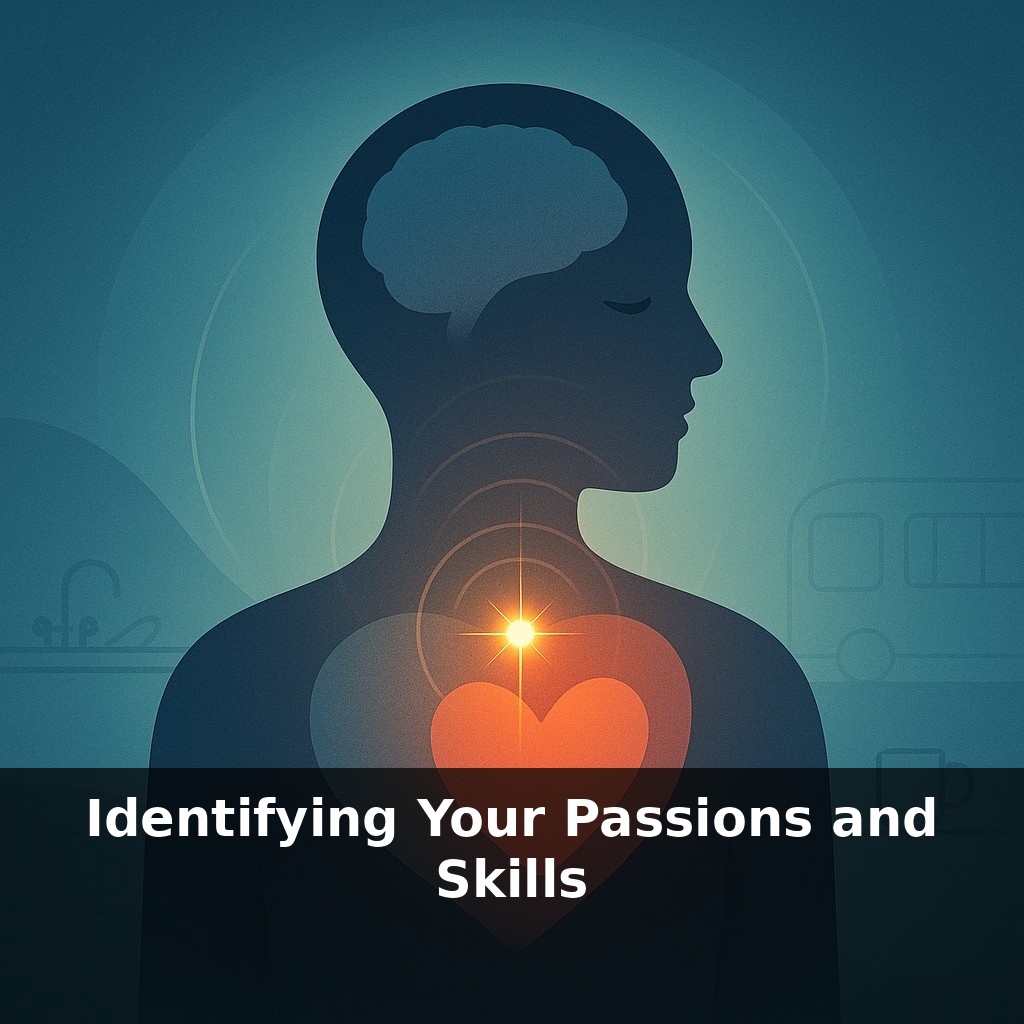
Only about one in five people feels truly switched on at work. Yet most of us still wait for passion to “strike.” You’re on your commute, or washing dishes, doing something automatic—when a tiny thought pops up: “I wish I could spend more time on… that.” That spark is where we’ll start.
Most people try to “figure out” their passion by thinking harder. They make lists, take tests, watch motivational videos—and still feel foggy. That’s because your real signals don’t live on paper; they show up in your body and your calendar. Notice when time distorts: the task you meant to do for 10 minutes that quietly became an hour. Or the opposite: the 10‑minute duty that feels like wading through wet concrete.
There’s a second clue hiding in plain sight: recovery. After a draining day, what do you *choose* to do when no one is watching and there’s no prize at stake? Do you tinker with a side project, fall into a research rabbit hole, message people about an idea, or reorganize things until they “work better”? These seemingly small choices are like browser tabs your mind keeps reopening. Instead of hunting for a single grand passion, we’ll zoom in on those tiny but repeatable pulls—and then connect them to skills you can actually grow.
Those pulls aren’t random quirks; they’re data. Underneath them sit patterns of curiosity and competence that often look ordinary from the inside. Maybe you’re the friend who quietly optimizes everyone’s travel plans, or the one who turns group chats into mini support groups. These don’t show up on a résumé, but they’re early blueprints of what you’re wired to enjoy and get good at. Modern research suggests passion tends to grow where your interest, effort, and results keep reinforcing each other—like a feedback loop you didn’t realize you’d coded for yourself. Our job now is to surface that hidden “source code” on purpose.
Most people hunt for “passion” at the wrong altitude: too high and too abstract. “I like creativity.” “I want to help people.” Useful sentiments, but they’re like job titles with no job description. To make them practical, you need to zoom in until you can see behaviors.
Start by separating *what* you’re doing from *how* you’re doing it and *why* it feels good.
- **The what** is the surface activity: writing, coding, teaching, designing, analyzing, repairing. - **The how** is the mode you default to: solo deep work, live collaboration, improvising, systematizing, competing, supporting. - **The why** is the payoff your brain secretly cares about: solving a puzzle, earning respect, bringing order, expressing identity, empowering others, chasing mastery.
Two people can both “like music,” but one lights up arranging complex harmonies alone at 2 a.m., while the other comes alive hyping a crowd as a DJ. Same domain, entirely different engines.
To get specific, notice *micro‑moments* inside activities you already do:
- In a group project, did you naturally grab the planning doc, the slide design, the data, or the group chat? - When you research a purchase, are you comparing specs, reading user stories, watching tutorials, or building spreadsheets? - During conversations, do you steer toward ideas, emotions, practical tips, or future plans?
Each preference hints at underlying skills: pattern-spotting, storytelling, mentoring, organizing, troubleshooting, persuading, tinkering. You don’t need to label them perfectly yet; you just need to see what keeps repeating across very different contexts.
This is also where the gap between *interest* and *fantasy* becomes visible. You might love the *idea* of being a founder, writer, or developer—but what happens on the days when it’s mostly debugging, editing, or outreach? If you still feel oddly engaged by the unglamorous parts—refining one sentence 12 times, chasing down a tiny bug, rephrasing an email until it lands—that’s a strong sign you’re close to a real passion/skill zone, not just a highlight reel.
Think of roles you’ve played informally: the explainer, the fixer, the organizer, the challenger, the encourager, the curator, the strategist. These informal “jobs” are often more honest than your official titles. They’re where your natural dispositions and emerging skills quietly shake hands.
Your goal isn’t to name a dream career yet. It’s to map raw materials: the types of problems you don’t mind wrestling, the environments that bring out your best, and the small actions that feel weirdly satisfying even when they’re hard. Those are your most reliable starting points for deliberate practice later—where effort compounds instead of just draining you.
Notice how your “how” and “why” often leak out in tiny, almost embarrassing preferences. Maybe you secretly love rewriting messy meeting notes into a clean outline. Someone else gets a kick out of jumping into a chaotic group chat and turning it into clear next steps. Another person keeps tweaking a playlist until the transitions feel “just right.” On the surface these look like quirks; underneath, they hint at design sense, facilitation skill, or an instinct for structure.
Think about moments you *overdo* things no one asked for. You build a color‑coded spreadsheet for fun, turn a quick message into a mini‑essay with examples, or turn up early to set up the room. That extra, unrequired effort is a huge clue: your brain decided this was worth more energy than the situation demanded.
In team settings, look at what you grab by default when there’s freedom: the whiteboard pen, the calendar, the prototype, the budget, the camera. Each choice quietly reveals both a comfort zone and a potential edge. You’re not just “helping out”; you’re rehearsing roles you might want to grow into.
In a world of shifting roles and careers, treating your passions and skills as “fixed” is risky. Think of them more like a personal software stack that gets updated as you try new projects, tools, and collaborators. As industries blend—health + data, art + tech, climate + finance—the people who keep experimenting at the edges of their interests will spot unusual combinations first and create work that doesn’t even have a standard job title yet.
Treat this week as version 1.0 of your “interest operating system,” not a final verdict. You’re just stress‑testing features: which tasks feel like leveling up in a game, which feel like lag. Over time, that log becomes a quiet compass for choices—what projects to say yes to, which skills to double‑down on, and which paths to gently retire.
Here’s your challenge this week: Block off 45 minutes on two different days to run a “passion lab” using the episode’s three filters: curiosity, energy, and usefulness. First session, set a timer for 15 minutes each and: (1) do one activity that reliably absorbs you (like sketching app ideas, tinkering with code, or planning a community event), (2) one that usually drains you (like cold outreach, detailed spreadsheets, or solo research), and (3) one that feels meaningful but slightly uncomfortable (like sharing your work online or asking for feedback). Second session, repeat with a different trio of activities, then score each activity from 1–5 for curiosity (how interested you felt), energy (how alive you felt), and usefulness (how helpful it could be to others), and circle the top two activities as your “prototype passions” to lean into next week.