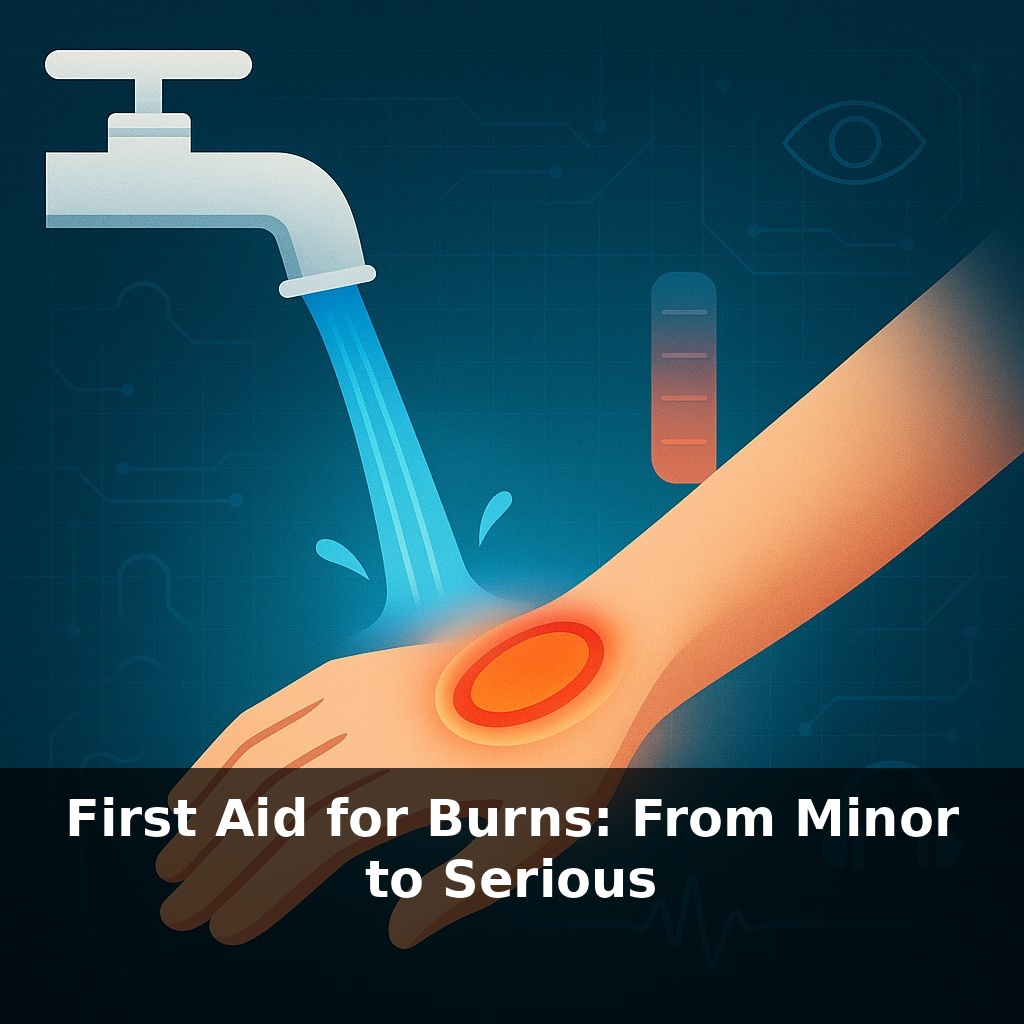
A splash of cool tap water, used fast enough, can literally decide how deep a burn goes—yet most people reach for ice or butter instead. A child grabs a hot pan handle; a friend spills coffee down their arm. In those first frantic seconds, what you do next can rewrite the injury.
Not all burns are created equal—and your eyes can be surprisingly good diagnostic tools if you know what to look for. The glossy white patch that doesn’t hurt, the mottled red-and-blistered area that throbs, the sunburn-red skin that stings when you move: each is your body “speaking” a different level of damage. Think of these clues the way a musician reads sheet music—patterns that tell you how serious the situation is and what tempo your response needs.
We’ll move from the small stuff—like touching a hot baking tray—to large, limb‑spanning injuries where seconds and surface area really matter. You’ll learn simple ways to estimate how much of the body is involved without fumbling for charts, when home care is enough, and when that same-looking burn crosses the line into “drop everything and call for help” territory.
Now we’ll zoom in on what *actually* happens in those first seconds after skin meets heat. Instead of thinking only in terms of “small” or “big,” start noticing *where* and *what type* of burn you’re dealing with. A coin-sized burn on the palm can be more disabling than a larger patch on the back; a scald across a child’s chest is a different beast than a brief touch on the forearm. Location, cause, and the person’s age quietly change the stakes. Hands, face, joints, and the groin carry extra risk because damage there can steal movement, expression, or basic bodily functions long after the sting fades.
main_explanation: Here’s where details start to matter: *how* you respond changes with both the depth and the “person behind the skin.”
Start with time. The closer you are to the moment of contact, the more difference you can make. Those first minutes aren’t just about comfort; they’re about controlling how far heat spreads into tissue. Past that early window, your role shifts from damage‑limiting to complication‑prevention: protecting the area, watching for infection, and spotting early signs that the body is struggling, not just the skin.
Next, think cause. A brief touch from a hot tray, a slow soak in hot bathwater, and a flash flame all leave different signatures. Scalds often spread in odd, splashy patterns and can “wrap” around limbs or the torso. Flame burns may singe hair and eyebrows—small clues that should instantly raise your suspicion for airway involvement, even if breathing still looks normal. Contact burns from metal (like motorcycle exhausts) can be deceptively neat and deep, especially over bony areas.
Age quietly tilts the scales. Thin, fragile skin in older adults and very young children means the same temperature can do more harm in less time. Watch for subtle behavior changes: a toddler who suddenly goes quiet, an older person who seems unusually confused or drowsy after a larger burn. Those may be early signs of shock or overwhelming pain, not just “upset.”
Clothing and jewelry become your early “environment management.” Synthetic fabrics can melt into skin; removing loose material *around* the area (not pulling off anything stuck) prevents further damage. Rings, watches, and tight sleeves can turn into tourniquets once swelling kicks in. Getting them off quickly can preserve circulation to fingers and hands later.
Finally, look beyond the obvious wound. Someone with a wide, patchy red scald across the chest may also lose fluid into damaged tissue, becoming light‑headed or nauseated. Someone with an electrical mark on the skin might have a normal‑looking burn but a dangerous heart rhythm underneath. When the story and the skin don’t seem to match, trust the story—and escalate your response.
A small change in how you move in the kitchen can quietly upgrade your “burn defense.” Think like a coach reviewing game footage: where are the repeat mistakes? The same mug in the microwave every morning, the same curling iron cord snaking across the sink, the same pan handle jutting over the stove’s edge. Those “near miss” patterns often predict the burn that *does* happen.
Now zoom in on what you’d actually *do* if it happened. You’re making pasta, draining the pot, steam billows up and hits your wrist. Instead of freezing, you already know where the nearest cool running water is, you’ve cleared that sink of dishes, and there’s a clean plastic bag or fresh cling film in an easy drawer—not buried behind three rolls of foil.
Think of professional athletes taping ankles: they don’t wait for an injury; they set the stage. A basic first‑aid kit with non‑stick dressings near the kitchen, a watch you can slip off quickly, and a mental “map” of exit routes if clothing catches fire all turn theory into automatic habits.
Smart first aid is about more than one emergency; it’s about upgrading the whole system around you. As bio‑printed grafts, infrared scanners and tele‑consults move from lab to street, the “golden minutes” after heat contact may be guided by your phone instead of your memory. Think of it like adding new instruments to an orchestra: the basic melody—cooling, covering, monitoring—stays the same, but more precise tools help each part come in at exactly the right moment.
Your role doesn’t end once the sting fades. Think ahead: could your workplace keep burn gel pads near machinery, or your kids’ school drill “stop, drop, roll” alongside fire alarms? Tiny upgrades like swapping loose stovetop towels for hooks or labeling the hottest taps turn isolated accidents into redesigned systems that quietly protect everyone.
Here’s your challenge this week: Build a 10‑minute “burn response drill” at home. Today, practice the exact 3-step routine for a minor burn on your own hand/arm (no real burn needed): move from the “heat source” (stove, oven rack, curling iron), run that area under cool running water for a full 20 minutes by the clock, then “apply” (or at least set out) a simple non-stick dressing or clean plastic wrap and check your watch to note when you’d reassess. Before the week ends, stock one visible spot in your kitchen or bathroom with real burn-care items: cling film or non-fluffy sterile gauze, a tube of plain water-based burn gel or aloe (no butter, oil, or toothpaste), and pain relief you’d actually use. Finally, teach one person you live with the two red-flag rules from the episode—when to call emergency services immediately (face, hands, genitals, large/deep burns, or electrical/chemical burns) and when to head to urgent care.