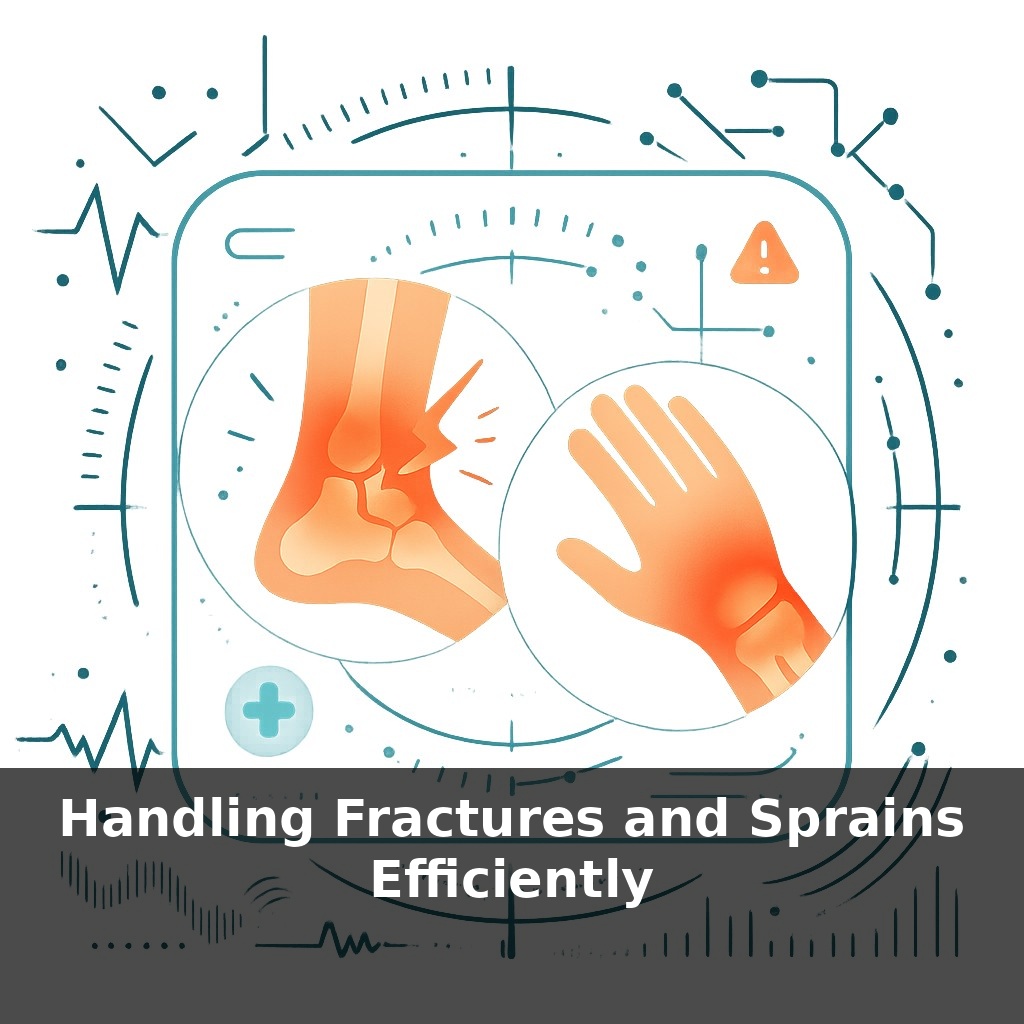
A twisted ankle on a trail run. A cracked wrist from slipping on wet tiles. Same story, different body part: most of the long-term damage doesn’t happen at the moment of impact—it happens in the confused minutes after. This episode asks: how much harm comes from help done wrong?
Statistically, about one in ten people waiting in a crowded emergency room is there because something in their body is now in pieces instead of one solid structure. Another is sitting there with what “only” looks like a bad twist—but the ankle, knee or wrist that feels minor today can quietly turn into years of weakness and repeat injuries. The difference between the two isn’t always the force of the accident; it’s often whether someone nearby knew how to keep that joint or bone quiet, supported and cool in those first few minutes. In this episode, we’ll shift from fear of “making it worse” to a practical skillset: noticing the clues that point toward fracture versus sprain, choosing when not to move someone, using whatever’s around you to immobilise safely, and timing rest, compression and ice so they actually help instead of hurt.
In real life, you almost never get textbook injuries. You get a soccer teammate insisting “it’s just a tweak” while their ankle balloons, or a colleague trying to stand after a fall because they’re embarrassed. The challenge isn’t spotting a dramatic, obviously broken limb; it’s deciding what to do with all the “maybe” injuries where walking, driving or even shifting into a chair might quietly turn a small problem into a big one. Here, we’ll focus on quick visual checks, pain clues and simple touch tests that help you decide: move, support or stop everything and call for backup.
Start with a calm reset: one deep breath for you, one for them. Then think in three layers—pain, shape, and function.
Pain first. Sharp, pinpoint pain directly over bone that worsens with any load is a red flag, especially if it came with a distinct crack, pop or immediate refusal to use the limb. A duller, more spread-out ache around a joint after a twist leans more toward soft-tissue damage. Either way, you’re not trying to diagnose on the spot; you’re deciding how little you can get away with moving them before a proper assessment.
Next, shape. Without poking or prodding, scan from the uninjured side to the injured and compare. New angulation, a step-off, or a limb that suddenly looks shorter or rotated inward or outward is trouble. So is skin being pulled tight and shiny over a swelling that’s growing in front of your eyes. Those are “don’t straighten, don’t test it” signs—stabilise in place and plan around it.
Function is where many helpers overdo it. You don’t need to see if they can hop, grip, or “walk it off.” A single, careful question—“Can you move your toes/fingers a little?”—is usually enough. You’re listening for two things: movement at all, and whether it sends pain shooting elsewhere. Loss of movement, or pain that zings along the limb or into the hand or foot, raises your concern for nerve involvement even before any obvious numbness shows up.
Now zoom in to circulation and nerves. Check colour, warmth and sensation beyond the injury: does the hand or foot look unusually pale, blue, or mottled? Is it cold compared with the other side? Can they feel a light touch on each toe or fingertip? Can they wiggle everything past the painful area? Changes here don’t just mean “this is serious”; they determine how urgently you need to get them seen and whether gentle repositioning is worth the risk to restore blood flow.
When you do support the limb, think like a sports physio taping an athlete mid-game: your job is to create a firm, comfortable bridge around the injury using what you have—rolled clothes, a backpack, a magazine—while keeping joints above and below from flopping. Every adjustment should be slow, announced, and stopped if pain spikes or sensation changes.
Your challenge this week: pick one everyday place you spend time—a car, office, gym, or living room—and quietly “audit” it for how you’d stabilise a sudden limb injury there. Identify at least three objects you could repurpose on the spot: something stiff, something soft for padding, and something to secure it all. Don’t just name them; actually handle them and test how you’d position them around an imaginary injured arm or ankle. By the end of the week, you’ll have rehearsed several real-world improvisations, so if someone does go down, your brain isn’t starting from zero.
Think of two friends on the same weekend hike. One rolls her ankle, laughs it off, and limps the last kilometre. The other stops right where she is, lets her teammates support the leg, and has someone grab a cold drink can and an elastic bandage from the first-aid kit. Months later, the first is still taping her “weak” ankle before every game; the second barely remembers which foot it was. Same trail, same twist—completely different future.
Or take a five-a-side football match where a defender takes a hard tackle. If teammates hurry him upright and drag him to the sideline, they might be trading ten extra minutes of play for weeks of extra rehab. But if they kneel, steady the leg, and build a quick splint from shin guards and spare jerseys, the physio who meets them later has a much cleaner starting point.
In both cases, the “win” isn’t heroics; it’s choosing stillness over testing, structure over improvising on the body itself, and smart cooling over bravado.
A broken limb might soon text your doctor before you reach the clinic. 3D‑printed casts with tiny sensors are being tested to track swelling and micro‑movement, quietly flagging problems while you go about your day. Augmented‑reality first‑aid guides could turn any bystander into a competent helper, like having a calm coach whispering in your ear. If schools and community centres routinely taught these skills, quick, confident care could become as normal as knowing how to use a seatbelt.
Building on the understanding of handling injuries, knowing the basics is only half the skill; the rest is noticing when your brain wants to rush. Treat each future trip, game, or commute as a quiet drill: watch where people stand, how they fall, who freezes and who helps. The more you rehearse in your head, the more your real‑world response can feel like muscle memory instead of panic.
To go deeper, here are 3 next steps: 1) Print and fill out the Red Cross “First Aid for Fractures and Sprains” PDF and tape it inside your medicine cabinet, then stock it with an elastic compression wrap (ACE bandage), instant cold packs, and a SAM splint so you’re ready to RICE and immobilize properly at home. 2) Watch the Mayo Clinic’s short YouTube series on ankle and wrist sprains, then practice applying a figure‑8 ankle wrap on yourself or a family member while you watch, so you can do it quickly and correctly in a real injury. 3) Download the free “First Aid: American Red Cross” app, save the nearest urgent care/ED locations in the app, and use its built‑in decision guides to walk through when to suspect a fracture vs. a mild sprain and when to seek X‑rays.