Your heartbeat can predict how well your next conversation goes. In one moment, you’re nodding in a meeting; in the next, your thoughts are racing, words jammed in your throat. Same room, same people—totally different inner world. What flips that switch inside you?
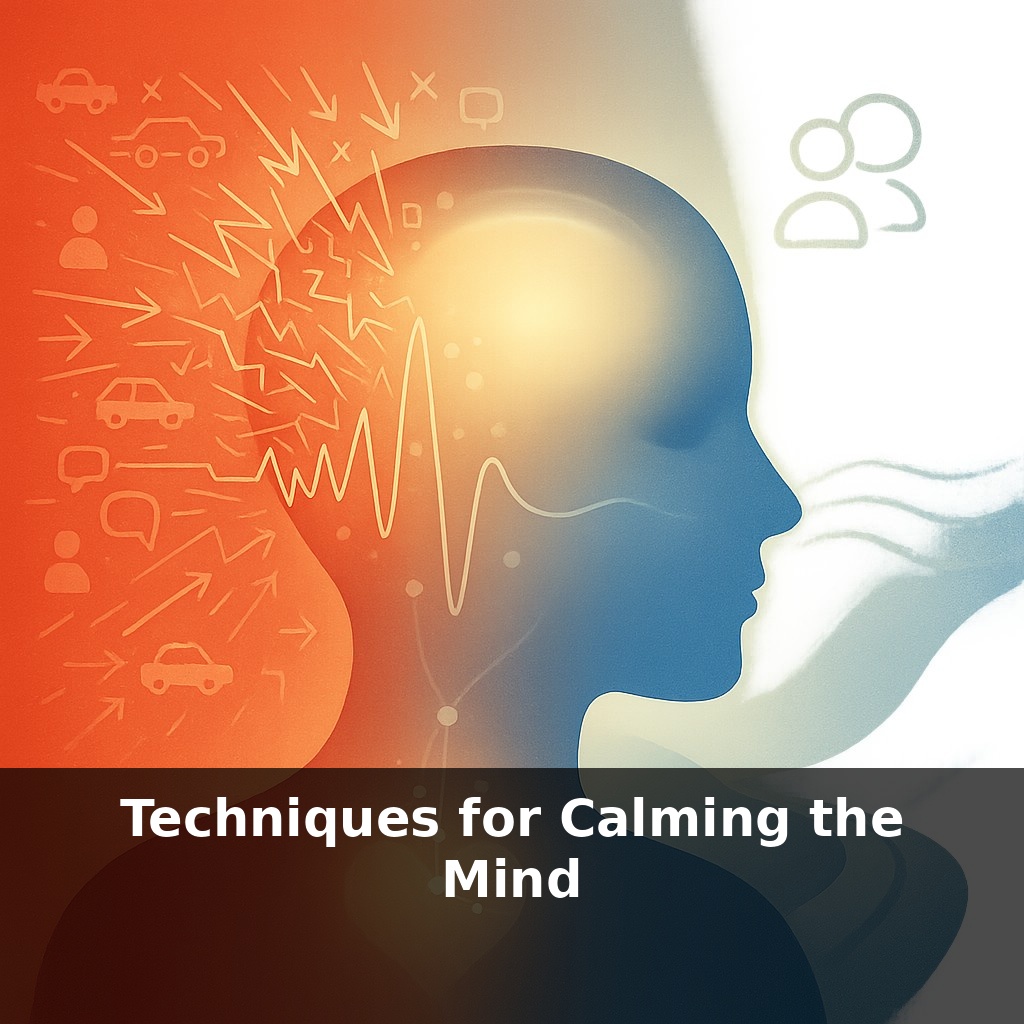
Some days, your mind feels like a quiet side street; other days, it’s a rush-hour intersection with thoughts honking from every direction. Same job, same friends, same routine—yet your reactions swing from calm to “get me out of here.” That shift isn’t random; it’s your nervous system running different playbooks, often without your permission.
In this episode, we’ll zoom in on one crucial skill: learning to nudge that system toward calm fast enough that it actually changes how a conversation unfolds, not just how you feel afterward. Instead of relying on vague advice like “just relax” or “be confident,” we’ll look at concrete switches you can flip—your breath, your muscles, your attention, your self-talk—and how tiny adjustments in these areas can turn a tense interaction into one where you think clearly, listen better, and actually feel present with people.
Think of most social stress like a software bug that only appears under load. Alone, your code runs fine; add three coworkers, a deadline, and a tricky question, and suddenly everything lags. That’s the real test environment: not the quiet morning when you’re journaling, but the hallway chat when your name gets called unexpectedly. In those high-pressure “live environments,” tiny habits matter more than big insights. This is where science helps: specific, trainable skills can shrink the delay between “I’m freaking out” and “I can still handle this,” so you stay online instead of mentally crashing mid-conversation.
Think about the last time you felt oddly “off” with people for no obvious reason—same commute, same meetings, but your timing was weird, jokes landed flat, or you blanked right as you wanted to speak. From the outside, it looked like a normal Tuesday. Inside, everything was slightly misaligned.
What’s happening in those moments isn’t just “I’m shy” or “I’m bad at small talk.” It’s that your brain has quietly switched into a protective mode that changes how you process every social cue. Faces look a bit more judgmental, pauses feel more dangerous, and neutral comments sound vaguely critical. The situation didn’t change; your threat filter did.
Here’s the useful part: that filter isn’t all-or-nothing. It has dials. And those dials are surprisingly responsive to very small, very specific actions you take in the span of 10–60 seconds. You don’t need to overhaul your personality; you need a short sequence you can run when you feel that subtle “something’s off” signal.
Think of it as a three-layer protocol you can deploy in real time:
Layer 1: Body signals. Before trying to “think positive,” you run a quick scan: jaw, shoulders, hands, stomach. You’re not fixing anything yet—just noticing where your body is quietly acting like there’s a fire alarm. This alone often reveals, “Oh, I’m half-bracing as if I’m about to be called out.”
Layer 2: Micro-resets. Instead of a big dramatic ritual, you use tiny, socially invisible moves: loosening your grip on a pen, lowering your shoulders on an exhale, shifting both feet flat on the floor. Each one is a small vote for “I’m not in danger right now,” which slightly updates that threat filter.
Layer 3: Social focus. Once your internal noise drops a notch, you redirect outward in a controlled way: notice one concrete detail about the person’s face, their tone, or the exact words they used. You’re training your attention to rejoin the actual conversation instead of the disaster movie in your head.
This isn’t about becoming perfectly serene. It’s about shaving off just enough tension that your timing, memory, and sense of humor can come back online while you’re still in the interaction, not hours later in the shower.
You can try this in tiny, low-stakes moments first, so it’s ready when it counts. Waiting for your coffee, stuck in a loading screen, standing in an elevator—each is a mini “debugging lab” for your reactions. Notice a slight tightness in your chest? Treat it like a notification, not an emergency: a cue to make one small adjustment in posture, one gentler exhale, one shift of attention from your own performance to a specific detail in the scene around you.
One useful way to think about it: you’re updating the “firmware” that runs in the background during every interaction. Instead of assuming tension is just your personality, you’re experimenting with toggles and sliders you didn’t know you had. Over time, you start spotting earlier and earlier signals—subtle urges to withdraw, interrupt, or overshare—then using them as prompts to run your three-layer protocol. The more reps you get in boring moments, the more reliable it feels when everything’s on the line.
In the next few years, those tiny in-the-moment resets could be synced with your tech. Wearables might flag subtle tension shifts before you notice them, pinging you with a custom prompt that fits your patterns. VR could rehearse tricky conversations like a flight simulator for friendships, letting you test different responses safely. Over time, your “calming protocol” stops feeling like a hack and becomes more like a quiet operating system update that keeps social friction from escalating.
Over time, these tiny experiments change not just single conversations, but the *kind* of person you feel like in a room. You stop bracing for impact and start treating interactions more like rehearsals than final exams. Your challenge this week: pick one recurring social moment and run a 60‑second reset there, every time. Notice what shifts by day seven.