A ten‑minute chat with a stranger can lift your mood more than many “self‑care” tricks. Now you’re standing in line, or joining a video call, and you feel that familiar silence stretching. Do you speak up, or stay quiet and scroll? That tiny choice can quietly reshape your day.
So if those tiny interactions matter, why do they still feel so hard to start—especially with strangers? Part of the answer sits in your body long before a single word is spoken. Your heart rate ticks up, your brain scans for risk, and suddenly the simplest opener sounds wrong. At the same time, the situation around you is constantly broadcasting clues: the book someone’s reading, the shared delay at a gate, the joke a presenter just made. When you ignore those signals, conversation feels like guessing a password in the dark. When you use them, it feels more like following illuminated exit signs in a theater—each one suggesting a safe next step. In this episode, we’ll zoom in on what happens right before you speak, how to read the room quickly, and how to line up one or two follow-up questions so the talk doesn’t die after “Hey, how’s it going?”
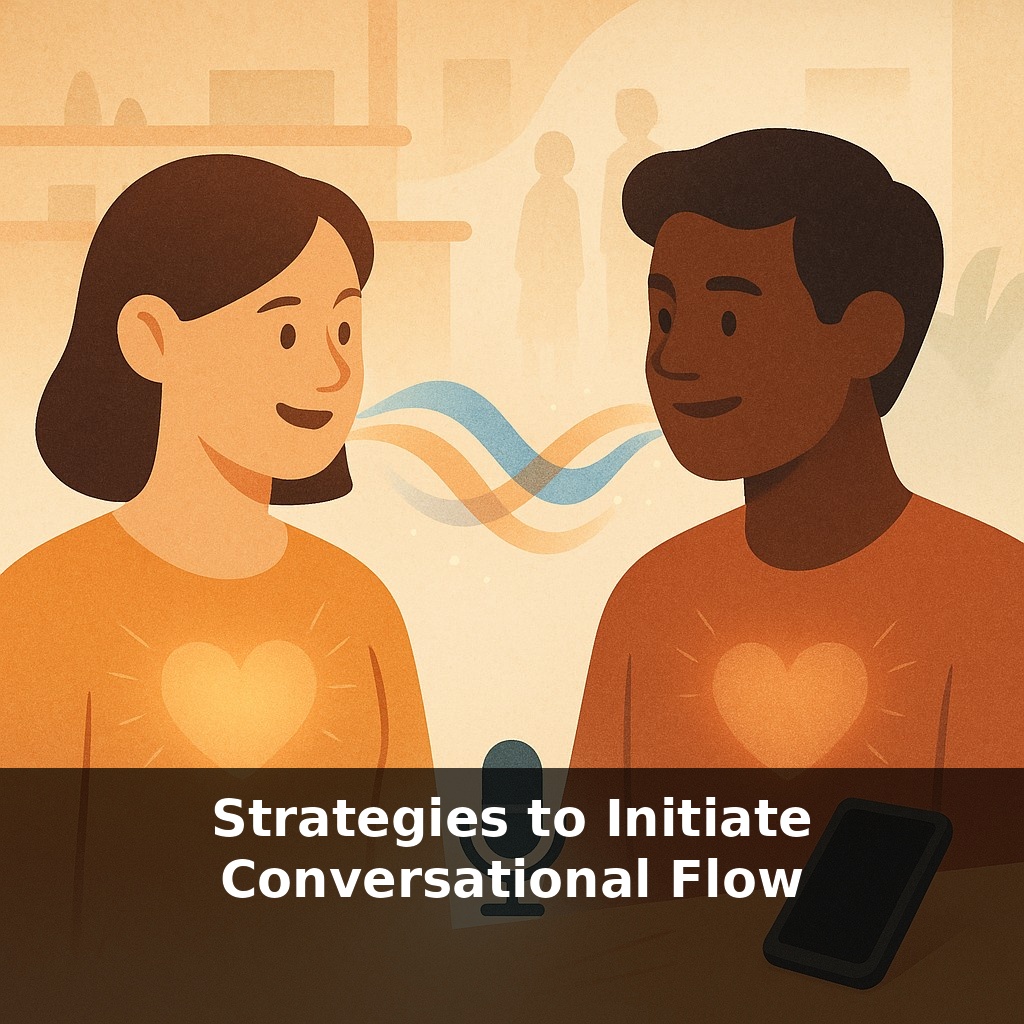
Instead of trying to “be naturally good at talking,” it helps to treat conversation openings as tiny, learnable skills. Research on shy adults shows that even brief, structured practice can dial down anxiety and make starting chats feel less like a test and more like a routine. You don’t need a dazzling line; you need a repeatable process. That process has three moving parts: getting your mind into approach mode, spotting low‑risk openings in your environment, and having two or three simple follow-ups ready—like preloaded shortcuts on your phone that keep things running smoothly once you tap them.
Think of the “three‑part process” as a sequence you can actually run in real time.
First: psychological readiness isn’t about “feeling totally confident.” It’s about shrinking the cost of speaking up and enlarging the possible upside. A simple way to do that is to swap *self‑focus* for *other‑focus*. Instead of “How am I coming across?” ask “What tiny thing could I make easier or more interesting for them?” That subtle reframe taps into the same circuitry as helping behavior, which tends to dampen social anxiety. Another tactic: pre‑label your nerves as “social energy” rather than fear. Studies on “anxiety reappraisal” show that just telling yourself “I’m excited” before a performance task improves outcomes, even when nothing else changes. You’re not faking calm; you’re redirecting the surge.
Second: spotting social cues gets easier when you give your brain a short checklist. Try scanning for just three categories: shared circumstances, visible interests, and ongoing activity. Shared circumstances are anything you and the other person are both experiencing: the wait, the event, the weather *as it affects you right now* (not generic weather talk). Visible interests are signals they’re broadcasting without speaking—logos, books, backgrounds on Zoom. Ongoing activity is whatever they’re currently doing that you can safely comment on: setting up equipment, choosing from a menu, reacting to a presentation. This reduces the pressure to conjure a topic from nowhere; you’re simply naming something that’s already in the space between you.
Third: structured follow‑ups work best when they shift from surface facts to personal meaning in small, comfortable steps. One useful progression is: **fact → feeling → future**. Suppose someone mentions they’re new to the city. Fact: “What brought you here?” Feeling: “How are you liking it so far?” Future: “Is there anything you’re still trying to find—good coffee, running routes, that kind of thing?” Each step invites a slightly richer answer without prying.
Notice how these parts support each other. A calmer, outward‑focused mindset makes it easier to notice cues. Clear cues give you a natural opener. Thoughtful follow‑ups lower the fear of awkward silence because you’re not improvising from scratch; you’re gently exploring their experience, one layer at a time.
Think of these three parts as dials you can adjust, not switches you either have or don’t. For mindset, tiny pre-conversation rituals help: some people silently name one thing they’re curious about the other person, others decide on a simple goal like “help them leave this chat feeling slightly lighter.” That keeps your attention anchored on something you *can* control.
For social cues, picture yourself running a quick “scan” like a photographer testing light before a shot: you’re not judging, just noticing a few details and choosing one that feels easiest to mention. In practice, that could sound like, “You look like you know what you’re doing with this equipment—any tips for a beginner?” or “I’ve heard mixed things about this speaker; have you seen them before?”
When it comes to follow‑ups, try preparing two or three “evergreen” questions that fit many contexts: “What’s been the most interesting part of this for you so far?” or “How did you get into that?” Over time, you’ll learn which ones feel most natural in your voice and settings.
As workplaces automate routines, initiating real dialogue becomes less “nice to have” and more of a career moat. Teams that can spark quick, thoughtful exchanges adapt faster—like agile software that updates smoothly instead of crashing under new demands. Expect hiring managers to quietly test for this: who can turn a stiff video call into a real conversation? On a personal level, practicing this skill now is like compounding interest in your social capital—subtle, then suddenly powerful.
Over time, these tiny starts stitch into a kind of social muscle memory. The goal isn’t to become “the life of the party,” but to widen the range of rooms where you feel at ease. Like adding shortcuts to a phone’s home screen, you’re reducing friction: fewer taps between noticing someone and actually connecting in a way that feels like you.
Try this experiment: For the next 24 hours, start three conversations using the “observation → question → follow-up” flow from the episode—first, comment on something specific you both can see (like the coffee shop playlist or the meeting topic), then ask a curious, open question about it, and finally respond with one follow-up that uses their exact words. Keep each conversation going for at least three back-and-forths before you share anything about yourself. At the end of the day, quickly rate each attempt (easy/medium/hard and awkward/not awkward) and notice which type of opening observation created the smoothest flow so you can reuse that style tomorrow.