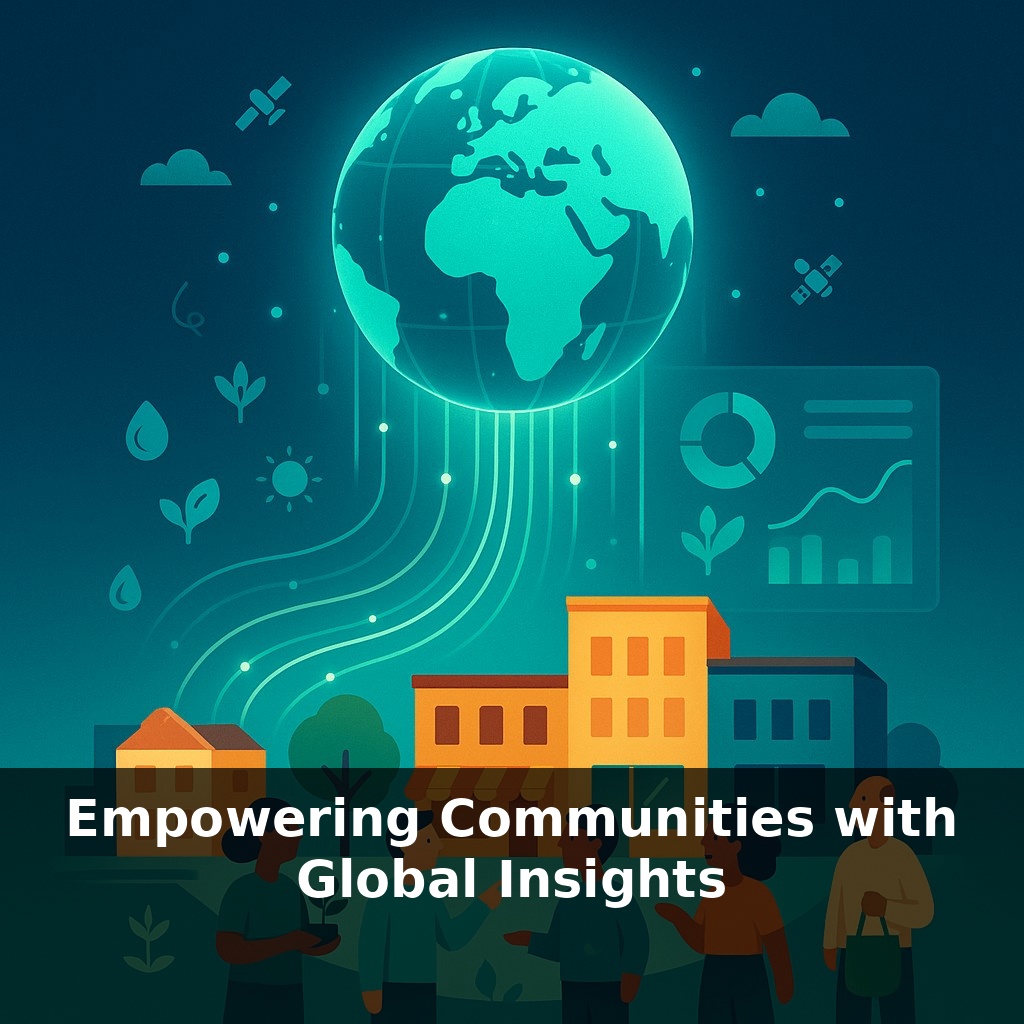
Right now, thousands of cities quietly upload climate and risk data to a shared global dashboard—yet on your street, almost no one knows it exists. Somewhere between those satellite maps and your local grocery line, a hidden power is waiting for your community to claim it.
That hidden power becomes real the moment global signals change what your neighbors actually do. When a distant drought forecast quietly warns of future food price spikes, a neighborhood co‑op can adjust what it plants, how much it stores, and whom it partners with. When an early warning hints at political instability along a key trade route, a local clinic can rethink where it gets its medicines before shortages hit. These aren’t abstract “world affairs”—they’re levers for deciding which streets flood, which shops stay open, which households have backup plans. In places that use open data platforms, cross‑border advice, and inclusive town halls together, residents stop reacting and start rehearsing. The question for your community is no longer “What will happen to us?” but “Which global signals do we choose to act on first—and who gets a say in that choice?”
When communities treat global intelligence as raw material, three things change. First, they start scanning beyond headlines, pulling in conflict forecasts, climate projections, and trade patterns the way a good coach studies game tapes from rival teams. Second, they build local “translation rooms”: small groups that turn those signals into neighborhood priorities—backup food options, alternate job pathways, or block‑level safety checks. Third, they connect outward, joining city networks or NGO coalitions so their local experiments feed back into bigger decisions, instead of staying invisible at the edge of the map.
Start with where power already quietly flows: numbers. More than 10,000 cities feed data into global systems like CDP, yet most residents never see that information translated into the choices that decide whether their basement floods or their job survives a supply shock. The turning point is when a community stops treating those numbers as a distant report card and starts using them as design material.
Three shifts tend to separate places that do this well from those that stay reactive.
First, they zoom in. Instead of staring at a world map, they pull out the slices that actually touch local life: heatwave projections for specific postal codes, trade exposure for the main local employers, migration trends for nearby regions. Then they cross these with hyper‑local knowledge—who depends on dialysis, which streets lack shade, which small businesses live week‑to‑week. Out of that mesh come concrete moves: a block decides on a cooling‑center buddy system; a business park experiments with shared backup storage; a tenants’ group pushes for tree‑planting where heat and rent stress collide.
Second, they build “translation jobs,” not just translation tools. Someone—often a librarian, teacher, or youth organizer—becomes the person who can say, “This conflict forecast might hit our grocery logistics; this debt trend could affect our municipal budget.” These roles don’t require being a professional analyst; they require being trusted. Communities that formalize them—through stipends, training circles, or school projects—turn random volunteers into a persistent local memory that outlasts elections.
Third, they plug into networks where local experiments actually travel. City alliances like C40 or United Cities and Local Governments aren’t just mayors’ clubs; they’re highways where a flood‑prone neighborhood’s homemade warning system can be noticed, tested elsewhere, and then cited back in international negotiations as proof that certain funding rules work. That feedback loop is how a single neighborhood association, by documenting its results, can end up indirectly nudging how a development bank designs a resilience loan.
None of this erases local culture. In practice, the most effective projects braid global signals with neighborhood identity: indigenous fire practices refined using satellite burn‑area data; faith groups timing relief drives with seasonal risk forecasts; cooperatives shifting crops based on trade outlooks while reviving heirloom varieties. The power doesn’t come from copying someone else’s blueprint, but from treating worldwide intelligence as a menu of hints—and then cooking a distinctly local recipe.
A coastal fishing town in Southeast Asia tracks a public ocean‑temperature feed and pairs it with notes from boat captains. When the data suggests fish will migrate early, they don’t just brace for losses; they test switching part of the fleet to seaweed and shellfish, then share outcomes with a WhatsApp group of ports in three countries. A deindustrialized European neighborhood, watching commodity dashboards and conflict forecasts, sees a spike coming in imported fertilizer costs. Rather than wait, a local gardening collective experiments with biochar and composting, turning vacant lots into test beds. Their results feed into a city resilience office and end up cited in a national soil‑health policy brief. In a midsize African city, youth volunteers scrape open shipping and price data for solar panels; when they spot a likely tariff hike, they launch a “90‑day solar sprint,” helping households bulk‑buy before costs rise—proof that geopolitical awareness can be converted into literal rooftop infrastructure.
Soon, “global awareness” could feel less like reading headlines and more like checking a neighborhood dashboard: AI flagging when to reinforce a playground against storms or shift a market day before a regional strike. Kids might learn to read these signals in school the way they learn traffic rules. Community wallets could let residents steer small budgets in real time as conditions change, like a local team calling plays from the sidelines instead of waiting for orders from a distant coach.
Your challenge this week: pick one live global signal—a conflict alert, climate index, or trade bulletin—and trace it to a single, specific place in your daily orbit: a bus stop, market stall, school gate. Then, with at least one neighbor, sketch a tiny counter‑move: a backup supplier, a shared watchlist, a joint letter. Treat it as laying the first brick of a neighborhood early‑warning system.