What Is Creativity? Debunking the Myths
📝 Transcript
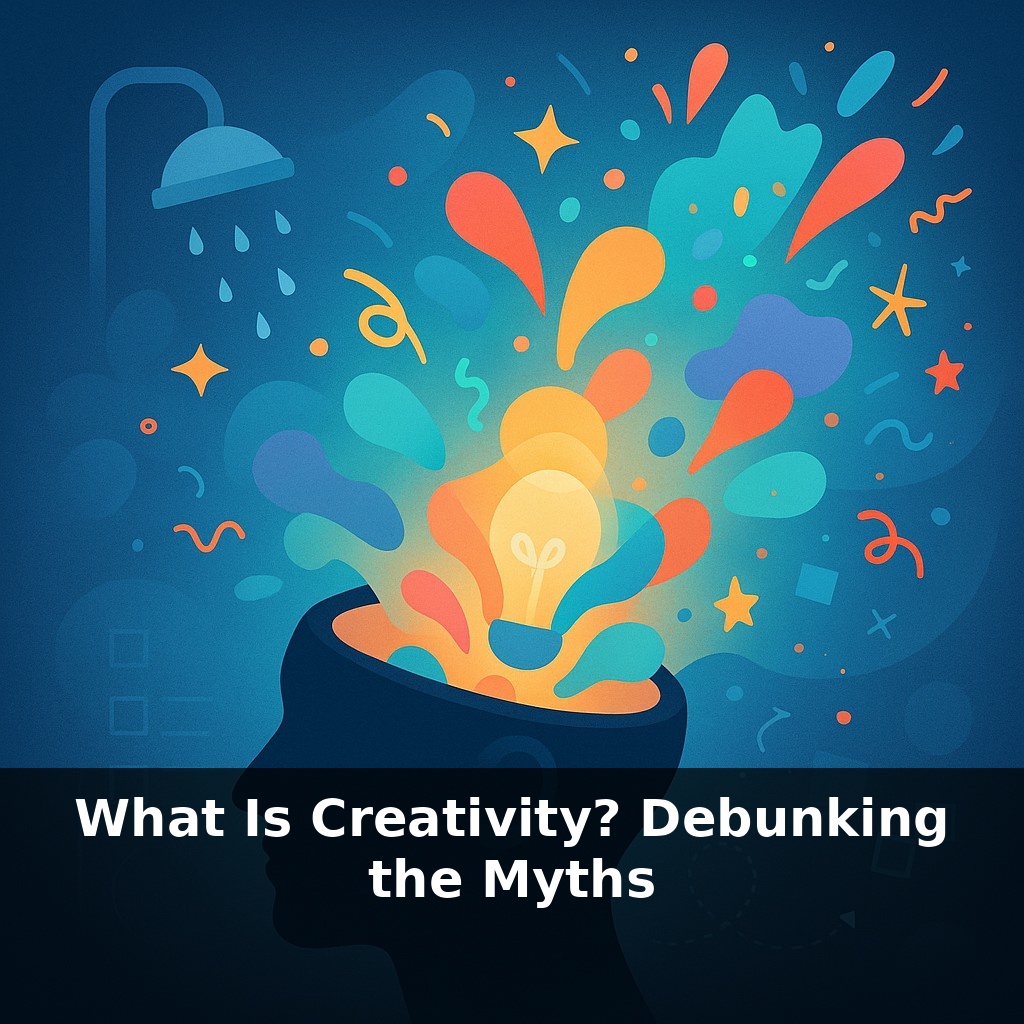
Einstein once said, “Creativity is intelligence having fun.” Here’s the twist: most of us were taught to stop “playing” with ideas by the time we left school. So why do your best ideas show up in the shower, not in meetings? That gap is exactly where we’re headed today.
Schools, job descriptions, even personality tests quietly sort people into “creative” and “not creative”—as if it were an eye color you’re born with, not a skill you build. Yet when researchers follow people across decades, the strongest signals of real-world creative impact aren’t labels, but habits: how often you explore unfamiliar problems, how deeply you invest in a craft, how safely you can admit, “I don’t know…yet.”
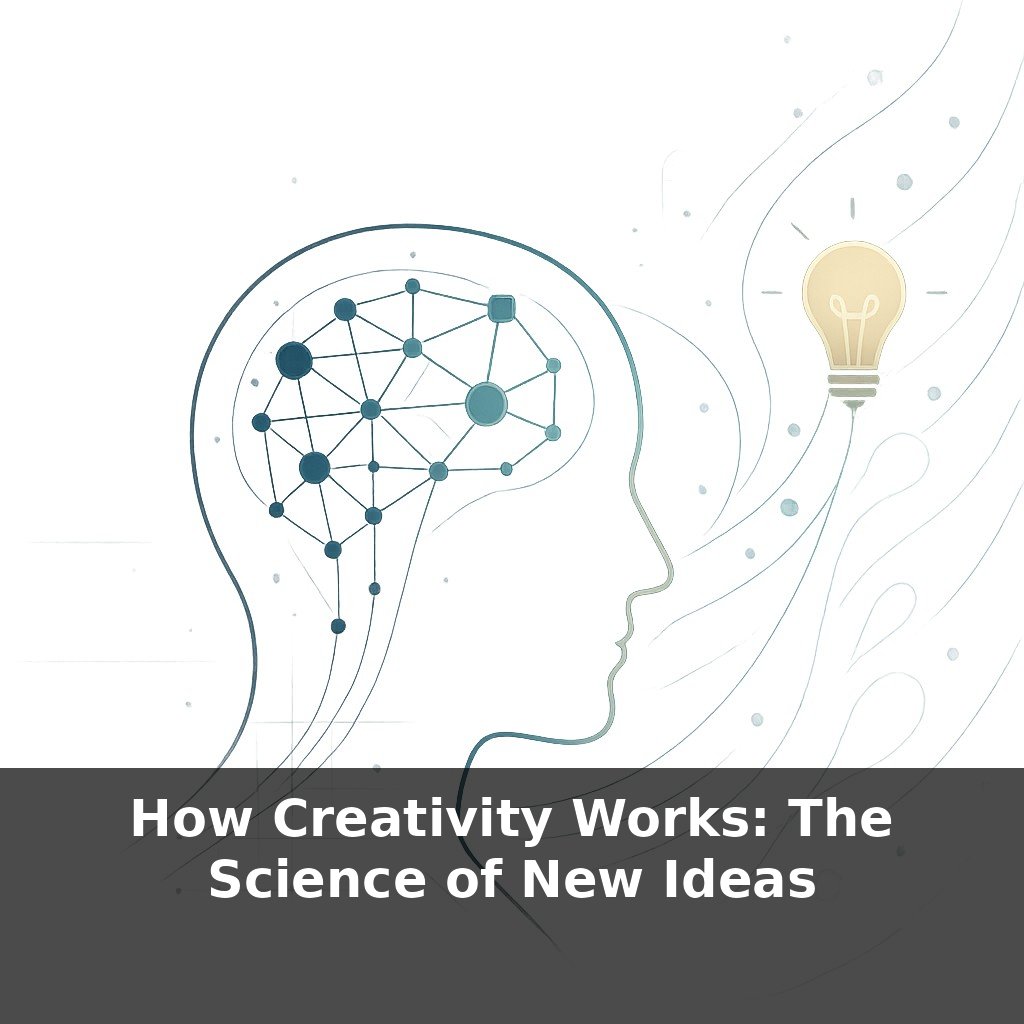
This is where the science gets interesting. Brain-imaging studies show your mind doesn’t have a single “spark” center; it works more like a studio with different teams handing ideas back and forth. Some generate wild options, others critique and refine, and another watches for what matters right now.
In daily life, those teams are often out of sync. Deadlines, inboxes, and meetings keep one part of the studio overworked while the others go quiet.
You’ve probably felt this misalignment: your mind drifts toward interesting questions while your calendar drags you elsewhere. That tension isn’t laziness; it’s a clue. Studies of high-output creators show they deliberately shift between focused effort and looser, exploratory states, instead of trying to “power through” everything in the same mental gear. Conditions matter more than we’re told: access to useful information, room to experiment, and permission to be wrong all quietly raise the odds of breakthroughs. In other words, the system you work in can either mute or amplify what your mind is already capable of.
If you strip away the hype, what researchers keep circling back to is surprisingly unromantic: creativity behaves more like a trainable skill than a lightning strike. When psychologists track who actually ships patents, publishes books, or launches useful products, they don’t see a clean line between “gifted” and “ordinary.” They see three levers that compound over time: how much you know in a field, how much you care about a problem, and how free you feel to push against the edges of what’s acceptable.
That first lever—knowledge—sounds boring, but it’s the raw material your brain recombines. The chemist who notices a novel reaction, or the marketer who spots a pattern in customer behavior, is drawing on a dense web of prior cases. Studies of eminent creators show they almost always log years of deliberate practice before their “overnight” successes. That doesn’t mean you must be an expert to have fresh ideas; it means that within any domain, understanding the rules gives you more interesting ways to bend them.
Motivation is the engine. Research distinguishes between doing something for external rewards and doing it because the work itself is compelling. Across labs, people who are intrinsically motivated tend to generate more original, workable solutions. They stay with hard problems longer, tolerate more false starts, and are more willing to explore unproven angles—exactly the behaviors that, over months and years, lead to breakthroughs.
Then there’s the environment. In surveys like Adobe’s, professionals point to constant output pressure as a creativity killer. It’s not just the stress; it’s what stress does to your willingness to take intellectual risks. Organizations that set aside protected time for exploration—3M famously gave engineers freedom to tinker, which helped birth the Post-it Note—create a buffer where “failed” attempts still count as progress.
At the neurological level, these conditions seem to change how flexibly your mind shifts between wandering and focusing. Beaty’s work and others suggest people who regularly exercise idea-generation skills show stronger coordination between brain networks, as if practice is teaching those systems to collaborate more fluidly. In that sense, the question isn’t “Am I creative?” but “How am I training the way my mind moves when it meets something new?”
Think about the last time you surprised yourself with a solution: maybe you fixed a home problem with tools meant for something else, or hacked together a spreadsheet that did way more than track expenses. Those moments hint at something research keeps finding: small, repeated experiments reshape what you’re capable of far more than waiting for a big “aha.”
Consider 3M’s “15 % time” policy. On paper, it’s modest—engineers get a slice of their week to chase hunches. In practice, that slack quietly stacked up into products like the Post-it Note, and over a billion dollars in annual revenue. The key wasn’t a single genius, but a system that treated oddball side projects as legitimate work.
On a personal scale, you can mimic this. Set aside a tiny block of low‑stakes time—say, 20 minutes every Thursday—to tinker with problems you don’t have to solve. No expectations, just curiosity. Over months, you’ll notice your default response to new challenges shifting from “What’s the standard way?” to “What else could this be?”
In the next decade, your “creative score” may sit beside your résumé like a credit report, shaping which projects and collaborators you access. As AI drafts options at the tap of a key, your value shifts toward choosing the right questions, sensing hidden constraints, and blending ideas across fields. Expect tools that track how often you shift perspectives, like fitness wearables for your mind—raising tough questions about who owns that data, and who decides what counts as “original enough.”
So treat this less like chasing lightning and more like learning an instrument: awkward at first, then unexpectedly fluent. Tiny experiments—asking “what else?” in a dull task, reframing a conflict, remixing two routines—are like quiet reps at the gym. Your challenge this week: deliberately do one thing “the odd way” each day, then note what new option it reveals.
From this course
How Creativity Works: The Science of New Ideas
7 episodesUnlock all episodes
Full access to 7 episodes and everything on OwlUp.
Subscribe — $1.99/monthLess than a coffee ☕ · Cancel anytime