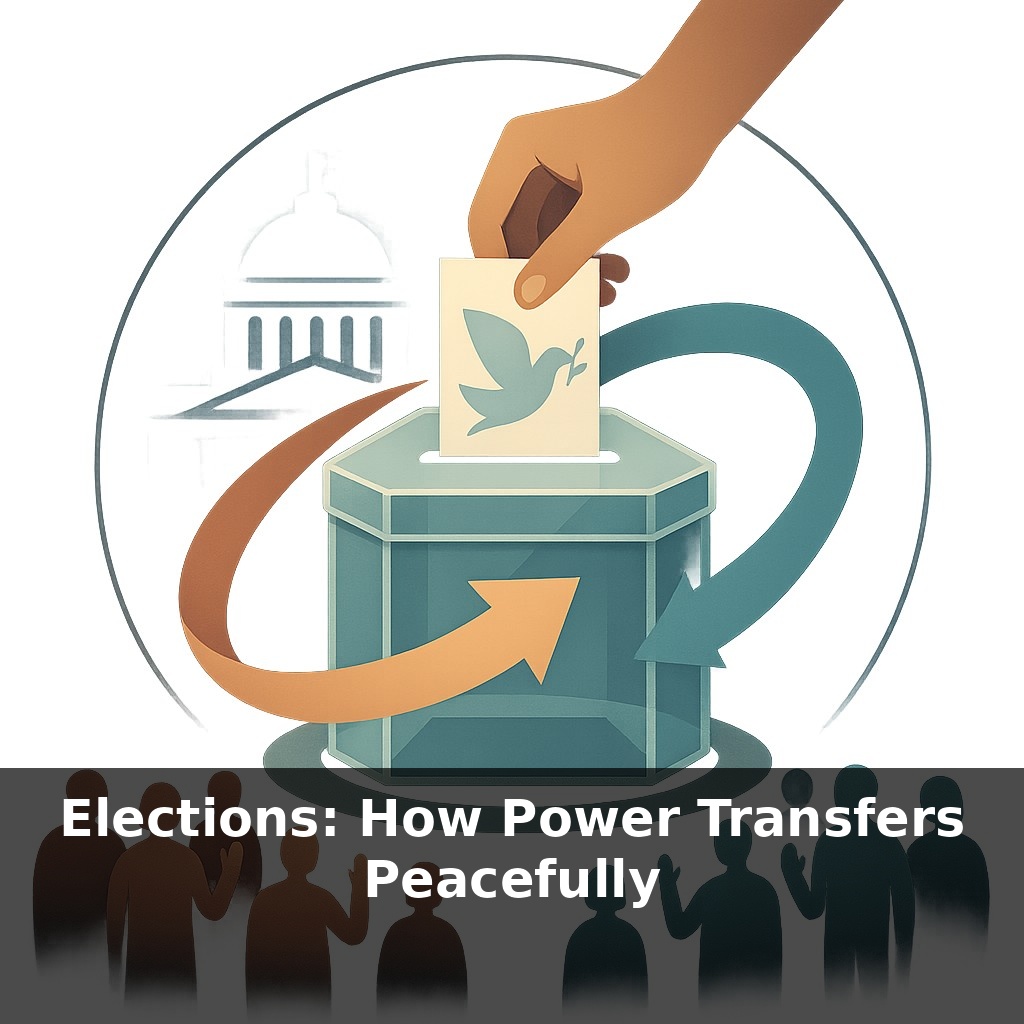
In most countries today, governments rise and fall without a single shot fired—yet the laws, money, and weapons stay under control. A candidate wins, another loses, and still, the loser tells their supporters to stand down. How does that fragile moment not rip a nation apart?
Three out of four countries on Earth now hold national elections. Yet in almost half of them, the “election” is closer to a scripted play than an open contest. So what, exactly, turns a vote from political theater into a real mechanism for changing who holds power?
The key is that elections are not just about counting preferences; they’re about creating a shared story of *how* a winner is chosen—and a believable reason for everyone else to stand down when they lose. Think of it less as a celebration and more as a carefully designed procedure, like a safety checklist before a plane takes off: boring when it works, catastrophic when it doesn’t.
In this episode, we’ll unpack how that procedure works at its best, why credibility matters more than the specific winner, and what signals—like public result sheets in Kenya or delayed concessions in disputed races—tell us a system is holding together under stress.
When elections work well, they quietly solve a brutal problem: how do you get people who are *losing* power to cooperate with the result? At the center is a trade. Losers agree not to reach for force if they trust two things: that the contest was winnable this time, and that they or their allies can realistically compete next time. That’s why term limits, independent courts, and even loser-friendly pensions matter. They turn politics from a last stand into a recurring season, where today’s defeat is painful—but not existential.
At the core of peaceful power transfer is something deceptively simple: *rules everyone agrees to follow even when they hate the outcome*. Those rules stretch far beyond the act of voting itself.
Start with who can run and who can vote. If opposition parties are banned, journalists harassed, or some groups quietly blocked from registering, the contest stops feeling winnable for one side. That’s why “free and fair” isn’t just election-day cleanliness; it’s months or years of letting rivals organize, speak, fundraise, and monitor each other.
Then there’s how disputes get handled. In tight or contested races, the system has to absorb anger without cracking. Al Gore’s 36‑day wait to concede in 2000 only made sense because courts, recount rules, and deadlines were already written down. The fight moved into legal channels instead of onto the streets—not because anyone felt calm, but because both camps had pre‑agreed on the referees.
Independent administrators are another quiet pillar. When election commissions control ballots, counting, and technology at arm’s length from the ruling party, losers are more willing to accept bad news. Kenya’s 2022 choice to post results at over 46,000 polling stations did something powerful: it let citizens and parties build their own tallies, cross‑checking the official narrative in real time.
Crucially, elections don’t grant a blank check. Constitutions, courts, and legislatures constrain what winners can do, signaling to minorities and opponents that “losing” doesn’t equal annihilation. When that sense of protection fades, politics reverts toward a survival struggle, and even high turnout can coexist with deep illegitimacy.
Political scientists sometimes watch for Samuel Huntington’s “two‑turnover test”: has power peacefully moved twice between rival parties? If yes, actors start to believe that today’s opposition can be tomorrow’s government. That expectation may do more to prevent violence than any speech.
All of this sits atop a cultural layer: parties training their supporters to respect results, media outlets resisting incendiary narratives, and outgoing leaders choosing a graceful exit over a desperate clinging to office. When those norms erode, even long‑standing democracies can find that a single election suddenly feels like a last battle rather than one round in an ongoing contest.
In practice, peaceful transfers can hinge on surprisingly concrete rituals. In Ghana, opposition leaders routinely phone the winner on live TV before any formal ceremony, signaling to millions that the contest is over. In Mexico in 2000, the long‑dominant PRI party not only left office but attended the inauguration, physically surrounding the newcomer with the old guard’s acceptance. Those small, choreographed moments tell nervous supporters: stand down, not up.
Contrast that with cases where formal rules exist but habits don’t. In some newer democracies, candidates sign “peace pledges” during campaigns, promising not to incite violence—but the real test comes when TV cameras are off and local party brokers decide whether to mobilize street protests or tell people to go home.
To demonstrate this dynamic, consider how a doctor must balance the formal treatment protocol with empathetic communication to ensure patient cooperation. The prescription matters—but so does the tone of voice when it’s delivered.
Generative AI will stress‑test how calmly power can change hands. Cheap deepfakes can be fired like flares in a storm, briefly blinding voters and even judges to what actually happened. At the same time, new tools—cryptographic audit trails, open data, citizen “home‑cooked” recounts from posted results—can thicken trust if they’re understandable, not just secure. States that master this balance may find their real export isn’t oil or apps, but a reputation for predictable, drama‑free transitions.
Your challenge this week: watch one political handover moment—a speech, announcement, or swearing‑in. Ignore the words for a second and study the *rituals*: who stands where, who speaks first, who claps. Those choreographed cues are like stage directions for a tense play, quietly teaching millions how to lose, win, and stay in the room together.