Most people invest before they can pass a basic money quiz—yet they’re risking decades of savings. Every day, countless investors face a dilemma between enticing stock tips and the steady allure of index funds. But realistically, which path holds the greater promise?
Here’s the uncomfortable truth: markets have historically returned about 10% a year, yet most individual investors capture far less—sometimes nothing—because they rely on hunches, tips, or headlines instead of structured knowledge. In other words, the gap between what the market offers and what you actually earn is often an education gap.
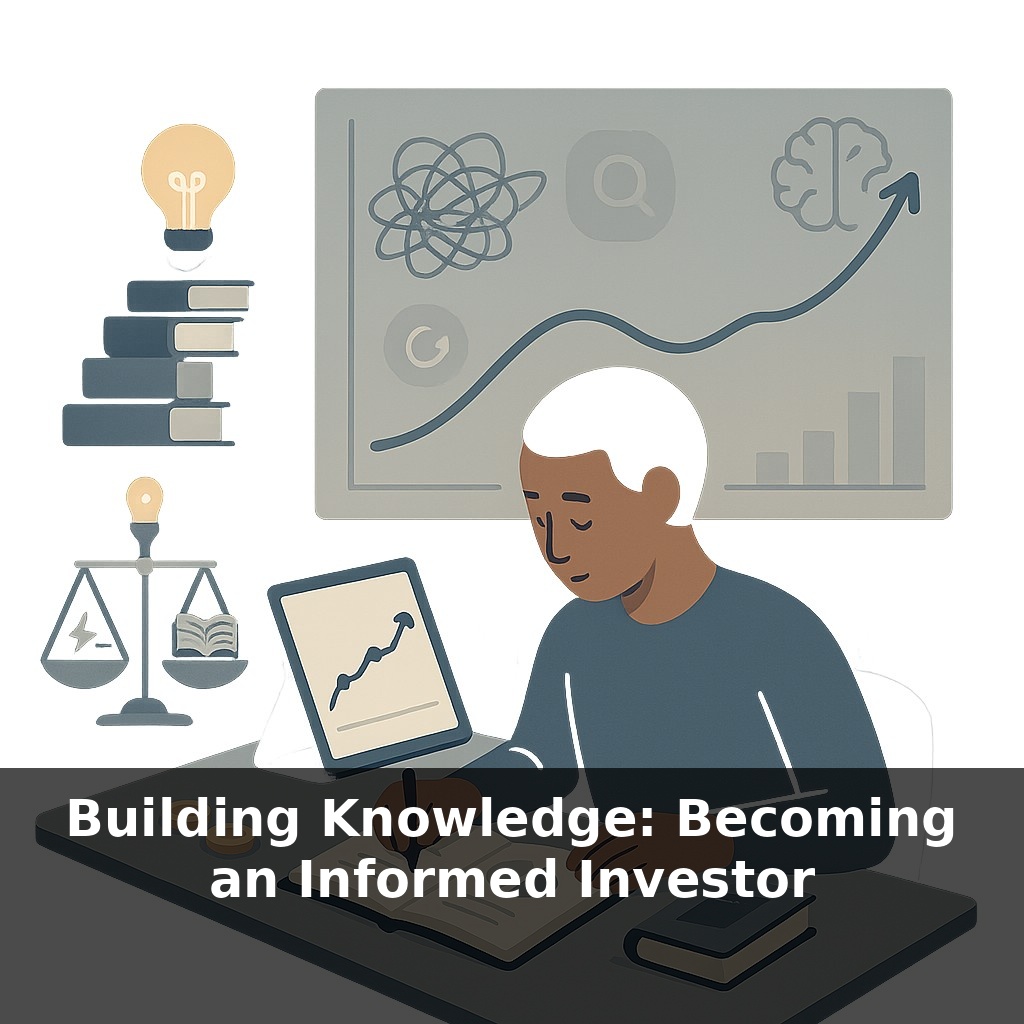
In this episode, you’ll start treating financial knowledge like an asset you deliberately grow. That means moving beyond scattered articles and social media threads into a simple, repeatable learning system. You’ll see why 5–10 focused minutes a day can matter more than chasing the “next big stock,” how to choose credible sources without needing a PhD, and which basic tools—like reading a company’s earnings summary or spotting your own overconfidence—have the highest payoff. The goal isn’t to become a professional analyst; it’s to stop being an underinformed one.
Today you’ll start building that system in concrete terms. Think small and specific: one news source, one basic tool, one short habit. For instance, instead of skimming random headlines, you might follow just two tickers—say, AAPL and VOO—and read their updates for 5 minutes each day. Or you might spend 10 minutes weekly reviewing a single metric, like revenue growth, across three companies. With only 20–30 minutes a week, you can create a routine that steadily upgrades your decisions, without turning investing into a second job.
Here’s the hard edge of the data: roughly 80% of day-traders lose money over a year, while a simple, low-cost index ETF that tracks something like the S&P 500 would have compounded at about 10% annually over the long run—before inflation—if you had just stayed put. The difference isn’t secret algorithms; it’s the quality and structure of what you know and how you use it.
To start compounding your own knowledge, think in three layers: what you read, what you calculate, and what you notice about yourself.
First, what you read. Instead of chasing hot takes, pick 2–3 “core feeds” and stick to them for 3 months. For example: - One broad source (e.g., a daily markets brief that takes 5–7 minutes). - One company-specific source (e.g., alerts for a single stock or ETF you own). - One educational source (e.g., a weekly deep dive on topics like valuation, options, or taxes).
That mix gives you context, detail, and skill-building—without drowning you in noise.
Second, what you calculate. You don’t need full financial models, but you do need a few basic numbers at your fingertips: - Revenue growth: is it rising 3% a year or 30%? - Profit margin: does a company keep 5¢ or 25¢ of each dollar sold? - Expense ratios: is your fund costing 0.16% a year or 0.66%?
Run these for 1–2 holdings you care about. If you invest $5,000 for 30 years at a 7% after-fee return, a 0.16% fee shaves the result to about $36,500; a 0.66% fee cuts it closer to $32,700. That’s nearly $4,000 gone for the same market exposure.
Third, what you notice about yourself. Keep a tiny “decision log” with just four columns: date, action, reason, and feeling (1–5 scale from anxious to euphoric). When you’re tempted to buy or sell, jot down: “2026-02-12, Sold XYZ, worried about recession, feeling: 4 (anxious).” Review 10–15 entries at the end of each quarter and look for patterns: do fearful sells usually precede recoveries? Do euphoric buys often follow big run-ups?
Over time, this three-layer approach—consistent inputs, simple calculations, and honest self-observation—turns scattered facts into working knowledge you can actually invest with.
Here’s how this looks in practice. Suppose you pick one company—say it earned $2.00 per share last year and now earns $2.30. That’s a 15% increase. If its share price rose from $40 to $44 in the same period (10%), you’ve learned its underlying business grew faster than the stock. Make a note, then watch what happens over the next 6–12 months. Do price moves eventually “catch up” to that 15%?
Now apply the same lens to your own behavior. Say you invest $300 per month into a broad ETF for 5 years. At a 7% annual return, you’ll have roughly $21,500. If you panic-sell twice during dips and sit in cash for a total of 12 months earning 0.5%, your result might drop closer to $19,800—about $1,700 lost, not from returns, but from decisions.
Think of this section of your routine as running small, personal experiments: adjust one input, track the numbers, and let evidence—not headlines—update your judgment.
As tools evolve, your edge will come from knowing what to learn next. AI tutors might flag that you misread balance sheets and queue up 3 targeted lessons. Tokenised real assets could let you buy $50 slices of buildings—but only if you can read a 40‑page offering and spot a 2.5% annual platform fee. ESG data may add 20–30 new metrics per company; pick 3–5 that match your goals and track them yearly to avoid drowning in disclosure.
Treat this like training for a skill. Set a 12‑month goal: read 4 short books, follow 2 quarterly reports, and review 20 of your own decisions. That’s fewer than 15 pages and 30 minutes of reflection a month. Over 10 years, that’s 40 books and 200 logged choices—enough to separate noise from knowledge and “luck” from process.
Try this experiment: Pick one company you own (or want to own), download its latest 10-K, and set a 25-minute timer to “speed-skim” just three sections: Business Overview, Risk Factors, and Management’s Discussion & Analysis. As you skim, highlight every term or concept you don’t fully understand (like “free cash flow,” “gross margin,” or “customer concentration”) and make a simple two-column list: “Don’t get it yet” and “Think I get it.” Then spend another 25 minutes using the company’s investor presentation and one independent source (like Investopedia or a 10-minute YouTube explainer) to upgrade at least five items from the “Don’t get it yet” column into plain-English explanations. Finally, decide whether you’re more or less confident owning this business based on what you learned, and jot down a one-sentence verdict you’d be willing to say out loud to a friend.