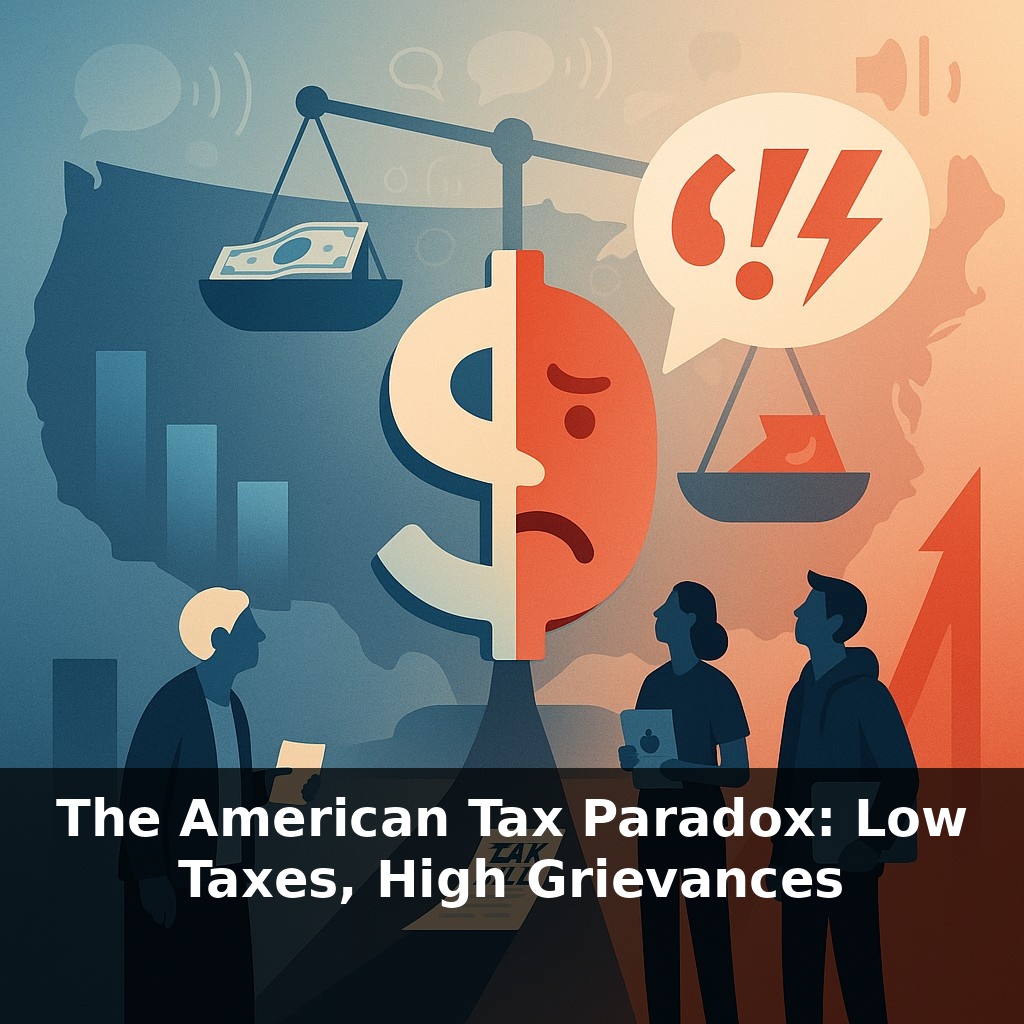
In global rankings, Americans pay relatively low taxes—yet complain about them more than people in higher‑tax countries. A retiree in Ohio, a teacher in Texas, a startup founder in California: all feel squeezed. Why does a lighter bill produce heavier anger?
Americans pay a smaller slice of their national income in tax than most rich countries, yet surveys show they’re *more* likely to feel overtaxed and cheated by the system. That gap between the numbers on paper and the anger in people’s voices is the American tax paradox.
To see it, you don’t need to wade into partisan shouting. Look instead at everyday lives: a freelancer toggling between tax apps at midnight, a parent staring at their paycheck stub, a small business owner budgeting around quarterly payments. Each one sees money leaving, but the return on that money feels vague, distant, or invisible.
In this episode, we’ll follow where that feeling comes from—how the structure of U.S. taxes, the way benefits are delivered, and the country’s political history combine to make a comparatively low‑tax nation feel like a high‑tax one.
On paper, the U.S. devotes a modest share of its economy to taxes—below the OECD average, far from Scandinavian levels. Yet daily life doesn’t *feel* modest when your rent, childcare, and health premiums are rising faster than your paycheck. Add in student loans, credit‑card interest, and $5 coffees, and taxes become the most visible slice of a crowded bill. In that environment, even a relatively small deduction can feel like the last straw, especially when price tags rarely show what portion funds Social Security, Medicare, or the highways beneath your tires.
On the numbers, the U.S. looks like a “low‑tax country”: total tax revenue is about 27% of GDP, versus roughly 34% across the OECD and nearly 46% in Denmark. Yet when Gallup asks, just over half of Americans say their federal income tax is too high, even though the median household’s effective federal income tax rate was only about 6.6% in 2020.
Part of the dissonance comes from what people focus on. Withholding from a paycheck is seen and felt; everything else fades into the background. In 2020, about 61% of households owed no *net* federal income tax after credits. Still, almost everyone paid something—payroll taxes on wages, sales tax at the register, property tax rolled into the mortgage. It’s easy to miss that mosaic of smaller streams and instead fixate on the one line labelled “federal income tax” as if it were the whole story.
Another part is that Americans often misjudge both sides of their personal ledger. On the “paid” side, they blend all the nicks and cuts into one painful impression of being constantly charged. On the “received” side, they rarely connect specific programs to their own wallets. Social Security, for instance, sends the average retiree about $1,841 per month—as if they had built up roughly $440,000 and were drawing a 5% annuity for life. Medicare, interstate highways, FEMA disaster aid, NIH medical research: they arrive as monthly deposits, seamless roads, or treatments in a hospital, not as a clearly labelled “dividend” on past tax payments.
The federal budget composition deepens the disconnect. Defense, Social Security, Medicare, and Medicaid together absorb well over half of Washington’s outlays. Many people don’t see fighter jets, overseas bases, or hospital reimbursements up close, so “my money” seems to vanish into abstractions rather than into visible neighborhood schools or child allowances, as in some European systems. Add a complicated filing ritual each spring—w‑2s, 1099s, software prompts, fear of mistakes—and the system’s main human interface is a stressful chore, not a clear explanation of what’s funded.
In combination, relatively low averages, fragmented streams, invisible returns, and an annual paperwork ritual create fertile ground for the enduring feeling that taxes are both heavier and less rewarding than they actually are.
Think about how this plays out across different American lives. A software engineer might grumble about her refund shrinking, while her aging parents quietly rely on a monthly deposit that keeps them above the poverty line. A truck driver curses fuel receipts on a long haul, not realizing that part of each gallon is keeping rest stops open and bridges inspected on his route. A coastal homeowner sees a line item in local property bills, but the check from federal disaster aid after a hurricane feels like a stroke of luck, not a pre‑funded service.
Even big national projects get psychologically “decoupled.” When a new vaccine appears in record time, the credit goes to heroic scientists or “the market,” not to decades of publicly funded basic research. When a regional employer stays afloat during a downturn thanks to emergency lending facilities, workers rarely trace that back to collective contributions. In finance terms, many Americans recognize every debit from their account, but most of the credits arrive without a memo line saying: “From your past payments, with compound returns.”
If the paradox persists, policy fights may drift further from fiscal reality. As retiree programs expand, vague unease can harden into reflexive opposition to any revenue change, even when roads crack or wildfire seasons lengthen. The IRS overhaul is a live experiment: if filing shrinks to a few clicks and statements show “here’s where last year’s dollars went,” debates could shift from raw frustration toward choices—more like rebalancing an investment portfolio than resenting the whole system.
As more tools show taxpayers personalized “receipts” and timelines—linking past payments to future college grants, wildfire crews, or upgraded broadband—opinions may shift from blunt anger to questions of design. Your challenge this week: any time you tap a public service, pause and ask, “Which level of government quietly keeps this running?”