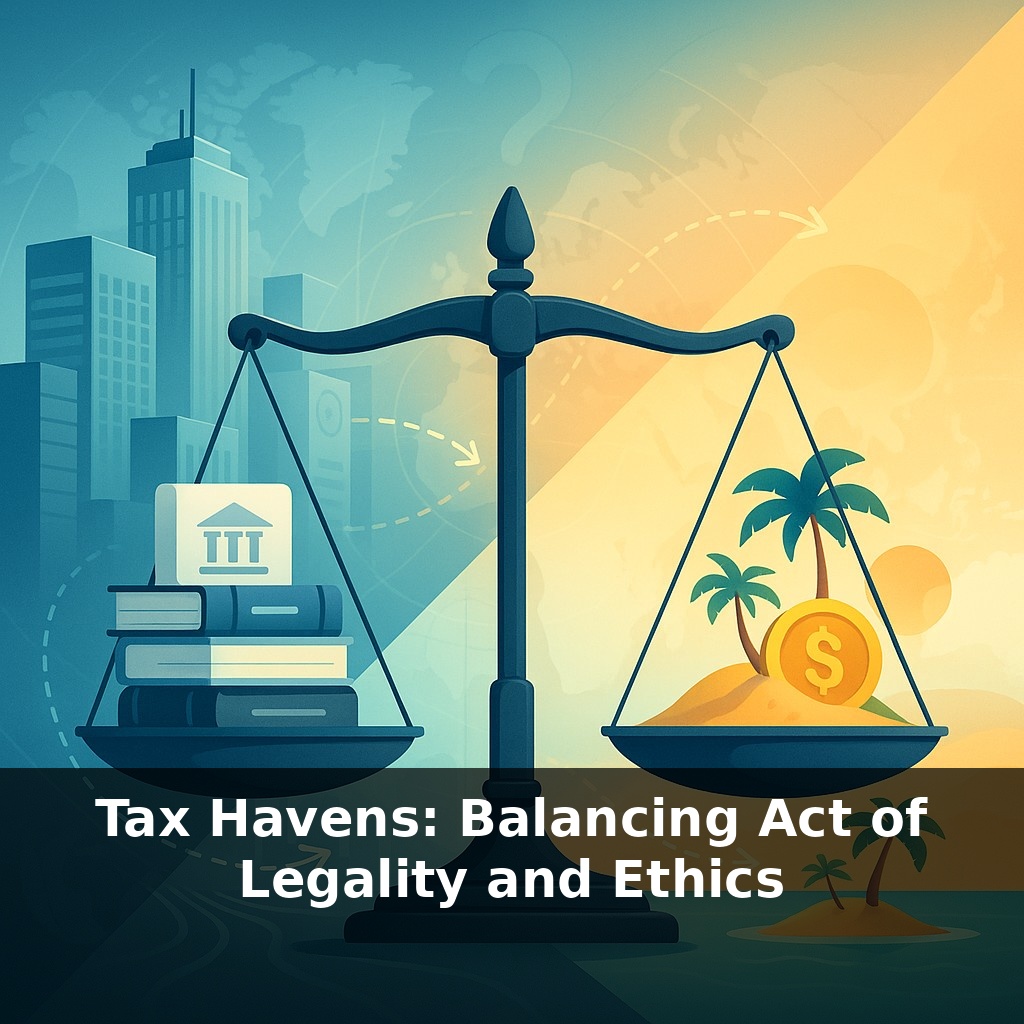
Roughly half of all profits made by big global companies don’t get taxed where they’re actually earned. Instead, they quietly “move” to sunny islands and tiny countries most of us will never visit. Why do laws allow it—and is following the rules always the same as being fair?
Laws on tax havens weren’t written in a smoke‑filled room by cartoon villains. Many grew out of ordinary choices: small countries trying to attract investment, big countries competing to keep headquarters, banks chasing wealthy clients. Over time, these scattered decisions stitched together a global system where a company can sell to customers in one place, have its engineers in another, and still report most of its profit in a low‑tax hub far away. That system is now huge: trillions of dollars in assets, and a large slice of multinational profits, pass through just a handful of jurisdictions. In earlier episodes, we looked at how countries raise tax within their borders; here, we step outside borders—into a world where the “where” of profit becomes flexible, and the line between smart planning and free‑riding on everyone else’s public services grows uncomfortably thin.
A key twist is that tax havens don’t just sit offshore waiting passively; they actively design menus for multinationals: special low rates on royalties, “patent boxes” for intellectual property, rulings that quietly bless aggressive structures. The clients, in turn, redesign themselves to fit these menus—shifting legal ownership of brands, algorithms, or drug formulas to favorable jurisdictions while daily business stays put. It’s less about suitcases of cash and more about which subsidiary, on paper, owns the most valuable ideas, and why that mailing address suddenly matters so much.
Here’s one way to see how this plays out in practice: start with a regular‑looking company and follow its profits as they “travel.” A US tech firm sells subscriptions in Germany, runs support from Poland, and keeps engineers in California. On the surface, you might think tax gets paid in each of those places. But on the legal map, a different story unfolds.
First, the company sets up a subsidiary in Ireland or Singapore to “own” its key software code or brand. The German and Polish entities are then recast as routine service providers. They charge enough to cover salaries and a modest markup, but most of what customers pay them becomes a royalty or licensing fee owed to the low‑tax subsidiary. On paper, the value is created where the intellectual property sits—even if the users, workers, and managers are mostly somewhere else.
Then come the “conduits”: places like the Netherlands or Luxembourg. They often aren’t the final destination but a tunnel through which money flows, helped by treaties that sharply reduce withholding taxes on cross‑border payments. A royalty might leave Germany for the Netherlands almost tax‑free, then be forwarded to a Caribbean entity that faces no corporate tax at all. Each link might be individually legal, vetted by accountants and even pre‑approved by local authorities.
For individuals, the game looks different but related. Wealthy clients might hold portfolios through shell companies or trusts in the Cayman Islands, with accounts booked in Switzerland or Singapore, managed by advisers in London. Modern transparency rules have made outright concealment riskier, yet even fully declared structures can trim tax bills through favorable treatment of capital gains, inheritance, or residency.
The ethical tension arises because not everyone can play. A nurse or shop owner generally pays tax where they live and work; multinationals and the very rich can route profits and assets through jurisdictions chosen for tax reasons alone. The more mobile your money or ideas, the more optional your tax bill starts to feel—and the more strain that puts on countries still trying to fund schools, hospitals, and infrastructure from a base that can’t move so easily.
Think of three very different “travel routes” for money. First, big consumer brands: Starbucks and Nike have both faced scrutiny in Europe for years when local subsidiaries reported thin margins while hefty payments went to group entities holding trademarks elsewhere. Second, digital platforms: before recent reforms, Google’s “Double Irish” structure became a textbook case in policy debates, prompting changes to Irish law and pressure for global minimum tax rules. Third, private wealth: the Panama Papers and Pandora Papers leaks revealed how politicians, celebrities, and business elites booked yachts, art, and investment portfolios into chains of shell companies and trusts stretching from the British Virgin Islands to Samoa. In each case, what drew attention wasn’t just the legal choreography, but the contrast with less mobile taxpayers. Policymakers now try to distinguish “good” competition—like streamlined administration or broad bases—from regimes that mostly serve to erode everyone else’s collections, yet the boundary remains contested.
Global minimum taxes, tougher disclosure, and ESG pressure might slowly narrow the options, but they can also just reshuffle the game. Instead of headline‑grabbing “tax havens,” you could see subtler hubs: data centers doubled as incentive magnets, or crypto platforms acting like offshore banks. Investors already scan balance sheets for tax red flags the way pilots scan weather radar, rerouting if a storm of scandal appears on the horizon. The open question: who adapts faster—regulators or planners?
For citizens, the frontier isn’t mastering loopholes; it’s deciding what we expect taxes to fund, then judging systems against that promise. Some countries now publish “tax gap” estimates, others weigh public “fair tax” labels for firms like nutrition scores on food. As data improve, the politics may shift from “who cheats?” to “what kind of deal are we all getting?”
Before next week, ask yourself: Which of my current or future investments, business structures, or international accounts might *benefit* from low-tax jurisdictions—and at what ethical cost if they mirror the strategies described in the episode? If I imagine my tax arrangements made fully public (to employees, customers, family, or the press), would I feel confident explaining *why* I chose them and how they align with my values around fairness and social contribution? When I next speak with an accountant, adviser, or business partner, what one specific question can I ask about transparency, substance (real activity vs. mailbox entities), or long‑term reputational risk that would move me closer to a tax strategy I’d be proud to defend?