 2min preview
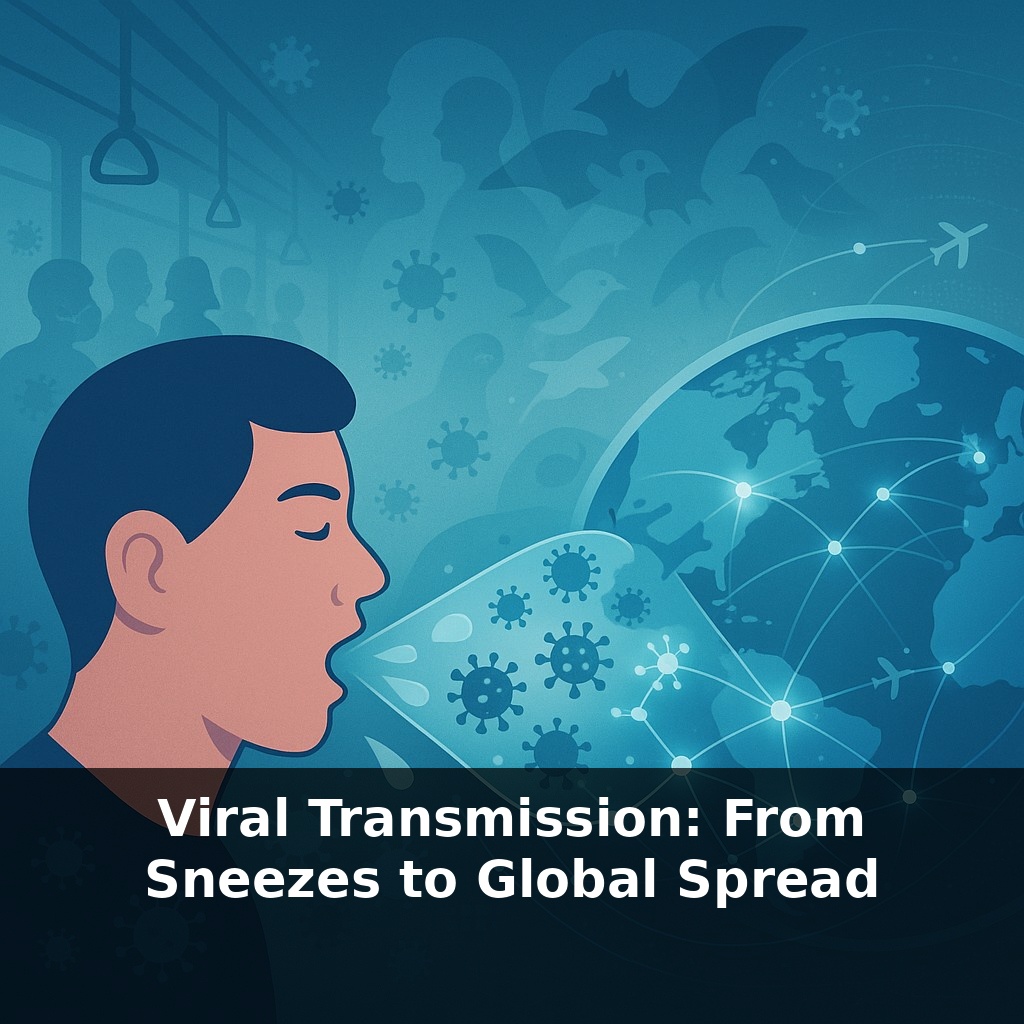
Viral Transmission: From Sneezes to Global Spread
📝 Transcript
A single sneeze in a crowded train can, in theory, nudge an outbreak that ends up closing schools on the other side of the world. Today, we’re diving into how those tiny, invisible droplets hitch rides on hands, air currents, and airplanes to turn local germs into global events.
About 60 percent of human infectious diseases come from animals, and three out of four new threats start there—often in quiet corners of farms, forests, or markets. A virus might first spill over in a single village, but what happens next is less like a straight line and more like a branching subway map: local buses feed into regional hubs, which link into global flight networks moving billions of people a year.
Those connections decide which viruses burn out quickly and which ones ride rush‑hour traffic, festivals, and long‑haul flights to every continent. Some spread explosively, like measles in a school; others advance slowly, slipping through households and workplaces.
Subscribe to read the full transcript and listen to this episode
Subscribe to unlockSubscribe for $1.99/month to unlock the full episode.
From this course
How Viruses Work: From Common Cold to Pandemics
5 episodesUnlock all episodes
Full access to 5 episodes and everything on OwlUp.
Subscribe — $1.99/monthLess than a coffee ☕ · Cancel anytime