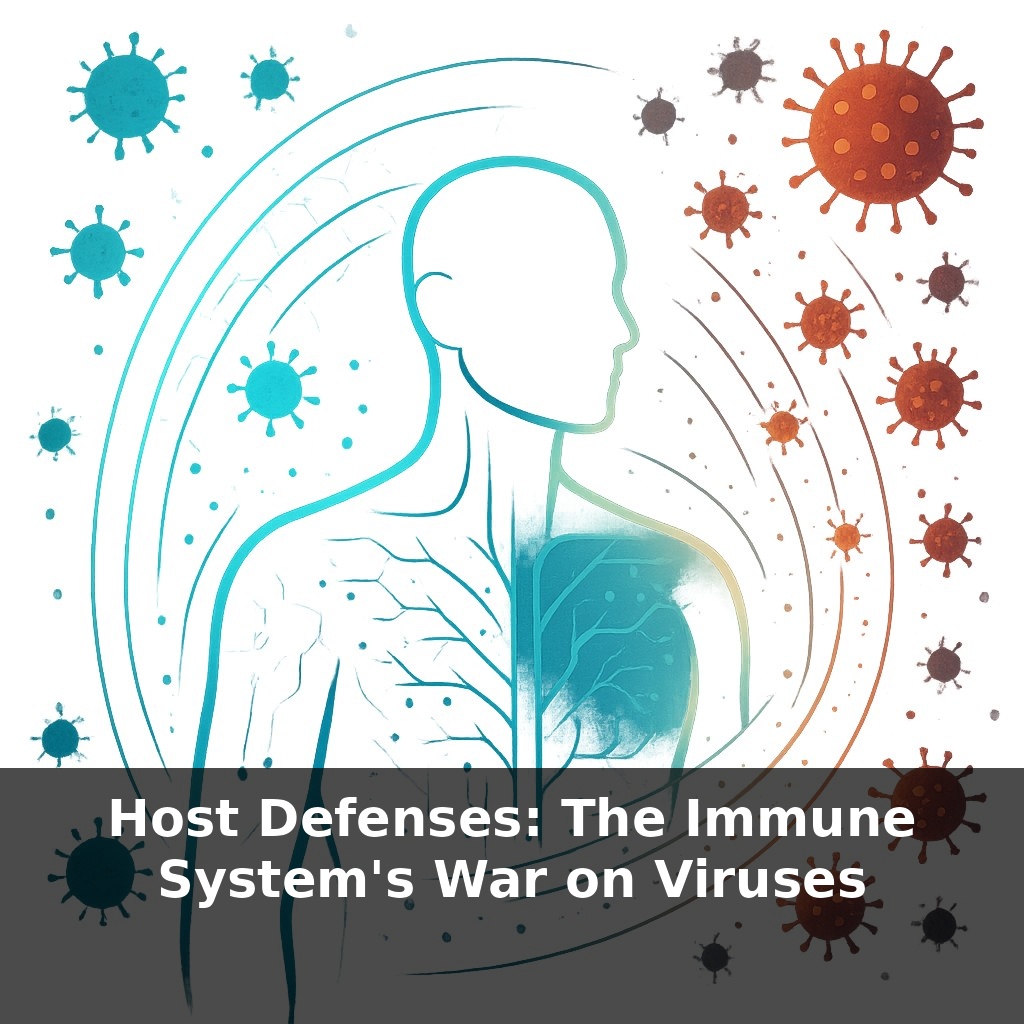
Right now, as you listen, your immune system is quietly killing thousands of virus‑infected cells every second—and you feel nothing. In this episode, we’ll step into that hidden war, where the same defenses that save your life can, if misfired, turn dangerously against you.
Here’s the twist we haven’t explored yet: your body isn’t just trying to get rid of viruses—it’s constantly negotiating *how hard* to fight. Too little response, and viruses from a simple cough can gain ground. Too much, and the very reactions meant to protect you can flood your lungs, scar your heart, or confuse your own tissues for the enemy.
This balance plays out on multiple layers. Fast, broad alarms rush in during the first hours, trying to contain the threat before it spreads. Slower, highly specific forces ramp up days later, tuned to recognize tiny molecular details on a particular virus strain. That timing gap is where many infections are won, lost, or pushed into dangerous territory.
In this episode, we’ll connect those hidden decisions to things you’ve actually seen: vaccines that work brilliantly, antivirals that must be timed just right, and cases where “strong immunity” backfires.
Some of the most important “calls” in this internal war happen long before a specific virus arrives. Your genes, age, sleep, stress level, gut microbes, and even past infections all help set the default volume on your responses—like a thermostat pre‑programmed before winter hits. Two people can meet the same virus on the same day and have completely different outcomes: one gets mild symptoms, the other ends up in intensive care. That isn’t randomness; it’s the accumulated history of their immune training, vulnerabilities, and environment, suddenly revealed under pressure.
The first moves in this battle are brutally simple: *detect* something wrong, *broadcast* the danger, and *buy time*. That starts at the level of single cells.
Many of your cells are studded with pattern‑sensing receptors that act like biochemical tripwires. They don’t care which virus shows up; they’re tuned to generic features like “RNA in the wrong place” or “unshielded viral DNA.” When tripped, they trigger interferons—signal proteins that spread from cell to cell, warning neighbors to lock down their machinery and making it harder for viruses to copy themselves. This is why, in many infections, you feel off—achy, tired—*before* the virus has done much direct damage: your own alarm system is turning down normal function across tissues.
Innate cells then respond to those alarms. Natural killer (NK) cells patrol for stressed or abnormal cells, especially those that have stopped displaying their normal “ID badges.” Virus‑infected cells often lose those badges to hide from future adaptive responses; NK cells treat that absence as suspicious and can trigger death from the outside. At the same time, professional antigen‑presenting cells—like dendritic cells—sample debris from the infection site and migrate to lymph nodes, where the slower, more tailored side of immunity is waiting.
There, B cells and T cells with the right receptors are selected, expanded, and refined. This refinement matters. B cells that bind loosely to a viral protein can, over days, mutate and be re‑selected to bind much more tightly, leading to antibodies that neutralize efficiently rather than just decorating the virus. When this process goes well, you get durable memory that can be rapidly recalled on re‑exposure or boosted by vaccines.
But “more” is not always “better.” Some antibodies latch onto a virus without blocking entry and can accidentally help it into immune cells—a phenomenon called antibody‑dependent enhancement, documented in dengue and a central concern in vaccine design. Similarly, an overly intense T cell response in delicate tissues can shred infected cells *and* critical architecture, leaving scars long after the virus is gone.
A useful parallel is a controlled burn in forest management: done at the right intensity and timing, it reduces fuel and prevents catastrophe; unleashed in the wrong conditions, it becomes the catastrophe. Much of modern virology and immunology is about nudging that fire—through vaccines, antivirals, and immunotherapies—so it runs hot enough to clear infection, but not so hot that it consumes the host.
Consider how differently two “nearby” threats can play out. Seasonal flu often pushes your defenses just enough to cause a week of misery, then resolution. Ebola, in severe cases, can trigger such intense signaling that blood vessels leak and organs fail, even when the amount of virus isn’t astronomically high. The damage emerges from *how* your own cells respond, not just from the invader’s brute force.
You can also see this tuning in long‑term outcomes. After measles infection, research shows people can lose immune memory to other microbes for months to years—like deleting parts of a hard drive to install a single huge program. Survivors are then more vulnerable to unrelated infections until that “library” is rebuilt through new exposures or vaccination.
On the flip side, carefully designed vaccines act more like software patches: they introduce minimal risk while extending your system’s recognition list, so future encounters can be handled quickly, locally, and with far less collateral damage.
Your immune “playbook” isn’t static; it’s being edited all the time. Past infections, vaccines, even gut microbes can tilt future responses—toward rapid control, chronic smoldering, or dangerous overreaction. That’s why two people can meet the same virus and walk away with a sniffle or land in intensive care. Researchers now map these immune “fingerprints” the way financiers profile risk, hoping to predict who needs boosters, blockers, or entirely new kinds of antiviral therapy.
We’re still only sketching the playbook. Next, researchers want to forecast outcomes the way meteorologists predict storms: short‑term “immune weather” from blood markers, plus long‑term “climate” shaped by age, stress, and prior shots. That future could mean routine checkups that not only count cells, but forecast how you’d handle the next new virus.
Before next week, ask yourself: 1) “If a virus hit me today, how prepared is my ‘front line’—my physical barriers—really? What’s one concrete change I can make this week (like better sleep, hand-washing habits, or reducing chronic stress) to give my innate immune system a real advantage?” 2) “Looking at my daily routine, where am I regularly doing things that might confuse or exhaust my immune ‘soldiers’ (e.g., constant snacking, late-night screens, excess alcohol), and what’s one I’m willing to experiment with changing for just seven days?” 3) “If I thought of vaccines and prior infections as ‘training drills’ for my immune memory, are there any recommended vaccines or boosters I’ve been putting off—and what’s my specific next step to check my status (e.g., portal, pharmacy, or doctor’s office) before the week is over?”