 2min preview
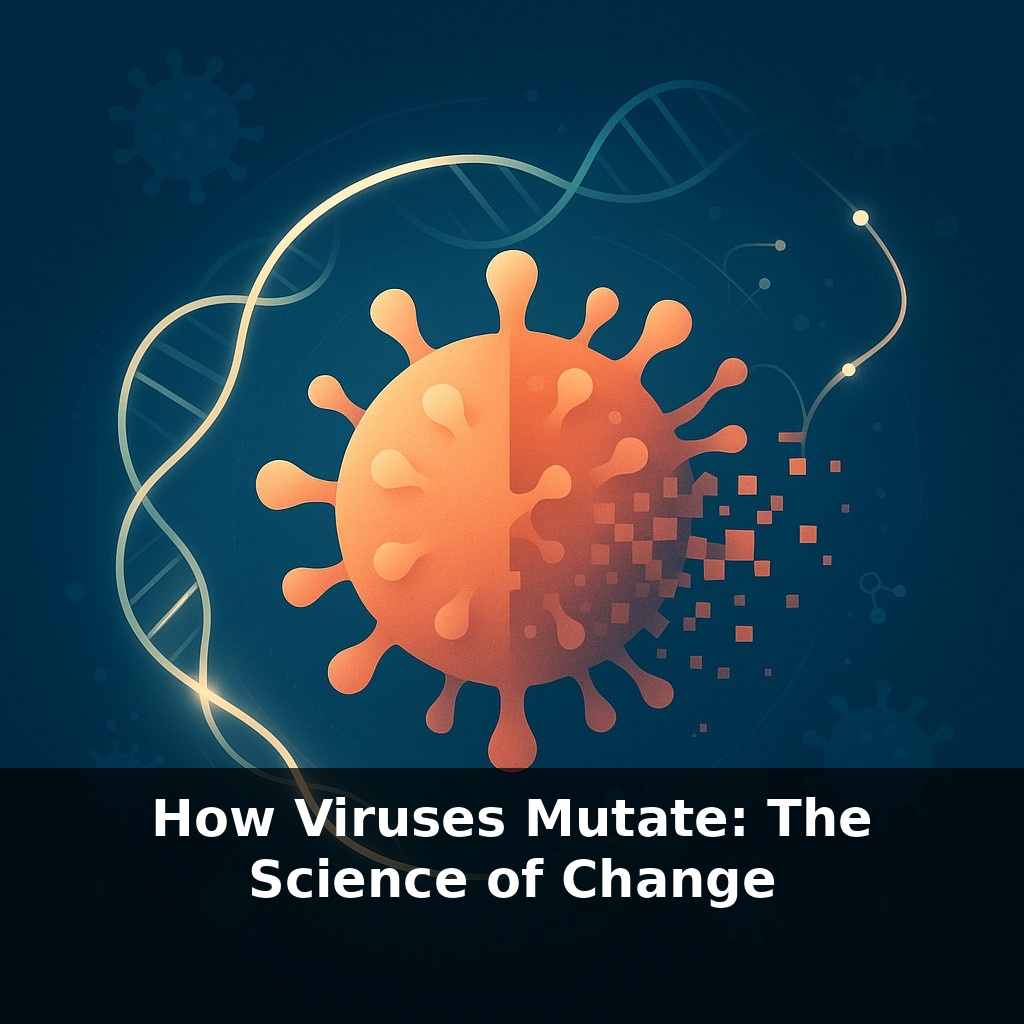
How Viruses Mutate: The Science of Change
📝 Transcript
A virus that never changed would quickly disappear. Yet the ones inside you right now are quietly rewriting themselves as they spread from cell to cell. One tiny genetic typo can mean nothing… or unlock a version that outruns your immune system and the next vaccine.
Viruses don’t “decide” to evolve; they’re forced to. Every time they copy themselves, their genetic code is nudged by chemistry, chance, and the limits of their own molecular tools. Some viruses, especially RNA ones like flu and coronaviruses, are sloppy copiers: they swap letters, drop chunks, or even trade entire gene segments when two strains infect the same cell. Others, like many DNA viruses, change more slowly but still drift over time.
This constant churn creates a moving target. Some new versions are duds and vanish. Others spread just a bit better, dodge a few more antibodies, or resist a drug long enough to gain an edge. Those are the ones we notice, because they reshape outbreaks, force updates to treatments, and sometimes fuel new waves of disease. In this episode, we’ll unpack how these changes happen, why some viruses evolve faster than others, and how scientists actually watch evolution in real time.
Subscribe to read the full transcript and listen to this episode
Subscribe to unlockSubscribe for $1.99/month to unlock the full episode.
From this course
How Viruses Work: From Common Cold to Pandemics
5 episodesUnlock all episodes
Full access to 5 episodes and everything on OwlUp.
Subscribe — $1.99/monthLess than a coffee ☕ · Cancel anytime