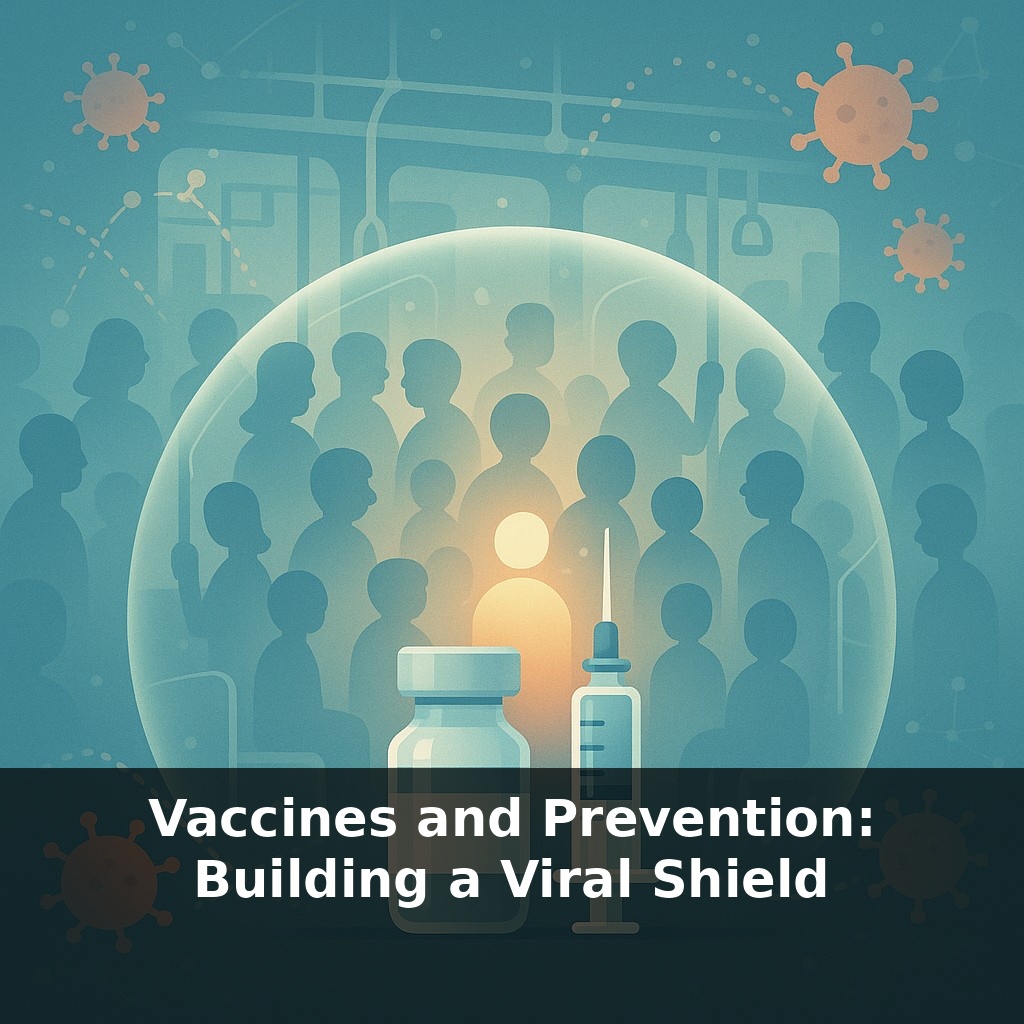
A simple shot in the arm quietly saves several million lives every year—yet many people still skip it. On a crowded bus, one vaccinated rider can break a whole chain of infection. In this episode, you’ll learn how vaccines turn individual choices into community armor.
Vaccines don’t just tilt the odds; they can flip the entire game. The World Health Organization estimates that existing vaccines prevent 4–5 million deaths every year, a number comparable to the population of a major city simply not dying annually. Economically, they’re just as powerful: smallpox vaccination cost around US$300 million per year but saved about US$1 billion annually once the disease was wiped out—more than a 3-to-1 return, every year. And modern platforms are speeding things up. The Pfizer‑BioNTech COVID‑19 vaccine reached Phase 3 trials with over 43,000 participants and showed 95% efficacy across age groups, going from genetic sequence to authorization in under a year. In this episode, we’ll connect those numbers to your daily life: how your decisions affect vulnerable neighbors, why coverage levels matter, and where vaccine technology is headed next.
Yet vaccines are only as strong as the systems around them. To stop measles, for example, about 92–95% of people must be immune; fall to 85%, and outbreaks can rip through schools and communities. Reaching and maintaining those levels is harder than it sounds. Roughly 25% of doses worldwide are thought to be temperature‑damaged in transit, and in 2023 nearly 14 million infants missed even a single routine shot. In this episode, we’ll connect science to logistics and behavior—how storage, access, and trust determine whether vaccine potential becomes real‑world protection.
At the microscopic level, vaccination starts with antigen‑presenting cells (APCs). Within minutes of injection, local dendritic cells ingest vaccine components, chop them into fragments, and display these on MHC molecules. Within nearby lymph nodes—roughly a few millimeters away but functionally a different world—T and B lymphocytes scan millions of possible antigen combinations per second. Only a tiny fraction—often fewer than 1 in 100,000 cells—recognizes a given vaccine antigen strongly enough to activate.
Once activated, these rare cells expand dramatically. A single B cell can proliferate into thousands of antibody‑secreting plasma cells over 3–5 days, releasing billions of antibodies per milliliter of blood. In parallel, CD8⁺ “killer” T cells increase in number up to 10,000‑fold, providing coverage across tissues. After the peak response, around 90–95% of these expanded cells die off; the remaining 5–10% become long‑lived memory cells. Some memory B cells have been detected more than 40 years after smallpox vaccination, and measles‑specific antibodies can remain at protective levels for decades after 2 doses.
Different platforms tune this process in distinct ways. Viral‑vector vaccines tend to induce especially strong CD8⁺ T‑cell responses—useful for viruses like Ebola that hide inside cells. Recombinant protein vaccines often need adjuvants such as alum or saponin‑based molecules; these can boost antibody titers 10‑ to 100‑fold by amplifying local inflammation. mRNA vaccines, despite delivering only a strand of genetic code, can trigger neutralizing antibody levels comparable to or higher than many traditional platforms within 7–14 days of the second dose.
At the population level, coverage, spacing, and targeting matter. Two doses of measles‑containing vaccine reach ~97% individual protection, but if only 80% of children receive both doses, outbreaks still occur because the virus has an R₀ as high as 18. In contrast, influenza vaccines may average 40–60% effectiveness in a given year, yet widespread use in older adults has cut flu‑related hospitalizations by tens of thousands annually in countries like the United States. Booster campaigns add another layer, restoring waning immunity; for COVID‑19, third doses have roughly doubled protection against severe disease in older age groups during variant waves in several national studies.
Your challenge this week: pick one real vaccination program—local school requirements, workplace flu shots, or a national campaign—and trace how it would change if uptake shifted by just 5 percentage points up or down. Look at who gains protection, who stays exposed, and where the virus could still find a path.
In 2019, Samoa’s measles crisis showed how quickly gaps can be exploited: national coverage had fallen below 35%, and in just a few months over 5,700 people were infected in a country of about 200,000—nearly 3% of the entire population. By contrast, countries holding measles coverage near 95% can go years without a single local case, even while importing infections from abroad. The difference is often decided far from clinics: in budget meetings that fund nurses, data systems, and outreach. One analysis in low‑ and middle‑income countries found every US$1 invested in childhood immunization returned about US$26 in broader economic benefits by 2030. Think about a city of 1 million people: if 930,000 are vaccinated against a virus with moderate spread, an introduction might trigger a few dozen cases. Drop that to 880,000, and the same spark can jump to thousands, overwhelming ICU beds and forcing school closures within weeks.
As platforms improve, the focus shifts from single diseases to broad protection. One trial of a universal flu vaccine reported >90% of volunteers developing antibodies to multiple strains after 2 doses. Self‑amplifying RNA candidates use up to 10× less material, so a 1,000‑liter batch might yield millions more doses. Microneedle patches tested in Ghana and India stayed stable at 40 °C for months, hinting that routine childhood shots could one day move from clinics to mailboxes.
Think concretely. A city with 700,000 adults: if 10% more accept routine shots, that’s 70,000 fewer easy targets for the next virus. Shift just 3% of the health budget toward outreach and mobile clinics, and you could cover an extra 50–80 schools. Your personal schedule—keeping boosters current—quietly plugs gaps that models and policies can’t fully predict.
To go deeper, here are 3 next steps: First, grab the CDC’s Adult Vaccine Assessment Tool (search “CDC adult vaccine quiz”) and in under 5 minutes you’ll get a personalized list of shots you may be missing—screenshot the results to bring to your next appointment. Next, bookmark and skim “The Vaccine Book” by Dr. Paul Offit or the free online resource “Vaccines and Your Child” from the Children’s Hospital of Philadelphia to build your confidence about how vaccines work and why schedules matter. Finally, download the free Stocard or Apple/Google Wallet app and add your COVID-19, flu, and other vaccine records so you have a simple, portable “viral shield” log you can update after every shot.