The Hidden Job Market: Why 70% of Jobs Are Never Posted
📝 Transcript
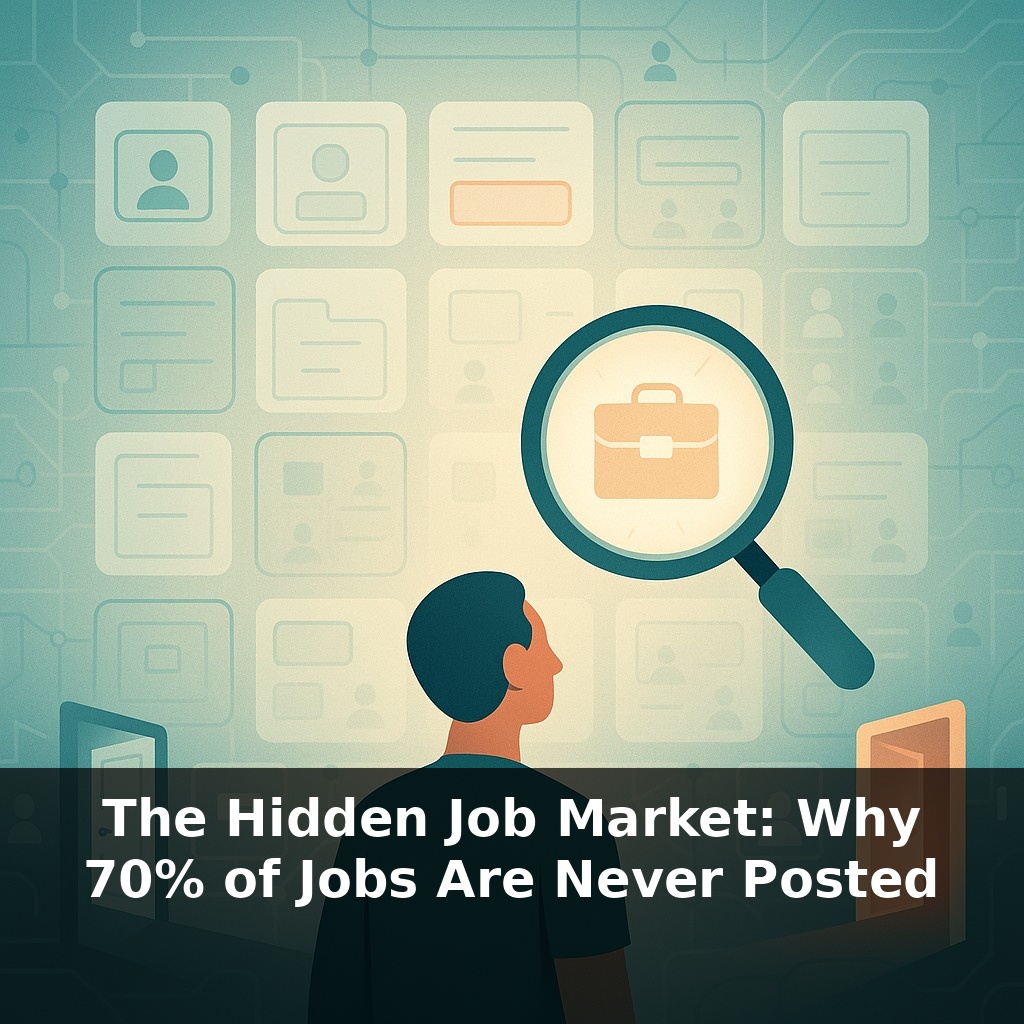
About half of all jobs are filled before a public posting ever appears. You’re updating your résumé, scrolling through listings, chasing a role that quietly vanished yesterday—because a manager already had “their person” in mind. So the real question is: how do you become that person?
Seventy percent of roles may never hit a job board—but they still have deadlines, budgets, and urgent problems behind them. While you’re scanning listings, hiring managers are quietly asking their teams, “Who do we already know who can handle this?” The search often starts long before the title is finalized or HR is looped in. That’s the part most candidates never see.
In this episode, we’ll explore how those early conversations form a kind of “pre-market” for jobs—where relationships, reputation, and timing matter more than perfectly tailored applications. We’ll look at why companies lean so heavily on referrals and internal moves, how recruiters proactively hunt for talent, and what signals actually get you pulled into those hidden discussions before a posting ever appears.
In this hidden market, timing and proximity quietly outrank polish. Roles often start as “we need help with this mess” long before they become a tidy job description. A VP vents in a meeting, a team lead loses a key player, a new product gets a green light—then someone asks, “Who’s already close to this work and could step in?” Think of it like being near a lightning strike: you don’t control when it hits, but standing on the right hill—visible projects, helpful comments, smart questions—dramatically changes your odds of being the person they reach for next.
When researchers dig into how roles actually get filled, a pattern appears: most hiring flows along existing lines of trust, not through giant funnels of strangers. That’s why employee referrals are wildly “overpowered”: they may be a small fraction of applicants, but they generate a huge share of offers. From an employer’s view, this is simple risk management. A referred candidate arrives pre-vouched-for, with fewer unknowns, and usually ramps up faster. Data backs it up: referred hires stay longer, which means fewer painful re-hiring cycles later.
The same logic drives internal moves. If you already know how someone behaves under pressure, collaborates across teams, and learns new tools, promoting or laterally shifting them is like reinvesting in a stock you’ve watched for years. The company cuts cost-per-hire, managers avoid gambling on culture fit, and HR spends less time wading through 250 nearly identical applications for one opening.
But here’s the twist: those advantages aren’t reserved for insiders at big brands. You can create similar “trust shortcuts” even if you’re outside the building. How? By showing your work in places decision-makers actually see: thoughtful posts on LinkedIn, targeted contributions in niche Slack groups, relevant answers on GitHub or Stack Overflow, short teardown threads about a company’s product, concise Loom videos walking through a project. These become public receipts of how you think and operate.
Small and mid-sized companies, especially, lean on these informal signals. They might peek at who engages smartly with their content, who consistently helps others in professional communities, or who keeps popping up with sharp, low-drama insights. Over time, you stop being “a random applicant” and start being “that person who really understands our space.”
Think of it like compound interest in finance: each tiny, visible proof of your skills quietly accumulates. One post won’t change your career—hundreds, over months, can tilt the odds that when a role quietly opens, your name is the one someone brings into the room.
A practical way to tap into this quiet flow of opportunities is to treat each interaction like a micro-audition. Comment thoughtfully on a VP’s post with a concrete idea, not generic praise. DM a recruiter a short, relevant case study instead of “checking in.” When a startup you admire ships a new feature, send a brief Loom walking through one improvement you’d test and why. These are tiny, low-stakes “samples” of how you think.
You can also engineer surface area where decision-makers already look. Speak at a niche meetup and post the recording. Contribute a pull request to an open-source tool your target company uses. Host a small roundtable on a sticky problem in your industry and invite three people you respect. One analogy: think of yourself as planning a layover in a hub airport—by routing your efforts through the “hubs” your ideal employers already pass through, you dramatically increase the odds of a meaningful connection without chasing every single flight.
As AI-driven tools quietly route roles to “best bets” before announcements, the edge shifts toward people who can be *found* and *measured*. Treat your online footprint like a garden: diversify what you plant (projects, collaborations, public wins and failures) so algorithms and humans can see patterns, not snapshots. Expect invite-only talent pools, skills badges, and even portfolio “credit scores” to matter more than where you worked, and earlier in the process.
Treat this as ongoing exploration: test small bets, notice what draws interest, and double down there. Your challenge this week: map five teams or leaders you’d love to work with, then do one tiny, useful thing for each—share a resource, suggest an idea, or connect them to someone. Track which seeds get a response and adjust your map.
From this course
Land Your Dream Job: The Modern Interview System
8 episodesUnlock all episodes
Full access to 8 episodes and everything on OwlUp.
Subscribe — $1.99/monthLess than a coffee ☕ · Cancel anytime