The Principles of Influential Leadership
📝 Transcript
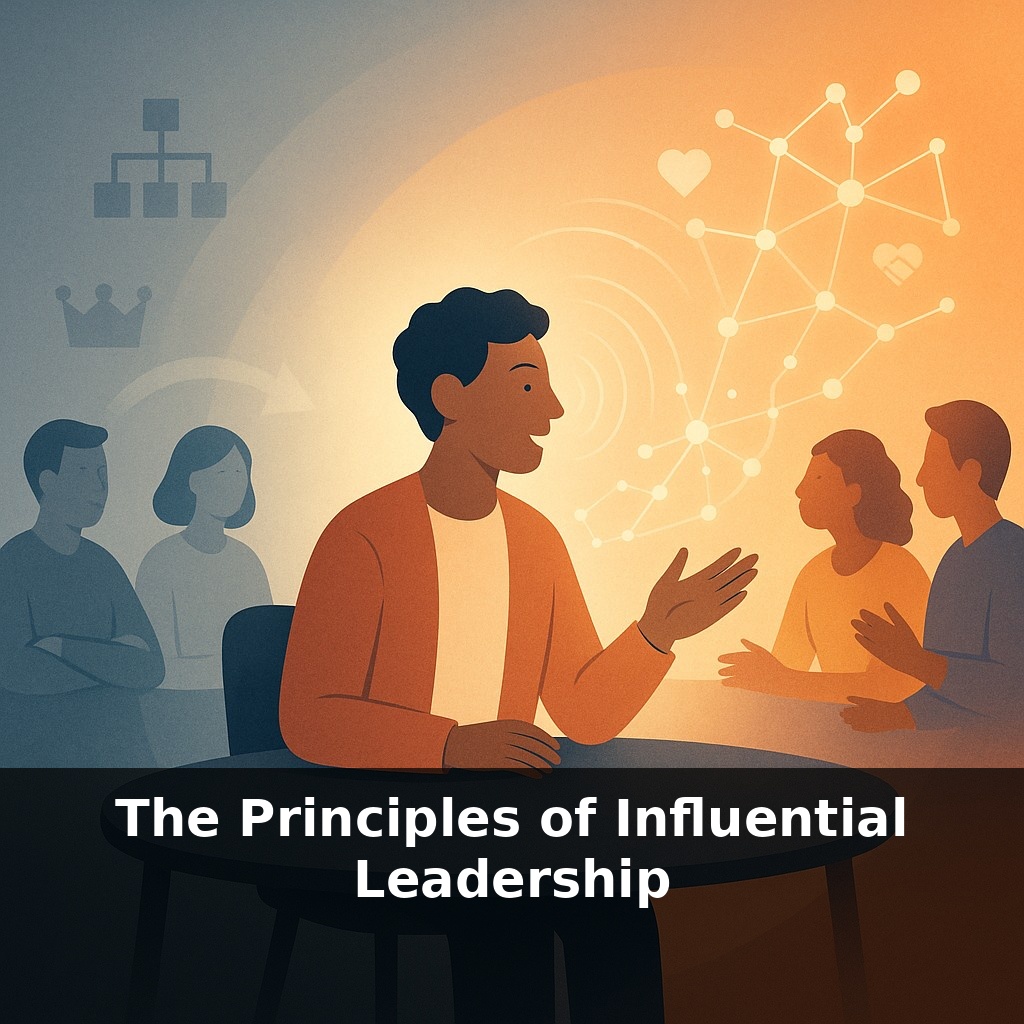
A quiet shift in tone at a meeting can move a room more than any org chart. One leader speaks, and people comply. Another speaks, and people lean in, argue, build. Same topic, same people, totally different energy. The twist: neither of them actually has more authority.
That gap between “people comply” and “people commit” is where influential leadership lives—and it’s built long before anyone walks into the room. By the time you speak, your track record is already in the air: whether you keep promises, how you react to bad news, who you give credit to, how you talk about people when they’re not present. Influence is less a single moment and more a running “reputation score” others update every time they interact with you.
In modern, matrixed work, this matters more than title. Projects cut across teams, decisions require buy‑in, and expertise is scattered. You can’t just lean on hierarchy; you need people who don’t report to you to still choose to follow your lead. That’s where trust, credibility, and empathy become practical tools—not soft extras, but the infrastructure that makes your ideas spread and stick.
Influence, then, is less about a single heroic moment and more about how you design the “system” around you. Think of your day like a user interface your colleagues have to navigate: Do your messages make decisions clearer or fuzzier? Do meetings unlock progress or stall it? Research on social networks shows that people with the most sway aren’t always the most senior—they’re the ones who sit at the crossroads of information and relationships. They spot patterns early, translate across groups, and reduce friction so others can move faster and feel smarter when they work with them.
Influential leadership starts with a simple question: *When people walk away from an interaction with you, what changes for them?* Not what they think of you—but what they now feel able, willing, or motivated to do. That shift is the true “unit” of influence: a micro‑change in someone else’s clarity, confidence, or commitment.
Research on power is helpful here. French and Raven showed that only some forms of power come from role; the rest come from what others *experience* with you over time—your expertise, how much they like and respect you, and whether you control resources or information they value. In knowledge work, those informal forms often outweigh job titles, because people can’t be forced to care about complex, ambiguous problems—they have to be convinced or inspired.
The leaders who do this well typically work along three tracks at once:
1. **Cognitive track: how people make sense of things with you.** They use rational persuasion well—but not as a blunt instrument. They tailor arguments to the other person’s goals, constraints, and language. They bring data *and* stories. They don’t just push their answer; they co‑create the logic so others feel ownership.
2. **Emotional track: how people feel around you.** Studies on influence tactics show that inspirational appeals build deeper commitment than facts alone. That doesn’t mean delivering a TED talk in every meeting; it means connecting a task to meaning: a customer’s life, a teammate’s growth, a larger change the work enables. People remember how you made them feel about their own role in the story.
3. **Relational track: how the system responds to you.** Instead of hoarding access, they broker connections. They know who trusts whom, where friction lives, and which small introductions unlock big progress. Over time, others start to associate their name with “things move forward when they’re involved.”
Your challenge this week: in one recurring interaction—a weekly meeting, a 1:1, or a project chat—experiment with adding *one deliberate move* on each track. On the cognitive side, sharpen the “why now, why this” in a single sentence. On the emotional side, name explicitly who benefits and how. On the relational side, bring in one missing voice or connect two people who should be talking. Then watch, not how much you spoke, but how much more productively others respond.
A practical way to see this in action is to look at how specific leaders shift behavior without changing anyone’s job title. When Satya Nadella took over at Microsoft, he didn’t start with a reorg; he started with how people *talked* about problems. “Hit refresh” wasn’t just a slogan—it was permission to admit what wasn’t working and to be curious instead of defensive. That single norm change altered what people felt safe saying in meetings, which, in turn, changed the kind of ideas that surfaced and the speed of decisions.
Think about your own team like a codebase you’re refactoring. You’re not rewriting the whole system overnight; you’re cleaning up one function at a time so everything runs smoother. Maybe you standardize how decisions are documented, or you swap “Who’s to blame?” for “What can we learn?” Those micro‑shifts don’t look dramatic in the moment, but they compound. Over a quarter or two, people start routing their toughest problems through you—not because they have to, but because the “experience” of working with you reliably upgrades their thinking, options, and odds of success.
AI will keep getting better at monitoring tasks and routing decisions, but it will still struggle with the messy “why this, why now, with *these* people?” questions. The leaders who thrive will treat influence like updating an operating system, not just installing new apps: they’ll revise norms, default questions, and who’s invited into which decisions. In cross‑company projects, your ability to align volunteers—who can leave anytime—may become the real test of your leadership.
Influence deepens when people reliably leave interactions with you a bit clearer, braver, or more connected. Treat each conversation like updating a shared playbook: you’re testing better questions, safer debates, sharper focus. Over time, these micro‑patches accumulate, and the “system” starts running a version of leadership you barely need to announce.
Here’s your challenge this week: Pick one recurring meeting and deliberately practice “influential listening” by speaking for no more than 30% of the time and spending the rest asking open, future-focused questions (like “What would success look like for you on this?”) and reflecting back what you heard. Before the meeting, choose one value you want to embody as a leader (e.g., clarity, courage, or humility) and signal it explicitly in how you frame decisions (“I’m choosing clarity here, so let me spell out the ‘why’ behind this call.”). After the meeting, send a short follow-up message to the group naming one idea you’re adopting from their input and one decision you’re making—so they see their influence and your leadership in action.

Unlock all episodes
Full access to 10 episodes and everything on OwlUp.
Subscribe — $1.99/monthLess than a coffee ☕ · Cancel anytime