Right now, at work, someone’s avoiding a hard conversation that could save their project. Here’s the twist: research shows employees lose hours each week to conflict, yet the best leaders run toward it—and walk out with stronger ideas and more committed teams.
Teams don’t just lose time in tense moments—they quietly bleed momentum. Those side Slacks after a heated meeting, the calendar ping for yet another “clarifying” call, the extra revisions because no one pushed back early… they add up. Research suggests employees spend nearly three hours a week locked in these unproductive loops, and that’s just what people notice. Under the surface, something more expensive is happening: people start optimizing for safety instead of truth. They bite their tongue to protect relationships or reputations, then compensate with behind-the-scenes workarounds. Over time, your culture drifts. Decisions slow. Ownership blurs. In this episode, we’ll treat those frictions as data—and show how decisive leaders turn that data into better choices, faster cycles, and teams that leave less potential on the table.
Most of us were never actually taught how to handle conflict with authority—only how to avoid it or smooth it over. School rewarded “getting along,” early jobs rewarded “being easy to work with,” and suddenly you’re leading a team where real disagreement feels like a threat instead of an asset. The result? Meetings where everyone nods, then quietly steers in different directions. The shift you need isn’t to become harsher; it’s to become more structured. Think less “argue it out,” more “run a clear process” where tension has rules, a purpose, and an endpoint everyone can see.
Most people think they have a “conflict problem” when what they actually have is a *decision* problem. The tension hangs around because no one is sure who decides, how they’ll decide, or when the decision becomes final. So everyone keeps lobbying, venting, or stonewalling—often with good intentions.
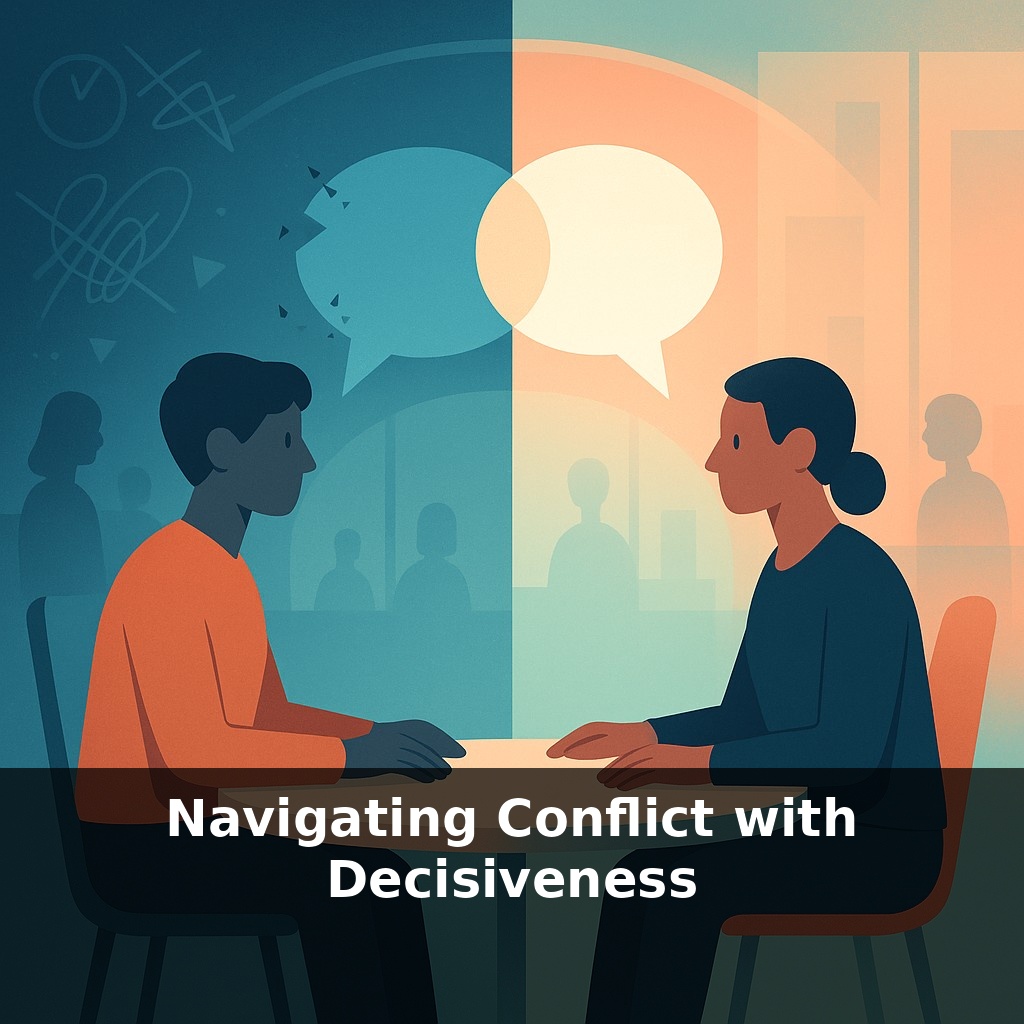
This is where treating conflict as information becomes practical: you turn fuzzy friction into a clear decision path.
Start by separating *positions* from *interests*. Positions sound like: “We must ship in Q2.” Interests sound like: “We need revenue this fiscal year” or “We promised a key customer.” When you surface interests on all sides, options multiply. Two teammates arguing “remote vs. in-office” might both actually care about focus time, onboarding juniors, and retaining talent—very solvable once named.
Next, give disagreements a visible track to run on. A simple version:
1. **Clarify the decision type.** Are we aiming for consent, consensus, or “leader decides after input”? Ambiguity here guarantees resentment later. 2. **Map the interests.** One sentence per person: “What are you optimizing for in this decision?” Write it down where all can see. 3. **Generate at least three viable options.** “My way vs. your way” is rarely the real choice. 4. **Stress-test with the OODA loop:** - *Observe*: What data actually matters here? - *Orient*: What constraints are real vs. assumed? - *Decide*: Pick a direction with a time-bound check-in. - *Act*: Commit visibly—who does what by when?
Here’s where psychological safety stops being abstract. Saying, “I’m 60% convinced, but we’re at diminishing returns on debate, so let’s disagree and commit to Option B for 30 days,” signals two things: dissent was heard, and there’s a path to revisit based on evidence, not ego.
You don’t need a title to do this. As a peer, you can say: “We’re circling. Can we clarify who owns this decision and what success looks like in 90 days?” You’re not grabbing power; you’re anchoring the group to a process.
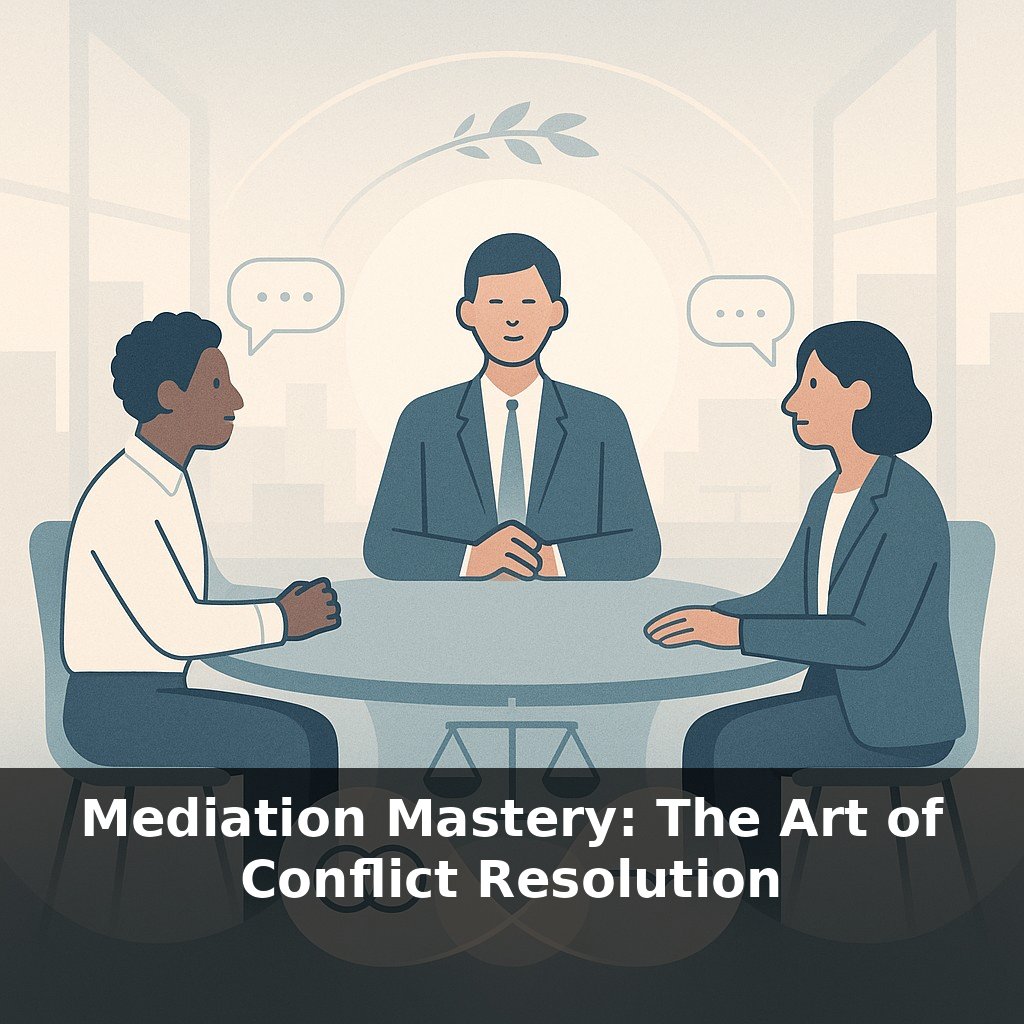
The leaders people trust most in conflict aren’t the ones who win every argument. They’re the ones who make *how* you’ll decide feel as fair and predictable as *what* you decide.
At Atlassian, a product squad was split: one camp pushed for a big-bang redesign, the other for tiny tweaks. Instead of letting it simmer, the PM wrote a one-page decision brief: “Goal: increase activation 10% in 90 days. Decision owner: PM. Inputs needed by Wednesday.” In the meeting, each person answered one prompt: “What are you optimizing for?” Answers ranged from “engineering risk” to “brand perception.” Three options emerged: full redesign, incremental release behind a feature flag, or an A/B test on just onboarding.
They chose the test, set a 6-week window, and agreed on a rule: no re-litigating unless the data missed the target by 5+ points. The argument didn’t magically vanish; it just moved into a container everyone could see.
Notice what shifted: instead of trading opinions, they traded constraints and experiments. You can do this in a 1:1 too: “Give me your top constraint, and I’ll give you mine. Then we’ll co-design three ways forward.”
Soon, your “room read” won’t rely only on gut feel. AI tools will flag rising tension the way budget dashboards flag overspend—early, quietly, and with patterns you’d miss. VR sims will let you rehearse tough calls like a pilot running flight drills, so the first time you say, “We’ll disagree and commit,” isn’t in front of your board. As teams stretch across time zones and employers, those who can align strangers quickly will own the most complex, high‑leverage work.
Treat each flare‑up like a product signal: specific, time‑stamped, and worth investigating. When you name who decides, how, and by when, tension becomes a roadmap instead of background noise. Like a good developer triaging bugs, you won’t fix everything at once—but you’ll stop guessing which issues matter, and start shipping better ways of working together.
Start with this tiny habit: When you notice yourself replaying a recent conflict in your head (like that awkward team meeting or tense text thread), quietly say out loud, “What do I actually want here—clarity, closure, or change?” Then, take a single slow breath in and out while mentally picking just one of those three. If you choose “clarity,” plan one specific question you could ask the other person; if it’s “closure” or “change,” decide whether this is worth a 5-minute conversation or just letting it go. That’s it—no big talk yet, just practicing naming the goal before you react.