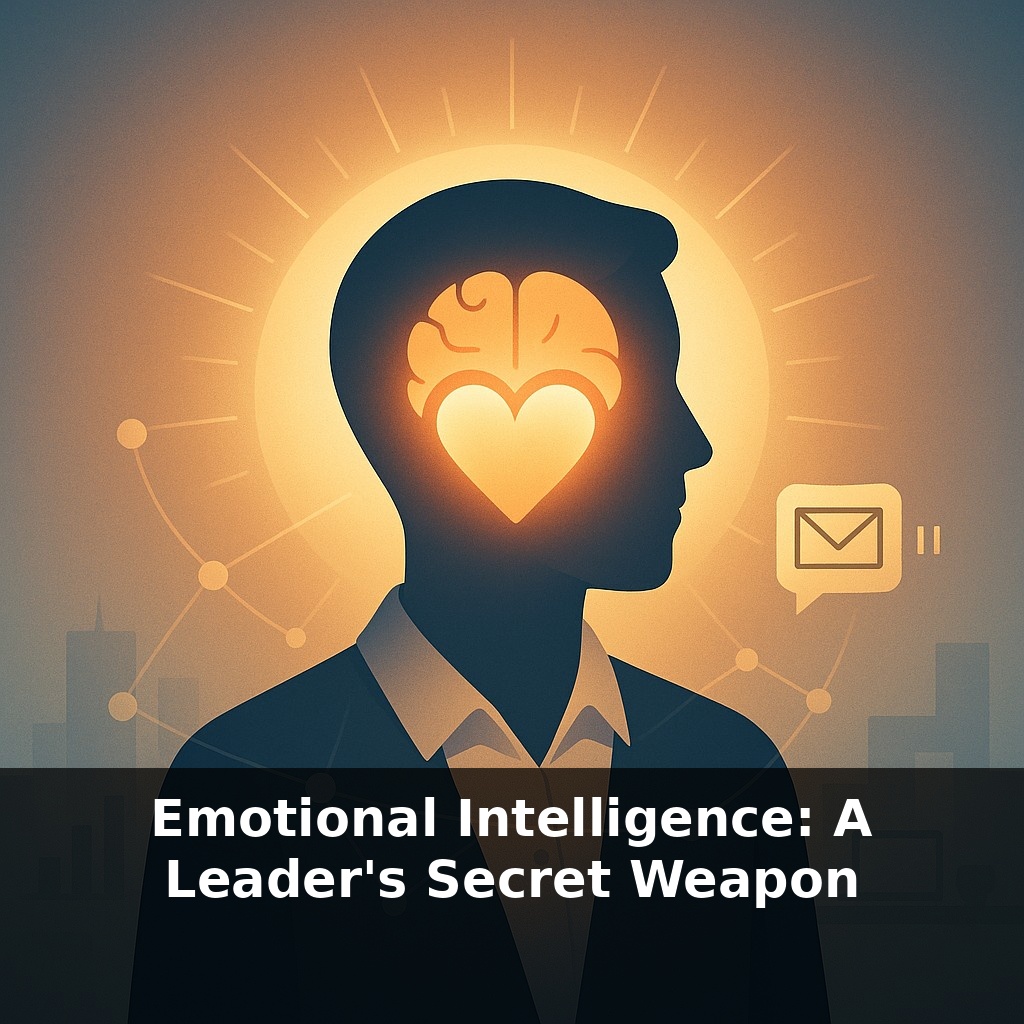
A Harvard study found that in top jobs, emotional skills explain nearly all the gap between average and standout leaders. So why do most leadership programs still obsess over strategy decks and dashboards, not feelings in the room? Today, we’re stepping into that gap.
Here’s the twist: your career has probably been judged on what’s on your résumé, but your trajectory is being shaped—quietly—by what happens in micro-moments your résumé never captures. The pause before you reply to a tense email. The expression on your face when someone shares bad news in a meeting. The way you adjust your tone when a project derails. These aren’t “soft” details; they’re the small hinges that swing big doors: promotions, trust, access to stretch assignments.
Research now makes it bluntly clear: the leaders who rise fastest aren’t just the ones who know the most, but the ones who notice the most—especially in themselves. They treat their inner world less like a black box and more like a control panel they can actually read and use, especially under pressure.
Here’s the catch: most workplaces still reward you for visible output—deals closed, decks shipped, fires put out—while the real leverage often sits in how you handle invisible tension. The colleague who shuts down after your rushed feedback. The stakeholder who keeps “forgetting” to invite you to key meetings. The direct report who suddenly turns in safe, bland work. Underneath all of that is emotional data you can learn to read, like learning the settings on a new app: once you know where to tap, you unlock features that were always there, quietly limiting or accelerating your influence.
Let’s make this concrete. When researchers break emotional intelligence down, they don’t find a vague “be more aware” cloud; they see specific capacities you can observe and train. Four of them matter most in leadership roles:
First, emotional self-awareness: noticing what you’re feeling with enough precision that you can actually work with it. Not just “I’m stressed,” but “I’m anxious because the timeline slipped and I’m worried my credibility’s on the line.” That extra resolution is what lets you choose a response instead of defaulting to defensiveness, sarcasm, or silence.
Second, self-management: what you do with those emotions once you’ve named them. This isn’t about suppressing reactions; it’s lengthening the gap between stimulus and response. The leaders people trust under pressure usually aren’t calmer by nature—they’ve practiced micro-pauses, breathing, and reframing so often that it looks like temperament.
Third, social awareness: reading the room accurately. That might be the moment you notice your sharp “quick question” email lands differently with a junior colleague than with a seasoned peer, or that the most knowledgeable person in the meeting hasn’t spoken once. High-EI leaders treat those signals as information, not inconveniences.
Fourth, relationship management: using your own and others’ emotions to move conversations, not just tasks, forward. This is where tough feedback, conflict, and negotiations live. The best leaders don’t avoid hard topics; they sequence them. They lower defensiveness first, then address the issue, then reinforce the relationship.
Here’s where the neuroscience clips in: MRI studies show that simply putting words to what you or someone else is feeling dampens emotional reactivity in the brain. “You sound frustrated—what’s underneath that?” isn’t therapy-speak; it’s a performance tool.
Think of it like updating the operating system on your leadership “device.” The hardware—your intellect, your experience—stays the same. But once the OS is upgraded, familiar apps behave differently: 1:1s get more honest, cross-functional meetings get less political, escalation emails get rarer because issues surface earlier. Over time, results compound: higher engagement, lower turnover, more people willing to tell you the truth before it’s career-ending or company-ending.
Consider two managers walking into the same crisis meeting. One has strong technical answers but barges in, clipped tone, eyes on the slide deck. The other pauses at the door, notices the tight shoulders and quiet side-conversations, and starts with, “Before we jump in—this has been a rough week. Let’s surface the main worries so we solve the right problem.” Same agenda, different emotional trajectory: the first gets compliance, the second gets commitment.
You can see this contrast in performance reviews, promotion panels, even who gets looped into early-stage discussions. People instinctively route sensitive, high-stakes work toward the leader who can absorb pressure without amplifying it.
In everyday practice, EI shows up in small design choices: how you open a meeting, whether you leave space after asking a hard question, how you follow up when someone seems “off.” None of this requires becoming warmer or more extroverted; it’s about treating emotional cues as operational signals, not background noise. Over time, that shift quietly rewires how much people are willing to tell you—especially when it matters most.
AI will quietly raise the bar on EI. When routine judgment and analysis get handled by systems, the scarce skill becomes sensing when a “correct” answer will land badly with real humans. Expect leaders to juggle three feeds at once: business metrics, team sentiment, and AI recommendations—more like a pilot scanning instruments while listening for engine tone. Those who can stay curious under pressure and adjust in real time will be trusted to steer the mixed human–machine crew.
Treat EI like a daily practice, not a personality trait. You’re not aiming to be perfectly serene; you’re learning to notice faster, recover sooner, and signal safety when pressure spikes. Over time, those tiny adjustments compound like interest—shaping whether people bring you problems early or wait until they’re too big for anyone to quietly fix.
To go deeper, here are 3 next steps: (1) Take the free *MindTools EI Quiz* and the *Greater Good Science Center’s “Emotion Regulation” quiz* back-to-back, then block 20 minutes to compare your scores with the four EI domains Daniel Goleman highlights (self‑awareness, self‑management, social awareness, relationship management). (2) Grab a copy of *Primal Leadership* by Daniel Goleman and, this week, read just Chapter 3 on “Resonant Leadership,” then use the “leader mood contagion” idea to consciously choose and track the emotional tone you bring into your next three team meetings in a simple Google Sheet. (3) Set up a free trial of *MoodMeter* or *Daylio* and, for the next 7 days, log your emotional state before and after key leadership moments (1:1s, feedback conversations, decision meetings), then bring that data to a trusted colleague or mentor for a 30‑minute debrief using Google’s free “Guide: Ask for Feedback” as a structure.