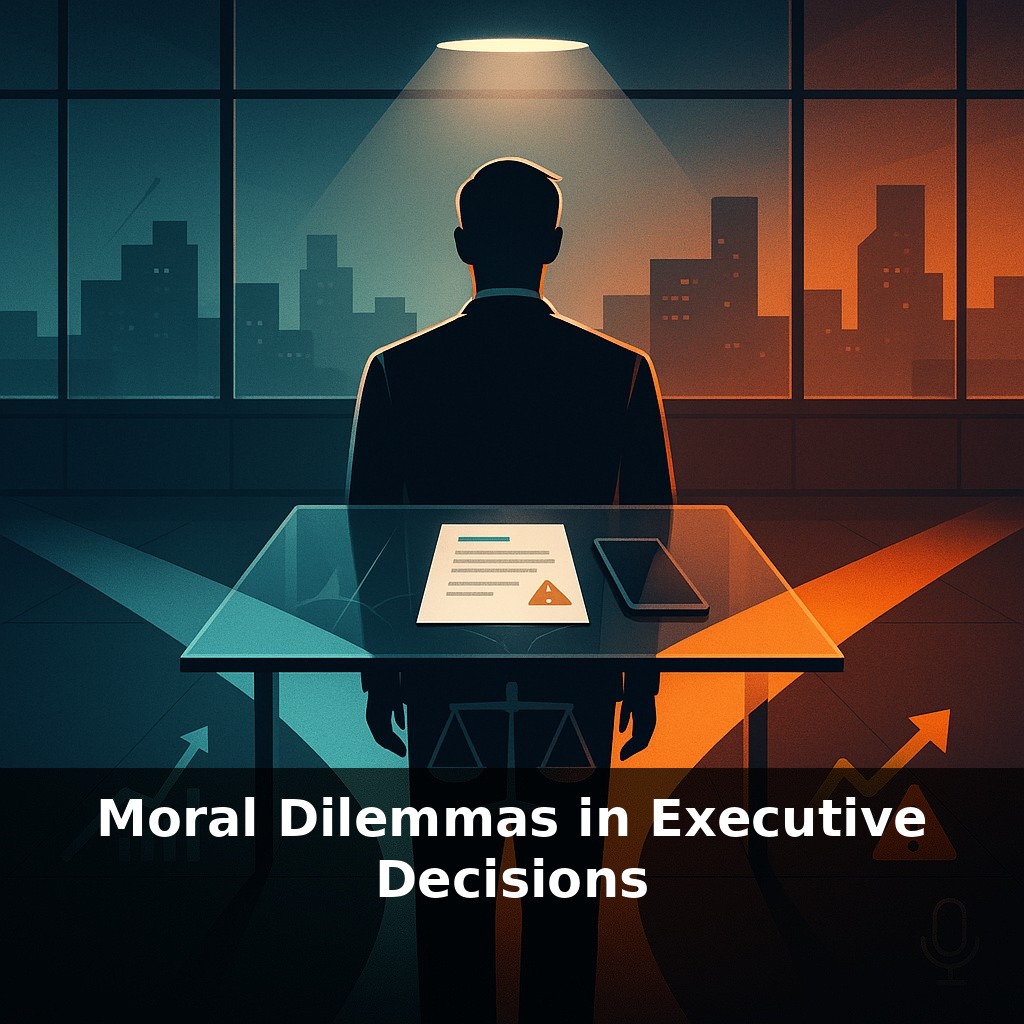
About half of employees say they’ve seen something unethical at work—yet most of those moments never make headlines. An exec signs off on a rushed product launch, trims one safety step, and quietly meets the quarterly target. Was that smart leadership…or the first crack in the foundation?
Forty‑one percent of U.S. employees recently reported seeing something at work that didn’t sit right with them. Most of those moments start small: a line in a report “smoothed out,” a risk “temporarily” downplayed so a deal can close, a privacy concern “parked” for the next release. These are rarely cartoon-villain decisions; they feel more like adding a pinch of extra salt to a recipe so dinner isn’t ruined. Yet history shows how these tiny bends can harden into a culture where cutting corners feels normal—and where a single scandal can erase years of growth. The real tension for executives isn’t between “good” and “evil,” but between competing goods: loyalty to the team vs. honesty with regulators, speed to market vs. care for users, shareholder returns vs. long-term trust. Moral clarity rarely appears on a spreadsheet; it has to be deliberately created.
Ethical frameworks help turn those fuzzy gut feelings into something you can actually work with. Utilitarian thinking pushes you to ask, “Net-net, who’s helped and who’s harmed if we do this?” Deontological questions sound more like, “What promises, policies, or principles would this break—no matter the upside?” Virtue ethics zooms in on character: “If this became public, would it reflect the kind of leader I’m trying to be?” Stakeholder theory widens the lens, forcing you to consider not just shareholders, but employees, users, communities, even regulators as part of the equation.
When real executives describe their hardest calls, they rarely start with “I didn’t know right from wrong.” They say things like, “I knew this was risky, but everyone else seemed fine with it,” or, “If I’d slowed things down, we might have missed the window and I’d have taken the blame.” The psychology of moral dilemmas at the top is less about ignorance and more about pressure, framing, and fear.
One pattern is the “lesser evil” mindset. A leader feels squeezed between two bad options—say, mass layoffs or aggressive cost-cutting that quietly shifts risk onto customers. Because neither path feels clean, the brain starts grading on a curve: “At least we’re not doing what our competitors do.” Over time, each compromise becomes a new baseline, so what felt uncomfortable last year feels “normal” today.
Another pattern is moral outsourcing. The CFO says, “Legal cleared it.” The CTO says, “Security signed off.” The COO says, “The board pushed for this timeline.” Everyone is technically correct, but collectively evasive. Responsibility gets diluted across experts and committees until no single person feels fully accountable for the human impact of the decision.
Then there’s time pressure. Under a looming deadline, ethical reflection feels like a luxury. You hear phrases like, “We can revisit this after launch,” or, “Let’s not make the perfect the enemy of the good.” Short-term framing narrows attention to immediate wins and losses, blurring long-term consequences that would look obvious in hindsight.
This is where virtue and stakeholder thinking become less about theory and more about design. Leaders who handle dilemmas well don’t just “have good values”; they build friction into the system. They insist on a short ethics note in major decision memos, invite the person most likely to disagree into key meetings, or ask one trusted skeptic, “If this blows up, what will we wish we had done differently today?”
Think of it like setting up two-factor authentication for your own judgment: your first instinct might chase speed or profit, but a second, deliberately designed check forces you to confront who else is affected, and what story you’ll have to tell yourself—and others—if things go wrong.
A CEO at a fast‑growing fintech is told a new algorithm slightly disadvantages older borrowers but boosts overall approval rates. Legal says it’s defensible. Product argues it’s “net positive.” Here the real question becomes: whose discomfort gets prioritized—the team’s fear of losing momentum, or customers who’ll never know why they were declined?
Johnson & Johnson, during the Tylenol crisis, chose public safety over cost, pulling products nationwide before regulators forced their hand. They treated trust as an irreplaceable asset, not a PR variable. Contrast that with Volkswagen’s emissions scandal: clever engineering solved a regulatory problem in the short term, then detonated over $30 billion in value once exposed.
One way to picture these forks in the road is like deploying a software update: you can ship fast with minimal testing, or build in more checks that slow you down but reduce catastrophic bugs. Ethical “testing” feels annoying in the moment—until you realize you’re not just protecting the company’s codebase, you’re protecting people’s lives and livelihoods.
Regulation and technology will only raise the stakes. As AI starts making complex calls, leaders won’t just ask “Is this fair?” but “Who owns the fallout when it isn’t?” Ethics will move from policy binder to live dashboard: real‑time sentiment, whistleblower data, and impact metrics surfacing before headlines do. Your future boardroom may feel less like a war room and more like a cockpit—constantly scanning for weak signals that today’s shortcut becomes tomorrow’s systemic harm.
Your real advantage isn’t spotting dilemmas, it’s rehearsing your response before they arrive. Like a chef refining a recipe, you adjust heat, timing, and ingredients until they reliably produce what you’d be proud to serve. Your challenge this week: notice one “small” gray‑area choice, and ask aloud, “What future am I normalizing if I say yes?”