Last year, Americans paid billions in overdraft fees—mostly on accounts where the money was technically there. The problem wasn’t income; it was timing. You get paid on Friday, a bill hits Thursday, and the bank quietly profits from that 24-hour gap.
That tiny timing mismatch you just heard about isn’t a one-off glitch—it’s a design flaw in how most of us run our money. We’re flying manual when we could be using systems.
Right now, your brain is doing work that software can do better: remembering due dates, deciding how much to save this month, wondering if you can afford that brunch. Each choice seems small, but together they create constant background noise—like a browser with 47 tabs open, all auto-refreshing.
This isn’t about becoming “more disciplined.” It’s about changing the default. When bills, saving, and investing happen automatically, the *path of least resistance* quietly becomes the path toward your goals. You still steer the direction, but you’re no longer dragging your finances forward one task at a time. Instead, money moves where it should, when it should—without you having to think about it every single day.
The real opportunity isn’t just “avoiding mistakes”; it’s redesigning how money moves through your life. Right now, most people treat finances like a series of pop-up alerts—rent here, card payment there, maybe savings if anything’s left. Automation flips that sequence. You decide the priorities once, then let them run quietly in the background, like a smart playlist that keeps serving up the right tracks without you DJ-ing every song. Over time, those small, automatic moves add up to something powerful: savings that grow, debts that shrink, and fewer decisions cluttering your brain.
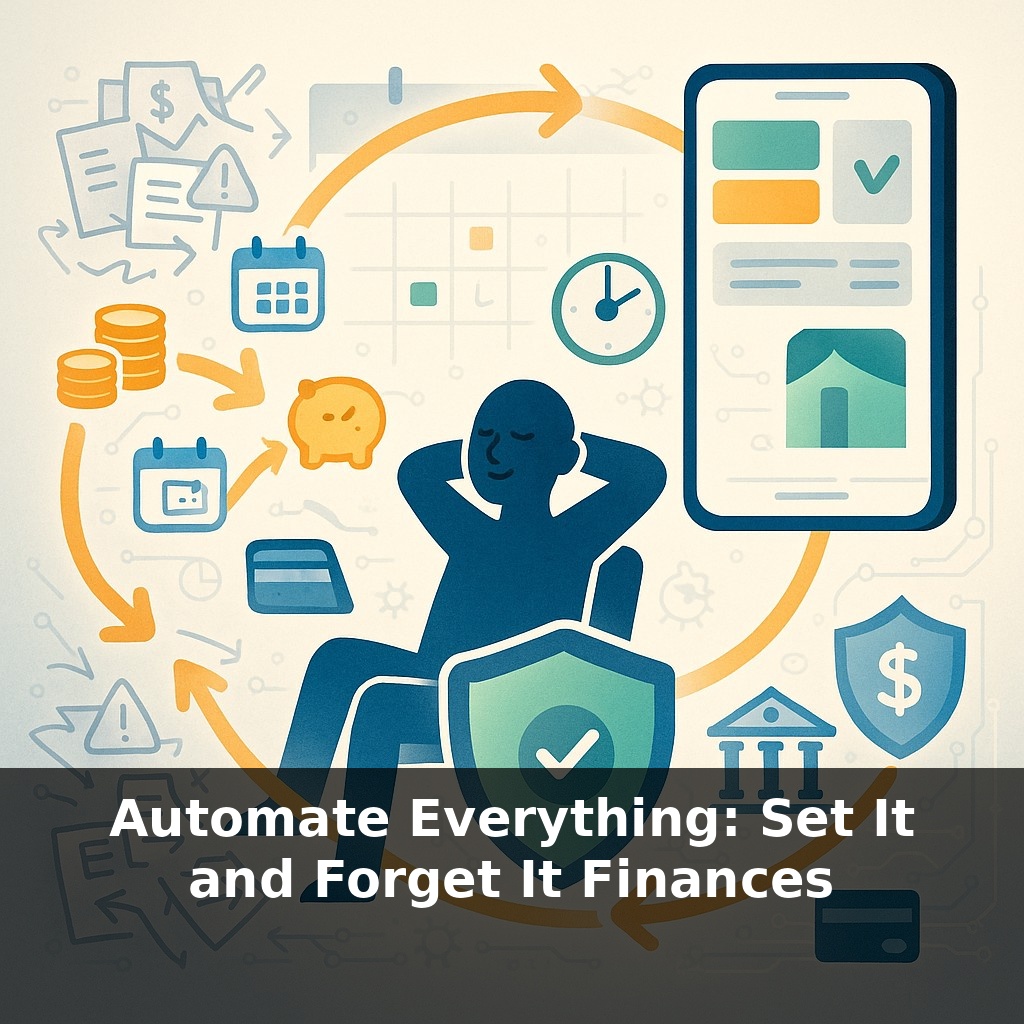
Here’s where this gets interesting: automation isn’t one big switch—it’s a sequence. Think of your money like a workflow in a well-run company: income comes in, gets routed to the right “departments,” and only then is anything left available for spending.
First, income. Most people stop at direct deposit, but that’s just step one. You can often split your paycheck at the employer level: 85% to checking, 15% straight to high-yield savings or a brokerage. If your employer doesn’t support that, you can mimic it with recurring transfers that fire the day after payday. The key is to move money *before* you see it as “available,” so you’re not relying on willpower.
Next, bills. The average person has around a dozen recurring payments—rent, utilities, insurance, phone, subscriptions. Manually juggling these is where late fees creep in. A more resilient setup routes all fixed bills from a single “bills account.” Your main checking feeds this account with a recurring transfer that covers the month’s total plus a small cushion. Then each bill is on autopay from that one place. You’ve just turned a scattered calendar of due dates into one predictable system.
Then, saving and investing. This is where small automations punch above their weight. Apps like Digit or round-ups like Acorns work precisely because they tap into money you’d barely notice. Tiny, frequent transfers exploit a bias in your favor: we adapt quickly to slightly lower spendable cash, but we rarely *decide* to move small amounts manually. Over time, those tiny moves pile up quietly in the background.
Finally, monitoring. “Set and forget” is a myth; “set and lightly supervise” is the goal. Modern tools can send you alerts for unusual charges, low balances, or when a bill jumps. A short, recurring calendar event—say, the first Sunday of each month—to scan your accounts and automation rules keeps you in control without dragging you back into micromanagement.
Done right, your daily role shrinks. You’re not asking, “Can I afford this?” every time; you’re asking it once, in the design of your system—then letting that design run.
Think of this like designing a playlist that reshapes your day without you babysitting every song. You don’t pick each track in real time—you choose moods and rules, then let the system serve up what fits. Money can work the same way.
For example, someone earning irregular freelance income might set a rule: every payment that hits checking triggers three moves—40% to a “tax” sub-account, 20% to long-term investing, the rest to spending. No spreadsheet, no willpower battle on a slow month; the rule quietly scales up and down with reality.
Another person might build “guardrails” instead of goals. They cap dining-out at $300/month via a card with a limit that low, used only for restaurants. Once it’s tapped out, that category is done—no judging, no tracking, just a rule enforced by the card itself.
Over time, you can stack rules like this: a raise that’s 100% routed to savings, a card used only for travel that’s auto-paid from a dedicated fund, or a small weekly transfer into a “fun” account so guilt never has to join the conversation.
As tools get smarter, your role shifts from “doer” to “designer.” Instead of pushing buttons, you’ll be tuning rules—like adjusting EQ settings on a mixing board while the music plays itself. AI could soon re-shop your insurance annually, redirect extra cash during low-spend months, and tweak investments after market swings. The real skill won’t be memorizing products, but deciding: What do I want my money *system* to prioritize when tradeoffs appear?
Your challenge this week: pick **one** money task you still handle manually—maybe a subscription, a transfer to savings, or a card payment—and turn it into a rule that runs without you. Then watch how quickly you forget that task even existed. That quiet mental space you get back? That’s the real dividend this system pays over time.