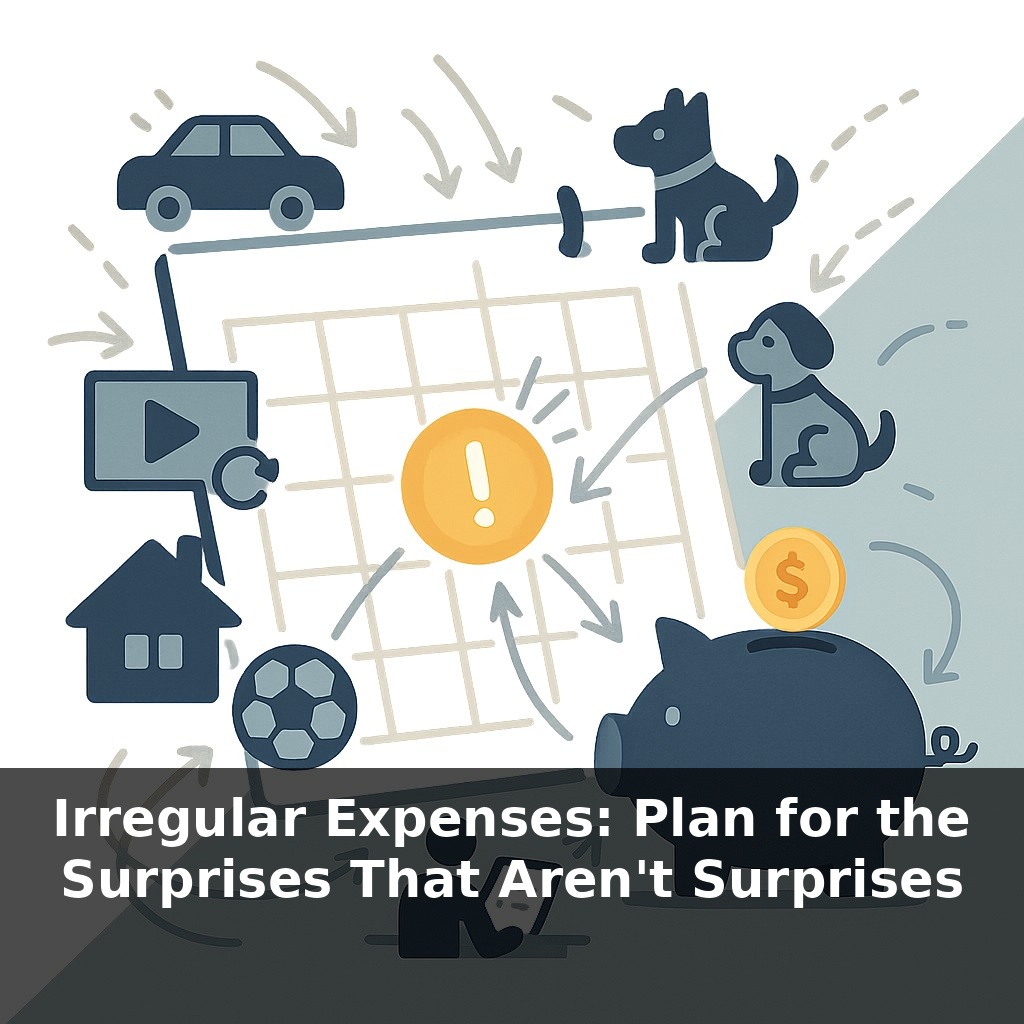
About half of us will face a big “surprise” bill this year—yet almost all of those costs are completely predictable. Your car, your dog, your roof, your kid’s activities… they’re all quietly lining up. The twist is this: we treat the calendar like a surprise generator.
Here’s the sneaky part: the problem usually isn’t the bill itself—it’s the timing. The dog gets sick the same month the car needs brakes, right when the annual software subscription renews. Each thing is manageable on its own, but stacked together they feel like a financial pileup. So we reach for credit cards, “float” with buy-now-pay-later, or quietly raid savings meant for bigger goals.
The real skill isn’t guessing what’s coming; it’s reshaping when the pain hits. Instead of one giant hit in December for gifts, or in April for taxes, you break those spikes into smooth, predictable lines across the year. That shift changes how your whole budget feels: calmer, more spacious, less like you’re bracing for impact every month—more like you’re actually steering.
So let’s zoom in on the part that usually gets skipped: actually mapping out those “later” costs before they show up. Most people rely on a fuzzy mental list—“car stuff, kid stuff, house stuff”—which works right up until three of them land in the same month. Instead, we’re going to treat these like mini-projects with price tags and rough due dates. Think: “Brakes within 12 months, $600,” “Winter clothes in October, $300,” “Annual card fee in March, $119.” Once they’re on paper with numbers and timing, you can start spreading them out on purpose instead of absorbing them on impact.
Here’s where we turn that rough map into something you can actually run your month on: numbers, buckets, and rules.
Start with one simple question for each “later” cost you listed: “How much do I need by the time this hits, and how many paychecks do I have until then?” That’s your formula:
Amount needed ÷ paychecks until due = contribution per paycheck.
Annual car insurance in 6 months and you’ll owe $900? Paid twice a month, that’s 12 paychecks: $900 ÷ 12 = $75 per check. Holiday gifts in 9 months, aiming for $600? With 18 paychecks, that’s about $33 per check. The math is boring on purpose; it keeps the drama out of your money.
Next, group these into a few clear “sinking fund” categories so you’re not juggling 17 micro-accounts. Think in clusters:
- Car: maintenance, repairs, registration, maybe tires - Home: repairs, appliances, property tax shortfall - Life & fun: gifts, travel, memberships, sports, kids’ activities - Annual bills: software, streaming, insurance if not escrowed
The goal is fewer, smarter buckets you can actually maintain. You can use separate savings accounts with nicknames, or one savings account and a simple spreadsheet or app that tracks how much of that balance belongs to each category.
Now, layer in an emergency fund on purpose, not by accident. Irregular expenses are “likely eventually”; emergencies are “unlikely, but painful.” A vet visit for vaccines? Irregular. A midnight surgery that costs $3,000? Emergency. Same with cars: oil changes and tires vs. a freak accident that totals the vehicle. Different pots.
This is where people get tripped up: they overfill one bucket and starve the others. So add a simple priority rule: protect housing, transportation, and basic health first. If cash is tight, you temporarily reduce contributions to low-stakes funds (like travel) before you touch the emergency fund or skip car maintenance.
Think of each sinking fund like a separate track in a music mix: you adjust the volume up or down as life changes, but you don’t delete the track every time the song gets loud. Over time, you’ll know roughly what each track needs to sound “right” for your life—and the surprises will get a lot quieter.
Think of sinking funds like separate “tabs” in your money system, each open for a different future cost. Instead of one crowded browser window (your main checking account) doing everything at once, you park specific dollars under labels like “Next car repair” or “Summer trip,” and let them quietly accumulate while you live your regular month-to-month life.
Need a starting set of tabs? Try three: “Wheels” (anything that keeps your car moving), “Roof” (anything that keeps your household running), and “People” (anything tied to kids, gifts, or plans with others). As your income or life changes, you can split a tab in two (separate “Travel” from “Gifts”) or merge them back when things are tight.
This is less about perfection and more about visibility. A $900 car bill is still $900—but when you can point to a balance labeled “Wheels: $620,” the decision shifts from panic to problem-solving: “How do I bridge $280?” instead of “Where do I find $900?” That quieter question is where better choices live.
A $1,000 surprise bill sinks over half of Americans—but most of those “surprises” were on the calendar all along. As tools evolve, your money system can, too. Some employers now offer emergency-savings accounts fed straight from payroll, like a side-stream that never hits checking. Banking apps are testing AI that flags when renewals, repairs, or seasonal costs are coming, nudging you to top up sinking funds before storms, both literal and financial, roll in.
Think of this as upgrading from reacting to events to running a quiet system in the background. Over time, patterns emerge: your dog, your roof, your hobbies each reveal a rhythm. Let that rhythm guide your targets. As your income, priorities, and seasons change, you can remix the amounts—like rebalancing a playlist—to match the life you’re actually living now.
Here’s your challenge this week: Open your last 3 months of bank/credit card statements and list every non-monthly expense that popped up (things like car registration, Amazon Prime, vet bills, annual software, kids’ sports fees). Total those irregulars, divide by 12, and set up an automatic monthly transfer for that amount into a separate “Irregulars” savings account by the end of today. Then, rename that account something fun and clear (like “Future Car Repairs & Fees”) so you’re reminded what it’s for every time you see it.