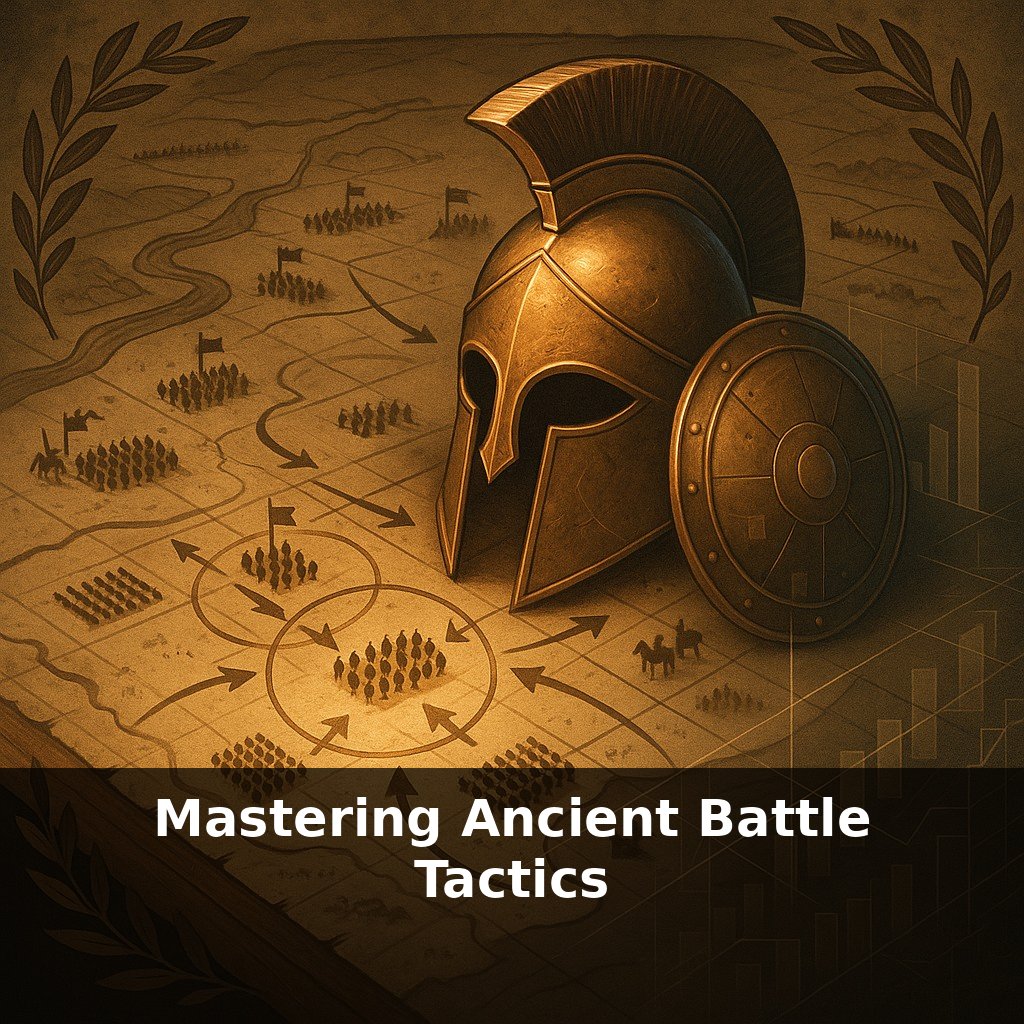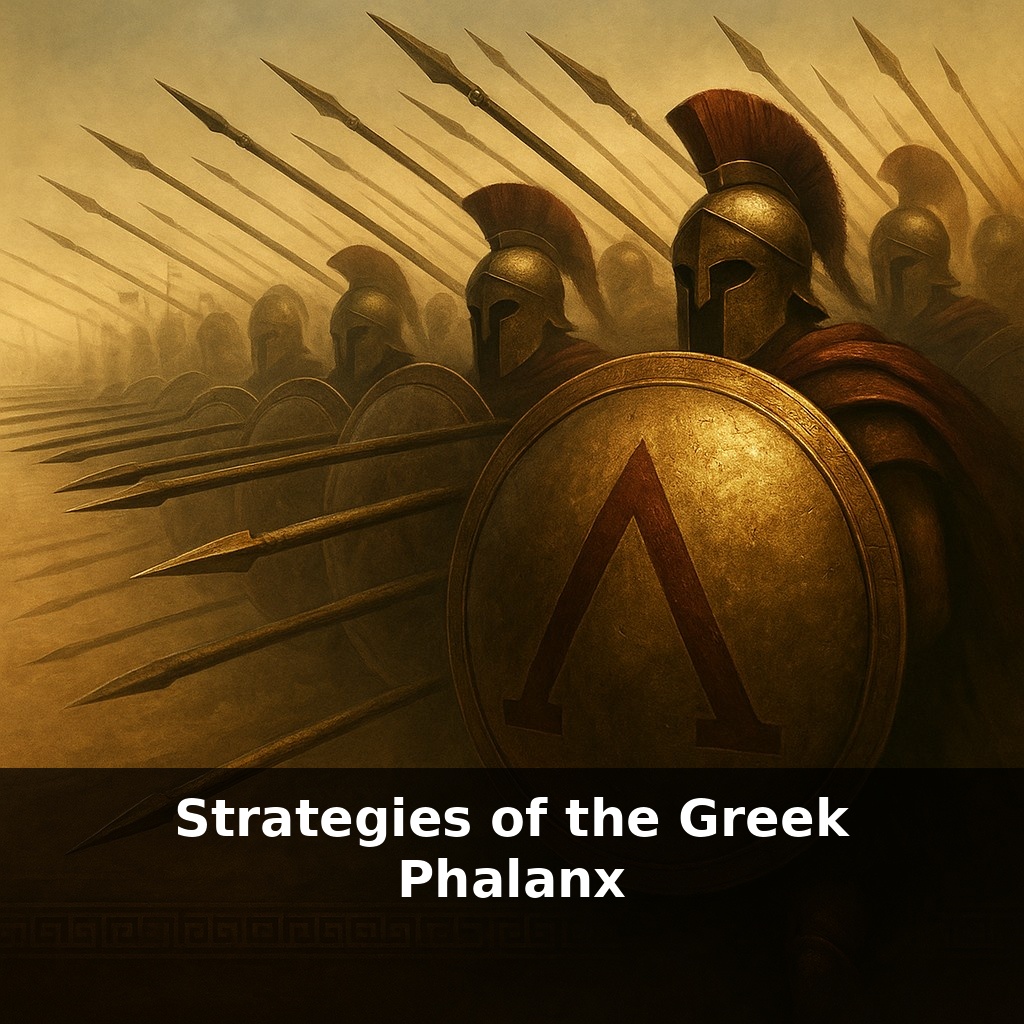
Spears lock, shields slam, and suddenly a few thousand farmers become the most feared war machine in the ancient world. How did a formation that demanded soldiers expose their right side on purpose become the secret weapon that humbled vast empires?
Herodotus claims that at Marathon, roughly 6,400 Persians fell against just 192 Athenians. Numbers like that don’t come from sharper spears; they come from a system that turned vulnerability into strength. By design, each hoplite’s right side was exposed, forcing him to trust the man beside him. That quirk reshaped how Greeks trained, marched, and even argued about politics, because a line that broke in battle could doom an entire city. Over time, communities learned to drill not just for impact, but for alignment: files keeping step over rough ground, ranks adjusting depth, officers watching for the slightest sag in the line like a conductor listening for a drifting section of strings. The real innovation wasn’t a new weapon, but a new way of thinking: survival depended less on personal courage and more on how precisely you could move as part of something larger.
On campaign, that neat line on a flat diagram became something far messier: dust, uneven ground, heat, and fear all trying to pull the ranks apart. Greek commanders had to decide how deep to stack their men, how far to extend the line, and when to push or hold, knowing that a local weakness could ripple outward. The Thebans at Leuctra, for instance, gambled by packing their left wing fifty men deep, accepting risk elsewhere for crushing power at one point. Strategy in the phalanx age was often less about clever tricks, more about shaping and steering a single, stubborn block of will.
At the heart of phalanx strategy were three interlocking decisions: width, depth, and timing.
Width meant how far your line stretched. Extend too far, and the ranks thinned out, making it easier for an enemy to punch through. Keep it too compact, and you risked being overlapped and rolled up from the side. Commanders constantly weighed: do I guard the whole front, or accept a weaker segment in order to hit harder at one key point?
Depth was the invisible dimension most modern readers underestimate. More ranks weren’t just extra spears; they were extra weight and moral pressure behind the front files. When a line advanced, men in the rear didn’t simply stroll—they leaned, braced, and crowded forward. On level ground, that mass could drive a wavering enemy backward; on a slope, it could decide whose feet slipped first. But excessive depth made the line short and clumsy, and in a long battle rear ranks tired too, dulling that pressure.
Timing bound width and depth together. Arriving at the clash too early with one wing while the other lagged could be fatal. Greek generals tried to keep step across hundreds of meters, slowing stronger units to avoid outrunning their neighbors. They also chose when to shift from slow, measured advance to the last, faster rush—too soon and order dissolved, too late and enemy missiles had more time to bite.
Terrain turned these abstract choices into harsh trade‑offs. On flat plains, a steady shove might decide the day. On broken ground—ditches, stones, low walls—files buckled and gaps opened. Skilled commanders angled their lines to steer enemies into bad footing or used a refused wing, holding one side back slightly, to shorten the front they had to defend.
The Macedonian variant added another layer: its long pikes created a forest of points to the front but left flanks and rear more fragile. Success now depended on coordinated support from cavalry and lighter troops. If those supporting arms failed to protect the sides, the dense block became a trap for its own men.
Your challenge this week: pick a team project you’re in, and map its “width” (how many roles you’re trying to cover), “depth” (how many people back up each role), and “timing” (who must act first, second, third). Then adjust just one of those three on a small scale—narrow the focus, deepen support, or reschedule a key handoff—and observe how it changes the group’s cohesion under stress.
Think of a summer storm line rolling across the sky: not every cloud is identical, but the front moves as one, and where it bulges or thins, you can predict where the heaviest rain will fall. Phalanx commanders watched their lines the same way, scanning for subtle swells or sags that signaled strength or danger. When veterans from Sparta or Thebes stood beside less seasoned allies, generals sometimes stacked the confident troops at key stress points, trusting their steadiness to absorb shock while weaker sections simply held on. In some city‑states, wealthier citizens bought better armor, so officers placed them where the enemy’s best fighters were expected. Elsewhere, relatives and neighbors were grouped together, betting that no one would shame his own kin. One musician‑general, Iphicrates, even tinkered with lighter gear and looser files, showing that “phalanx thinking” could stretch, as long as the line still behaved like a single advancing weather front.
The next frontier isn’t copying the phalanx’s weapons, but its logic. Engineers testing drone swarms, for example, are less interested in speed than in how each unit “watches the neighbor” to keep gaps from opening—like birds in a murmuration holding shape against shifting wind. Organizational designers are asking similar questions: what if peer‑to‑peer support, not hierarchy, became the main safety net when stress hits, and resilience was measured in how well the line bends without breaking?
In the end, the phalanx is less a relic than a question: how tightly can we bind people together without crushing their freedom to move and think? Like a river divided into many channels that still finds the sea, strong groups let individuals bend and eddy, yet keep a shared direction. Study the line, and you’re really studying how trust scales under pressure.
Try this experiment: For the next three days, pick one “phalanx” project at work or in your life (a team task, family chore, or group study session) and deliberately assign each person a clear “rank” and “shield side” like the hoplites—one person blocks external distractions, one handles communication, one executes the core work, and one watches for “flanking” issues (deadlines, risks, or scope creep). Run a 45–60 minute focused “formation” where no one steps outside their role, and you move as a tight unit toward a single, defined objective. Afterward, debrief for 10 minutes: where did your line hold, where did it “break,” and what changed compared to your usual, looser way of working together?