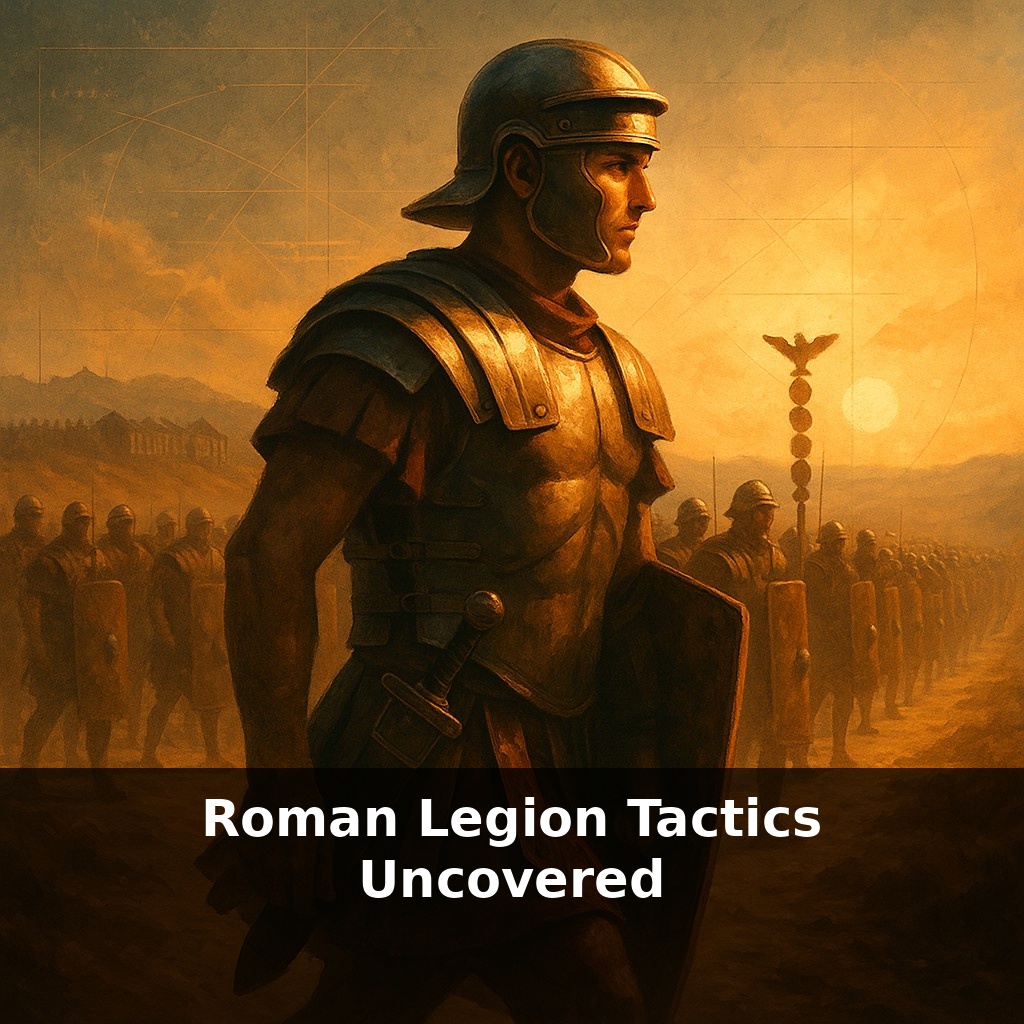
A Roman legion could march all day under brutal loads, then calmly build a fortified camp before dark. In one afternoon, farmers and tradesmen turned into a moving war machine. How do you train thousands of ordinary people to switch roles that fast—and almost never break?
A Roman legion could cover 15–20 miles in a day, each man hauling roughly 45 kilos of gear, and still arrive organized enough to fight or build on command. That’s not just toughness; it’s a system. Behind those marching columns sat a quiet revolution: standardized pay, standardized kit, and a command structure sliced into neat, reusable blocks. A legion wasn’t one giant crowd—it was hundreds of small teams that could be rearranged at will, like sections in an orchestra shifting from a march to a complex symphony without changing players. Add to this the engineers who laid down over 50,000 miles of roads, turning the map itself into a weapon. Tacitus notes redeployments that took mere weeks across entire provinces. This episode, we’ll pry open that system: how modular tactics, logistics, and engineering combined to make Roman flexibility more dangerous than any single sword.
Roman commanders weren’t just shuffling blocks on a battlefield; they were playing a long game across seasons and provinces. Before a campaign, they scouted grain supplies, river crossings, and winter quarters the way a modern strategist studies markets and supply chains. The real trick wasn’t winning one clash—it was choosing when *not* to fight. Legions might shadow an enemy for days, probing ground, testing reactions, trading skirmishes instead of committing fully. Victory often came from forcing opponents into bad terrain, stretched rations, or frayed nerves long before blades met in the main line.
The real secret wasn’t just how legions were built, but how they *moved* and *behaved* once contact with the enemy began.
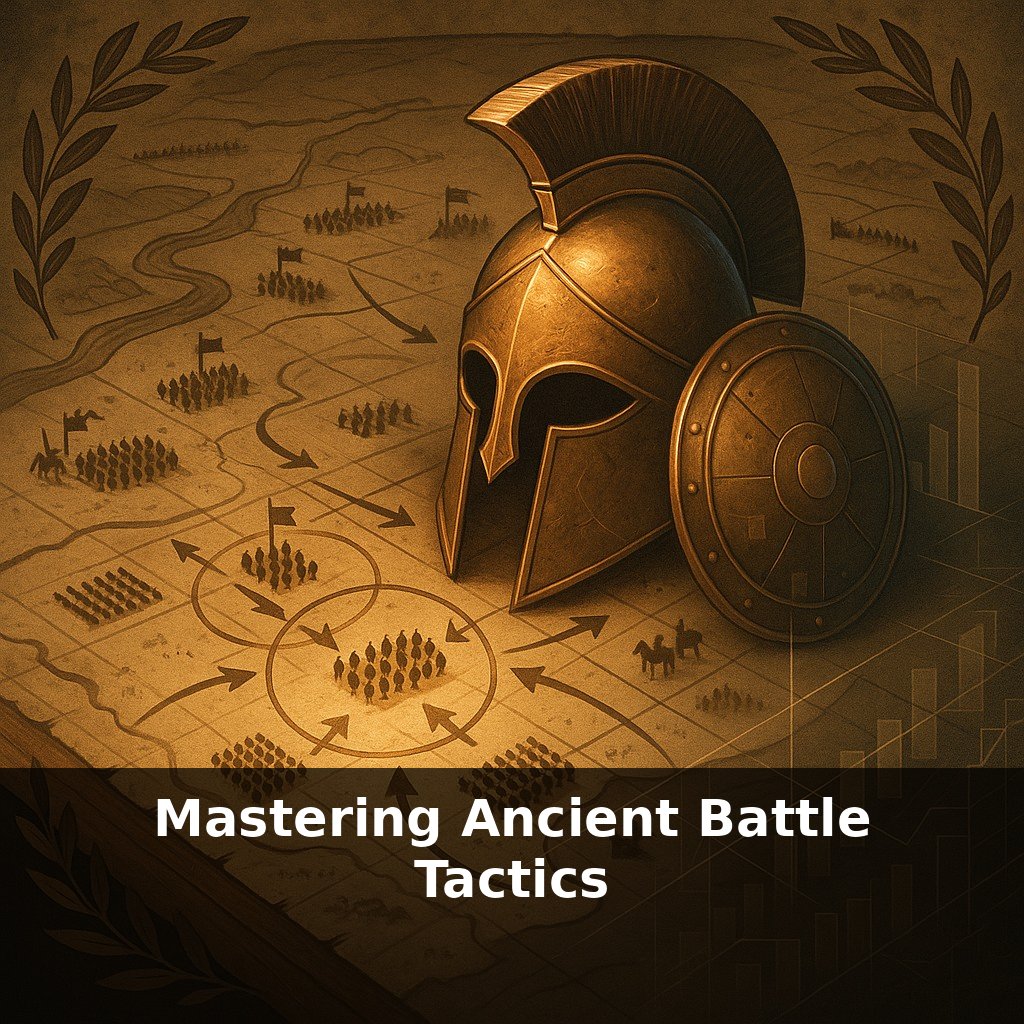
On paper a legion looked neat: ranks, files, named sub-units. In combat, it breathed. Commanders rarely threw everyone in at once. They used depth. Front units engaged briefly, then rotated back to recover while fresh lines pushed forward. To an enemy used to a single furious charge, this felt like hitting a wall that kept renewing itself. Exhaustion became a Roman weapon.
That depth extended sideways too. Individual sub‑units could be pulled out, doubled up on a threatened flank, or pushed into a gap before it became a crisis. Ancient sources describe officers literally running behind the line, redirecting cohorts like sliding tiles in a puzzle until the picture they needed appeared: a local advantage in one precise spot.
Terrain was never just “background.” Hills, ditches, and rivers were turned into tools. Against fast enemies, Romans tried to anchor their flanks on rough ground or water, shrinking the space cavalry could exploit. Against dense infantry, they picked open areas where their units could pivot and overlap. Sometimes they built the terrain they wanted: small ditches, stakes, and fieldworks channeled attackers into predictable lanes, where pre‑positioned reserves could strike.
Missile and shock weren’t separate phases; they were layered. Javelins softened a line, then close combat probed for weakness, then a held‑back reserve surged exactly where shields were thinning or formations fraying. The goal wasn’t a glorious simultaneous advance—it was to create and then magnify a single crack until the whole enemy will collapsed.
Discipline under pressure made this possible. When formations needed to contract, open, or wheel, success depended on thousands of men trusting that shifting ground under their feet meant *coordination*, not panic. Ancient writers repeatedly note that what broke most armies wasn’t casualties but the moment confusion outweighed confidence. Roman tactics aimed every rotation, redeployment, and feint at triggering that moment in the other side first.
In a modern company, most “battles” aren’t single meetings—they’re campaigns that evolve over weeks. Think of how a product launch plays out: the sales team hits first contacts, burns energy, then rotates out while customer support absorbs the next wave, and marketing shifts the narrative based on early feedback. No one group must win outright; they just have to keep pressure where it counts, long enough for the overall plan to work. Roman officers did something similar at the strategic level. When they faced an enemy who loved sudden charges, they *invited* the charge, then stepped back just enough to make that burst of energy overextend. Against cautious foes, they used probes and skirmishes like questions, testing for hesitation and slow reaction times. One unusual trick: they sometimes advanced in deliberate silence—no shouting, no trumpets—turning the lack of noise into pressure. The other side had to decide: are they tired, or terrifyingly confident?
“5,000 men, 50,000 miles of roads, and a marching day longer than a modern marathon”—the numbers sound ancient, but the logic is starting to look familiar again.
As AI units act more like independent “micro‑commanders,” future forces may resemble a storm front: clusters of drones and troops forming, breaking, and re‑forming like shifting clouds around areas of pressure.
Your challenge this week: map your own work into small teams that could split, merge, or redeploy if a key assumption suddenly failed.
In the end, Roman commanders weren’t hunting heroic duels; they were tuning a system, nudging pieces until pressure rippled where they wanted it. Think of a storm edging across a valley—gusts here, sudden calm there—until one hillside finally gives way. That mindset survives in any field where small, timed shifts quietly decide who holds the ground tomorrow.
To go deeper, here are 3 next steps: Pick up Adrian Goldsworthy’s *Roman Warfare* or *The Complete Roman Army* and read the chapters on manipular and cohort tactics while sketching a simple diagram of a legion’s triplex acies formation as you go. Fire up the game “Total War: Rome II” (or watch a YouTube battle replay if you don’t own it) and deliberately experiment with recreating a Roman checkerboard formation, testing how it performs against a dense phalanx line. Finally, open the online *Perseus Digital Library* and read Polybius’ description of Roman military organization (Book 6), then compare his account to the podcast by listing 3 similarities and 3 differences in how the legion’s flexibility and discipline are portrayed.