What Are Boundaries? Understanding the Concept
📝 Transcript
In today's fast-paced world, saying 'yes' often seems synonymous with being helpful, yet it's the silent erosion of personal boundaries that's truly at play. Imagine driving to help a friend move only to answer midnight work texts and agree to resentful favors. This isn't kindness; it's a boundary slipping quietly away.
You might tell yourself, “This is just who I am—I’m generous, flexible, easygoing.” But notice what happens underneath: your chest tightens when your boss “needs one more quick thing,” your jaw clenches when a friend changes plans for the third time, your brain keeps replaying the conversation you wish you’d had. That inner friction is data. It’s the moment your nervous system quietly flags, “Something about this doesn’t work for me.” Many people mistake that signal for weakness or selfishness and push past it. Over time, that habit can blur your sense of what you actually want, need, and can give. Learning to notice those micro-signals—your sighs, irritation spikes, sudden exhaustion—is often the first real step toward shifting how you relate to others, without sacrificing your values or your kindness.
Those signals aren’t random mood swings; they’re clues about where your personal limits actually are. Most of us inherited an unspoken “rulebook” from family, culture, or past relationships about what it means to be good, loyal, productive, or loving—and that rulebook often overrides our internal cues. Maybe you learned that resting is lazy, that saying no is rude, or that needing space means you’re difficult. So you override the tight chest, swallow the annoyance, push through the exhaustion. Over time, the real cost isn’t just burnout; it’s losing a clear sense of where you end and other people’s expectations begin.
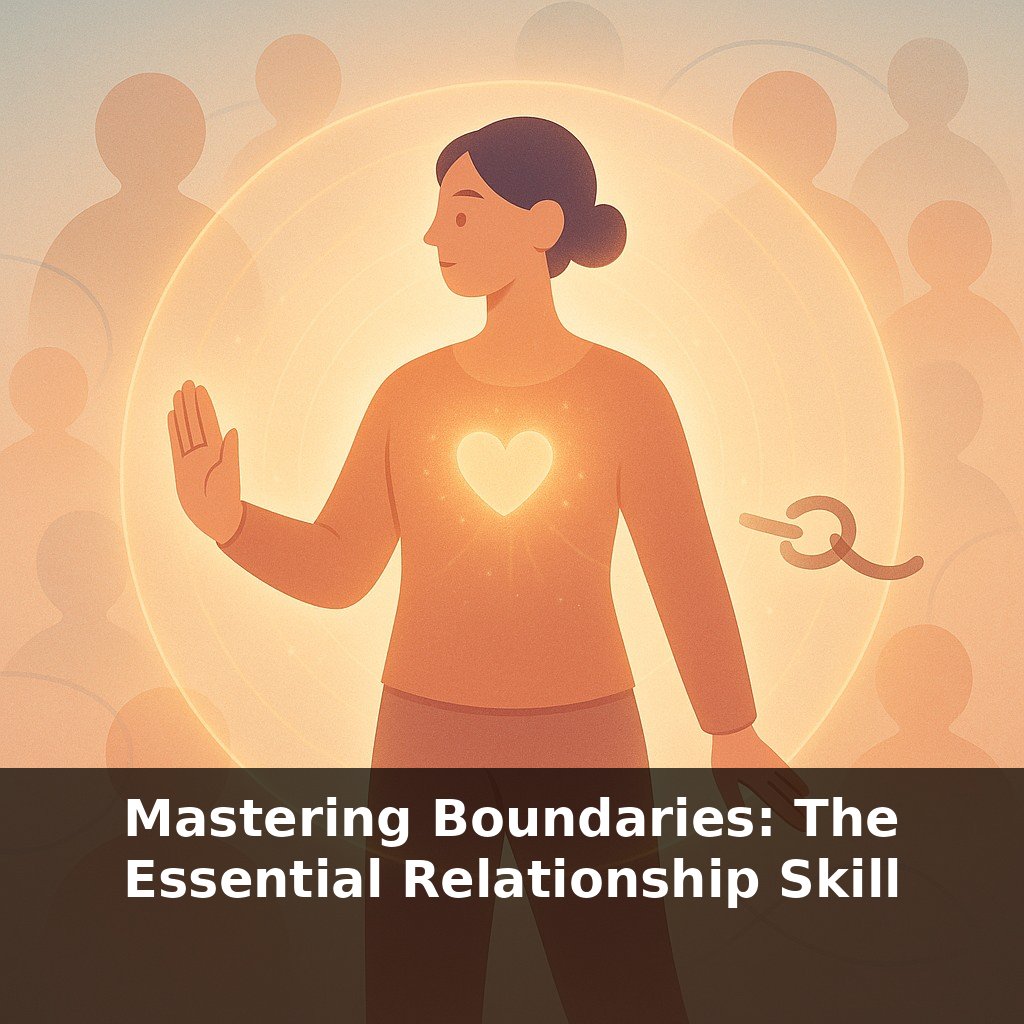
Boundaries sound abstract, but in practice they’re surprisingly concrete. Psychologists usually talk about a few core types: physical (your body, space, touch), emotional (what feelings you’ll take on or manage for others), time and energy (how you spend your hours and attention), material (money, possessions, resources), and mental (your ideas, values, and what influences you let in). You don’t need perfect language for each type, but it helps to notice which area is getting crossed when that inner “something’s off” signal shows up.
Researchers who study relationships often find the same pattern: people who can name and communicate these limits tend to feel more respected and less overwhelmed. That matches the data—lower stress, higher satisfaction—because boundaries operate like clear agreements instead of silent expectations. When you never state them, other people aren’t necessarily being cruel; they may just be playing by rules they learned, not the ones your body is reacting to.
This is where the difference between rigid, healthy, and porous boundaries matters. Rigid boundaries sound like “No one gets close to me, ever.” Porous ones sound like “Whatever you need, I’ll figure it out.” Healthy boundaries are flexible and context‑dependent: “I care about you, and here’s what I can realistically offer.” You can be generous with a friend in crisis and still decline a late‑night call before a big exam or presentation.
One way researchers frame it is as an issue of agency: who has the steering wheel in your life? Without articulated limits, other people’s priorities tend to drive your schedule, emotions, and even your self‑evaluation. With them, collaboration becomes possible. You’re not withdrawing from others; you’re actually giving them more accurate information about how to work with you.
A useful way to picture this is like adjusting a medication dose: too little, and the problem keeps flaring; too much, and side effects appear. Boundaries are similar—something you titrate over time. You try saying no to weekend emails, notice the results, and tweak. You ask a partner to text if they’ll be late, see how it feels, and refine. The goal isn’t to build an unbreakable wall; it’s to keep living data‑driven, instead of default‑driven, in your relationships.
Think about an ordinary Tuesday. Your coworker asks, “Can you jump on a quick call at lunch?” You’d planned to decompress with a walk, but you hear yourself say, “Sure.” Later, your partner launches into a stressful story right as you’re trying to fall asleep. You want to listen, you also want rest, and you feel that familiar tug-of-war inside. These aren’t dramatic betrayals; they’re the tiny crossroads where boundaries either quietly exist or quietly vanish.
Instead of focusing on what you “should” do, notice the trade‑offs. When you say yes to that lunch call, what are you saying no to—food, daylight, a reset? When you absorb your partner’s late‑night stress, what happens to your own sleep and patience tomorrow?
In cooking, a pinch of salt transforms a dish, but dumping in a handful makes it inedible. The same action—adding salt—shifts from helpful to harmful depending on amount and timing. Boundaries work like that: the same “yes” or “no” can either nourish or deplete you depending on context, capacity, and choice.
As tech blurs home, work, and social life, boundaries will quietly shape who thrives. Expect norms like “notification quiet hours,” “camera‑off defaults,” or VR “do not disturb” zones to become as ordinary as seatbelts. Companies may start tracking “respect for limits” the way they track deadlines, and kids could learn consent scripts alongside multiplication. Like urban zoning laws, shared norms about where access stops and privacy begins may end up protecting entire communities, not just individuals.
Treat this as an ongoing experiment, not a verdict on who you are. Boundaries will wobble, especially with people you love or fear losing. That wobble is useful data, not failure. Your challenge this week: notice one small moment a day when you’d usually override yourself, and pause long enough to ask, “If I mattered here, what would I choose?”
From this course
Mastering Boundaries: The Essential Relationship Skill
7 episodesUnlock all episodes
Full access to 7 episodes and everything on OwlUp.
Subscribe — $1.99/monthLess than a coffee ☕ · Cancel anytime