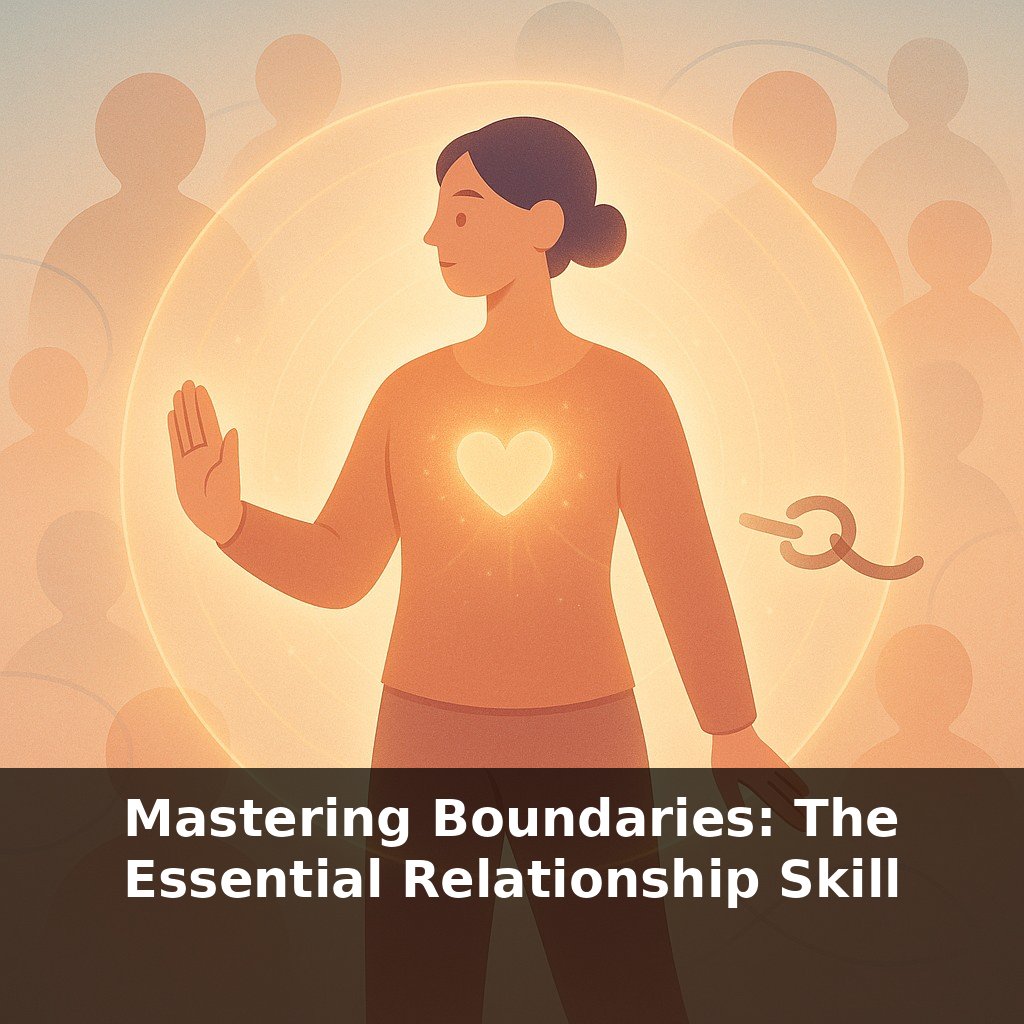
The paradox of self-perception strikes again: many who see themselves as good at setting boundaries still crumble at a simple favor request, leading to stomach-knotting stress. Where exactly does this perception fall short, and how can we identify these slipping boundaries?
Maybe your weak spot shows up only with certain people: the boss who “just needs one more thing,” the friend who turns every coffee into an unpaid coaching session, the family member who treats your weekend like their personal help desk. On paper, your boundaries look fine; in practice, they quietly bend in the same few directions, over and over.
This isn’t random. Research suggests our “boundary blind spots” cluster: we might be solid at work but crumble in romantic relationships, or vice versa. Stress, cultural expectations, and old attachment patterns don’t erase our boundaries—they selectively soften them. Like a pot left on low heat, you don’t notice until something finally boils over.
In this episode, you’ll map where your boundaries are strongest, where they’re thinnest, and what reliably pokes holes in them—so change stops feeling mysterious and starts feeling doable.
Some of your patterns come from the outside in—like workplace norms that quietly reward over-functioning, or family rules about “not making a fuss.” Others run inside out: attachment habits, fears of conflict, or the belief that your worth is tied to being useful. Under pressure, these layers stack, and suddenly “no” feels ten times heavier than “yes.” The goal here isn’t to judge yourself, but to observe like a researcher: in which roles do you overextend, with whom, and under what conditions? That clarity becomes your roadmap for practicing different choices, one specific situation at a time.
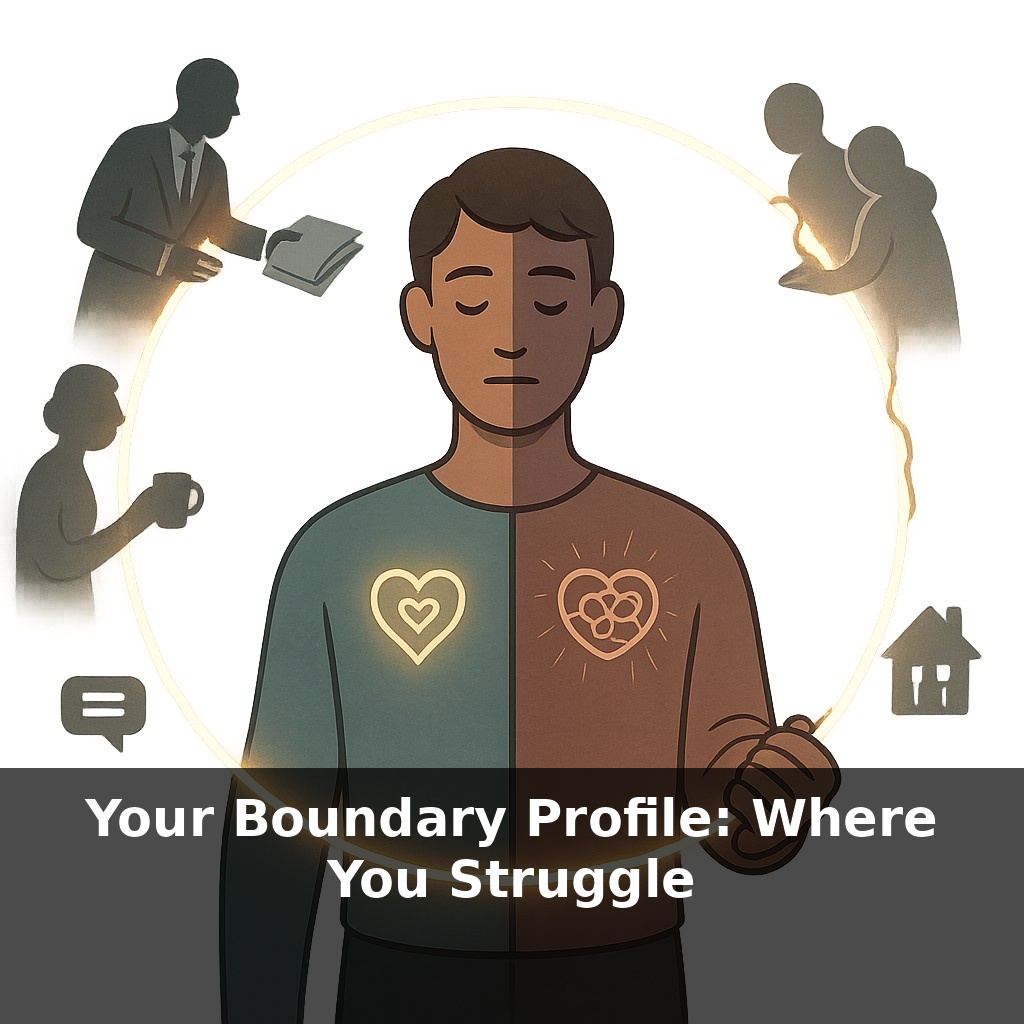
Some researchers break boundaries into a few practical domains: time (your schedule and availability), emotional (what feelings and topics you’ll take on), physical (space, touch, privacy), and role or responsibility (what is and isn’t your job). Most people aren’t uniformly “good” or “bad” across these; they have a signature pattern—a kind of boundary profile.
That profile tends to show up in four places:
1. **Who’s asking.** You might say no easily to peers, but fold with authority figures. Or protect your time with acquaintances, then abandon all limits with family. Notice if certain roles—boss, parent, partner, mentor—seem to “auto‑override” your usual standards.
2. **What the story is.** Requests wrapped in urgency (“I need this now”), sacrifice (“You’re the only one who can help”), or guilt (“You’d do this if you cared”) are especially erosive. These stories hook different fears: being selfish, being replaceable, being rejected.
3. **How you feel in the moment.** Research on emotion regulation shows that when you’re tired, anxious, or ashamed, your ability to hold a line drops. You’re more likely to say yes just to make discomfort stop. Ironically, people with the highest standards for themselves often have the leakiest boundaries under stress—they use over-giving as damage control.
4. **What you secretly hope for.** This one is subtle. Sometimes we over-give because we’re chasing something unspoken: approval, safety, stability, a future favor. You might keep taking on extra work hoping it will finally be “noticed,” or keep listening to a draining friend hoping they’ll eventually do the same for you. When the hoped-for payoff doesn’t come, resentment spikes—but the pattern continues because the hope does.
A simple litmus test: where do you regularly feel one of these after saying yes—resentful, invisible, used, or oddly anxious? Those emotions are less about the other person and more like dashboard lights on your own system.
Your “weak spots” don’t mean you’re broken; they’re simply places where old strategies (please, fix, over-function, disappear) still feel safer than being clear. Once you can name *where* they show up and *what* they trade on—fear, guilt, hope, habit—you can experiment with very small adjustments, not a total personality overhaul.
Think about three kinds of “auto‑yes” zones: roles, topics, and timing.
For roles, you might be rock‑solid with your manager yet overextend for younger colleagues because you’ve cast yourself as the “responsible older sibling” at work. With friends, maybe you’re the default planner—if you don’t organize it, nothing happens—so you agree before you’ve checked your own bandwidth.
For topics, some people go fuzzy around money (“I’ll cover it, don’t worry”), others around emotions (“Call me anytime, I’ll pick up”), or around expertise (“Sure, I’ll quickly look over your resume/contract/deck”). If a subject feels tied to your identity—being generous, being knowledgeable—that’s where your limits may blur.
Timing is sneakier. Notice whether your yeses cluster at certain hours: late‑night texts you’d decline in daylight, weekend favors you wouldn’t accept on a busy Tuesday. Fatigue and quiet surroundings can make over‑giving feel “harmless,” until Monday hits and the cost becomes obvious.
As tools blur “on” and “off” time, knowing your weak spots becomes less optional and more like routine blood work: a check on what’s quietly drifting out of range. AI assistants may soon flag when your calendar or messages show a “chronic yes” pattern, the way fitness trackers spot poor sleep. You’ll likely see job offers that include “boundary coaching” alongside health benefits, and leaders evaluated not just on output, but on how well their teams can disconnect and still feel secure.
Noticing these weak spots is less about judgment and more like adjusting a recipe that’s slightly off: a pinch less obligation here, a bit more self-respect there. Over time, you start tasting the difference in your day—more ease, fewer grudges, clearer choices. You’re not rebuilding your life, just tuning the dials so it finally fits you.
Here’s your challenge this week: Choose one relationship where you tend to over-function (the “helper” or “fixer” role) and, for the next 7 days, say “no” to at least one request you would normally automatically say “yes” to, without giving a long explanation or apology—just one clear sentence. When that person pushes back (because they’re used to your old pattern), pause, take one deep breath, and calmly repeat your boundary once, word-for-word. At the end of each day this week, quickly rate from 1–10 how drained or resentful you feel toward that person, so you can actually see how holding this new line shifts your energy.