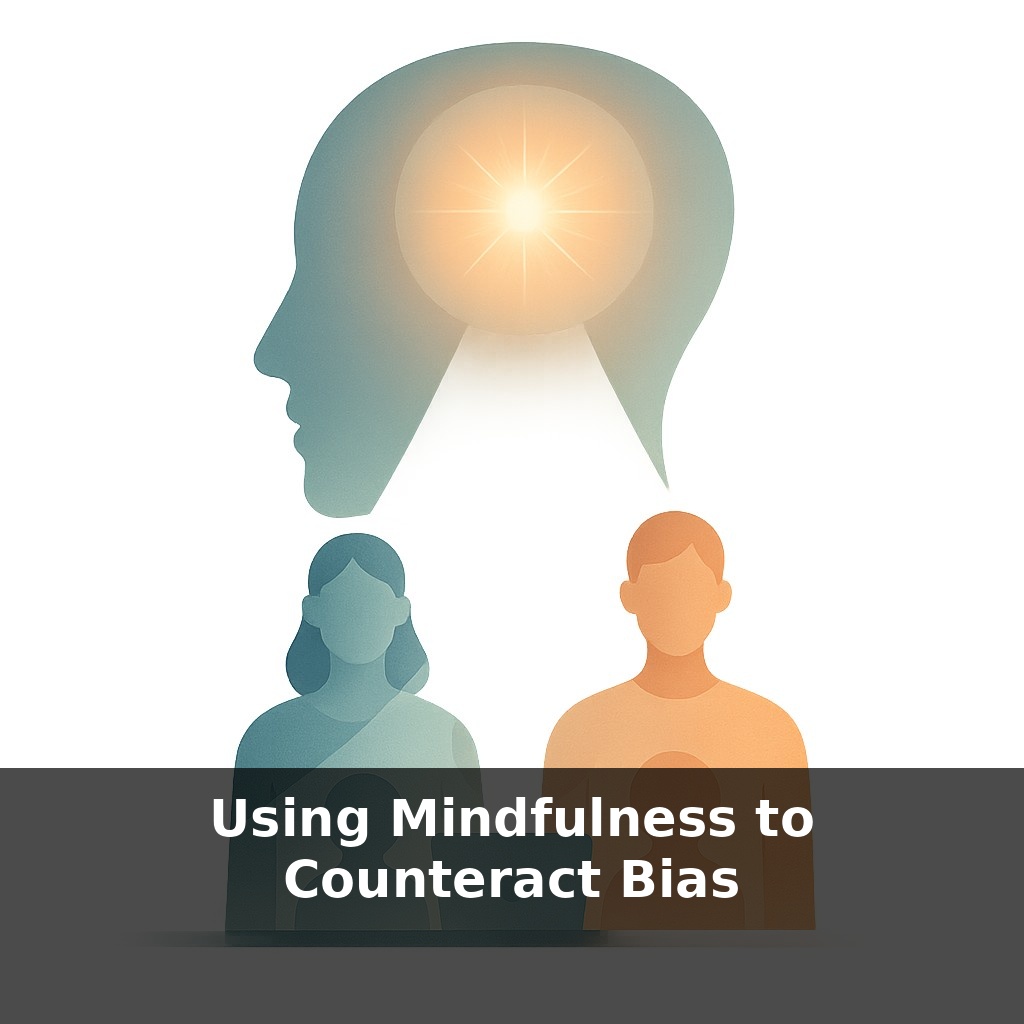
A brief daily mindfulness session can measurably reduce racial and gender bias—and most people don’t realize it. You’re in a meeting: two candidates, similar resumes. Your mind leans toward one. In this episode, we’ll explore how training attention can quietly tilt that choice.
A hiring manager skims two applications: one name feels “professional,” the other “unfamiliar.” The decision feels objective—but beneath it, split-second associations are already nudging the outcome. This episode zooms in on that hidden gap between first reaction and final choice, and how brief, consistent practice can widen it just enough to choose differently. Instead of trying to “fix” your beliefs in one big effort, we’ll look at how small, daily mental reps chip away at automatic habits. You’ll hear how short practices have shifted real-world decisions in workplaces and high-pressure environments, and why the most important moment often isn’t the bias itself, but the instant you notice it arising. Our focus: turning quiet inner skills into concrete changes in how you evaluate people, allocate opportunities, and respond when your mind’s first story isn’t the full story.
Now we’ll zoom out from a single hiring moment to the larger systems you move through each day: group chats, performance reviews, classroom discussions, even who you greet first when you walk into a room. These settings quietly reward speed and certainty, not pause and reflection. That’s where regular practice comes in—not to make you slower, but to give you a mental “third option” when situations feel rushed or emotionally loaded. As you strengthen that option, you’re not just changing isolated choices; you’re reshaping the social climate around you.
Seventeen percent. That’s how much a single 10‑minute loving‑kindness meditation shifted implicit racial attitudes in one lab study. Not beliefs people reported on a survey, but split‑second associations measured with reaction-time tests—quiet mental reflexes, nudged by a tiny daily habit.
To see what’s going on, move from the hiring table to your ordinary week: passing a colleague in the hallway, skimming social media, glancing at who’s speaking most in a meeting. In each of these micro‑moments, your mind is running lightning‑fast predictions: Who feels competent? Who seems “approachable”? Who do you assume is in charge? You rarely notice those silent rankings, but they shape where your attention lands—and where it never goes.
This is where specific forms of practice matter. In loving‑kindness exercises, for example, you deliberately generate goodwill toward different categories of people, including those you don’t naturally feel close to. That gentle stretch of emotional muscle seems to soften rigid “us/them” boundaries, particularly when repeated over days or weeks, not as a one‑off workshop.
Neuroscience adds another layer. Under pressure, the brain tends to lean more heavily on stereotypes as shortcuts. Amishi Jha’s work with Marines shows that training attention can keep working memory online even in stressful conditions. Practically, that means you can hold more details about an individual person in mind instead of defaulting to the quickest label.
The emerging research picture is modest but consistent. A meta‑analysis of 22 studies doesn’t show a magic cure; it shows a small‑to‑medium nudge that accumulates. If your organization already has reflection programs—like Google’s internal course that reportedly increased how often people say they consider bias—integrating brief, structured mental exercises isn’t about becoming “spiritual”; it’s about building a skill set for fairer pattern recognition.
Think of it less as changing who you are and more as updating how finely tuned your internal “social radar” is—so you detect subtle pulls in your attention before they quietly harden into decisions.
You’re in a project meeting and a new idea lands on the table. Before anyone speaks, notice who you instinctively look toward for a reaction. One manager I worked with started a 5‑minute pre‑meeting practice: eyes closed at her desk, she silently named three types of contributions she often overlooked—quiet dissent, junior voices, and non‑native speakers. Then, in the meeting, she used that list as a live filter, deliberately scanning for those signals. Within a quarter, speaking time in her team shifted toward people who had rarely led the conversation.
Think of a forest trail after rain: the more often you walk an alternative path, the clearer and more walkable it becomes. Brief mental pauses before recurring situations—code reviews, classroom discussions, performance debriefs—serve the same function. You’re not forcing different outcomes; you’re making it easier for underused pathways—crediting, inviting, following up—to become the new “default” route your attention takes.
A likely next step is quiet personalization. Instead of generic “mindfulness minutes,” tools may pinpoint your risk moments: sprint planning, grading, crisis calls. Sensors and apps could flag when attention narrows—rising heart rate, shallow breathing—and prompt a 30‑second reset before you speak or click “send.” Like a travel guide suggesting side streets off the tourist track, these nudges might steer you toward voices and options you’d otherwise pass by.
Treat this work as open‑ended, more like adjusting sails than reaching a finish line. Over time, you may notice quieter voices becoming easier to hear, and snap judgments loosening their grip. Small, repeated shifts in where you place attention can, collectively, redraw group norms—turning quick private pauses into shared expectations for slower, fairer choices.
Before next week, ask yourself: 1) “In the next conversation where I feel defensive or ‘certain I’m right,’ can I pause for three breaths and ask: What assumption about this person or group might be underneath my reaction right now?” 2) “When I interact with someone from a group I tend to stereotype (political, cultural, or workplace role), can I mentally note: What three concrete things am I actually observing, and what is pure story I’m adding in my head?” 3) “At the end of each day this week, can I replay one tricky interaction and honestly ask: If I had been fully present and curious instead of on autopilot, what would I have noticed or asked differently?”