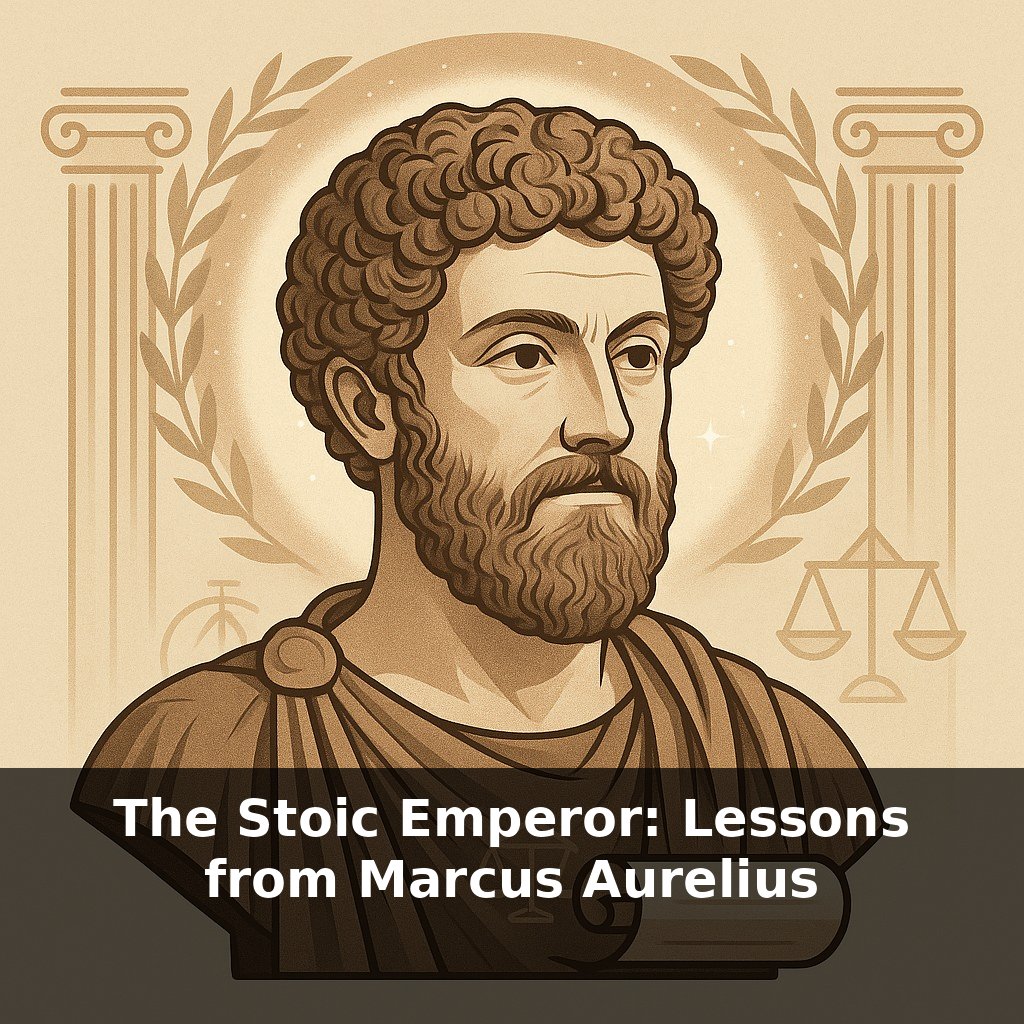
Marcus Aurelius, one of the most powerful men in history, wrote private notes reminding himself not to lose his temper in meetings. Today’s CEOs pay thousands for coaches to learn the same skill. So here’s the puzzle: why do smart people still make choices they later regret?
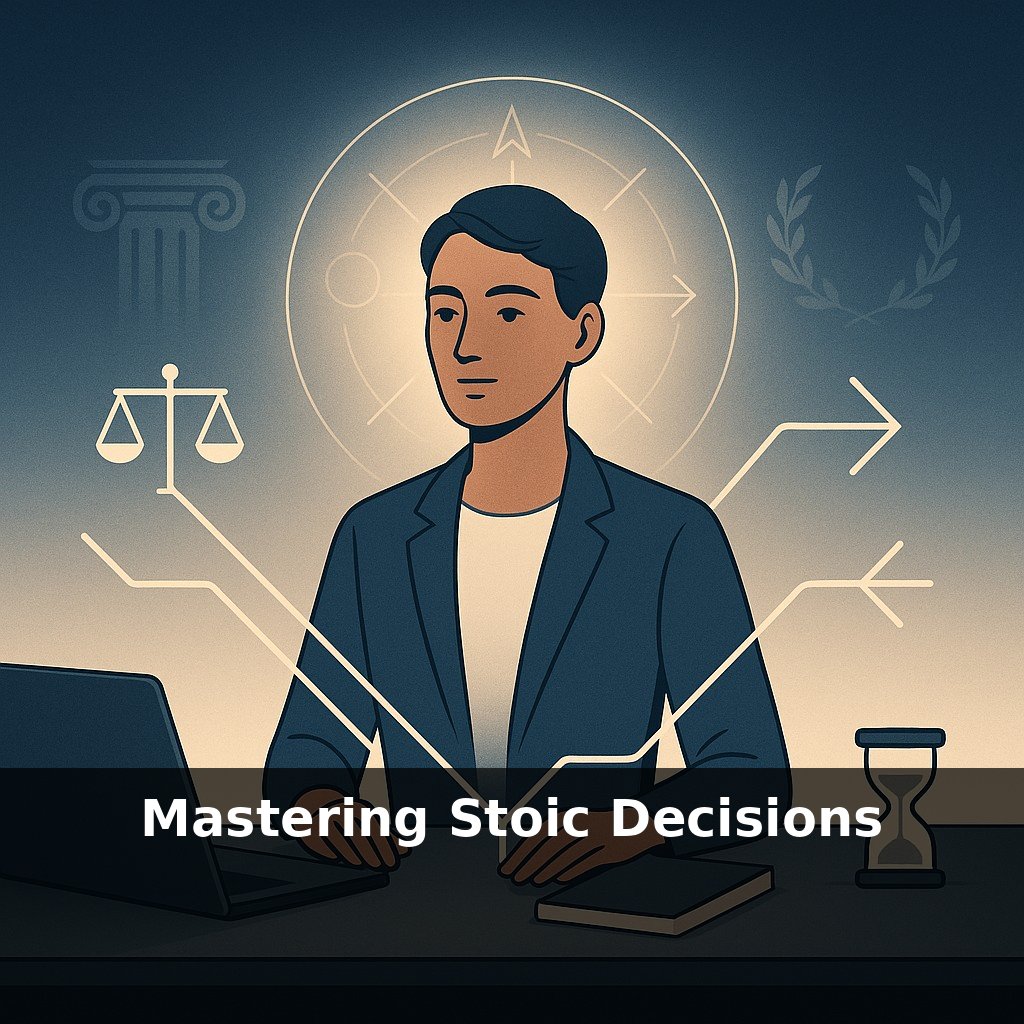
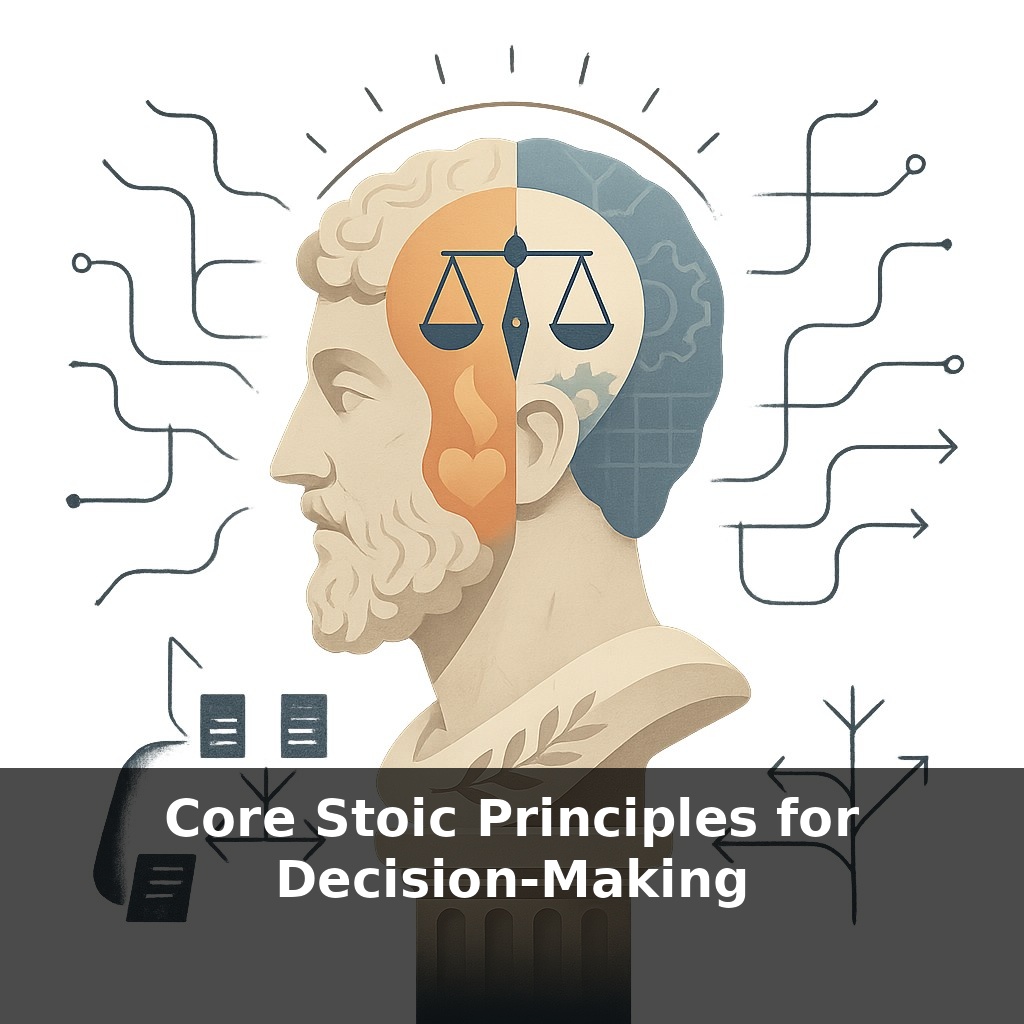
Stoic philosophers would say the problem isn’t that we lack information; it’s that we lack a reliable *standard* for using it. We toggle between “follow your heart” one day and “be purely rational” the next, like switching recipes halfway through cooking and then blaming the oven when dinner fails. Stoicism offers a different move: don’t ask “How do I feel about this?” or “What do I get from this?” as your first question. Ask: “Does this choice honor wisdom, courage, justice, and temperance?” These four aren’t motivational slogans; they’re a compact decision framework used by emperors, soldiers, and statesmen under pressure. Instead of chasing certainty or comfort, Stoicism asks you to align your choices with character, then accept whatever follows as the only outcome that was ever fully in your control.
On paper, this sounds neat; in real life, your boss emails at 10 p.m., a friend needs help moving, your savings account looks thin, and theory dissolves into “it depends.” That’s where the Stoics are unexpectedly practical. Epictetus compressed his guidance into a booklet shorter than a novella, yet modern therapists still mine it for tools. Marcus tested these ideas while juggling wars, plagues, and court politics. Seneca applied them to calendars and commitments. They weren’t chasing inner peace in a vacuum; they were stress‑testing choices under pressure, the way architects test a bridge with heavy winds.
When you actually try to use those four virtues in a messy decision, the first surprise is how often they *disagree* with each other. That tension is where Stoic decision‑making lives.
Think of a promotion offer that doubles your pay but demands 70‑hour weeks and nudges you toward tactics you find questionable. One part of you wants security, another wants integrity, another wants rest. Instead of asking “Do I want this?” a Stoic would run a different sequence of questions, each virtue acting like a different lens over the same scene.
First lens: clarity. Not “Is this good?” but “What exactly is being asked of me?” Vague options are where most regrets are born. Stockdale didn’t have the luxury of vague thinking; in a prison cell, misreading a guard’s intent or his own fear could cost lives. Extreme settings expose what’s true everywhere: before you judge, describe. Who is affected? What are the real trade‑offs? What do you actually know versus assume?
Second lens: cost to your character. Modern career advice obsesses over opportunity cost; the Stoics cared more about *integrity cost*. When you picture saying yes, which habits does that yes strengthen? When you picture saying no, which habits atrophy? That’s how “justice” (in the broad moral sense) stays in the room when money or status start shouting.
Third lens: load‑bearing emotion. The goal isn’t to delete feelings but to ask, “If I removed fear and excitement from this choice, what would remain?” The POW who signs a false confession out of terror and the executive who signs a shady deal out of greed are both letting a temporary inner storm dictate a permanent outer consequence. You can’t stop the storm, but you can delay signing until your hands stop shaking.
Fourth lens: reversibility. Some decisions are loops; you can test, learn, and adjust. Others are cliffs; one step and the landscape is different forever. Early time‑management advice in the Stoic tradition quietly assumed this: treat cliff decisions as if you’ll have to live with their character consequences on your worst day, not your best.
Used this way, the virtues don’t hand you an automatic answer. They narrow the field to a smaller, more honest set of options and force a harder question: “Given who I’m becoming, which regret can I live with?”
You can see this most clearly in decisions that *look* small. Say you’re debating whether to ghost someone you’re casually dating. No big moral crisis, right? Yet run it through the same lenses and the trade‑offs sharpen. Clarity: Did you actually signal your level of interest, or are you quietly hoping silence will do the uncomfortable work for you? Character cost: Each time you avoid a hard conversation, you vote for a slightly more evasive version of yourself. Load‑bearing emotion: Are you dodging an awkward ten‑minute talk because you’re anxious about being “the bad guy”? Reversibility: You can always choose kindness *earlier* next time, but you can’t unsend the message you never wrote.
Or consider a founder choosing investors. One term sheet is generous but pushy, another leaner but aligned. Short‑term spreadsheets point one way; long‑term habits point another. The “right” move isn’t obvious, but the more precisely you name the real costs, the less you’ll later claim you were forced.
A future shaped by these virtues may feel less like automating choices and more like tuning an instrument. AI that “thinks” in terms of character trade‑offs could make its reasoning auditable, not just accurate. Classrooms that ask students to log one hard choice a day—and how they’d judge it 10 years from now—may graduate people who negotiate online conflicts with the same care they’d bring to a face‑to‑face dispute. Boardrooms might quietly shift from “Can we win?” to “Can we respect ourselves if we win this way?”
Treat this week as a quiet field study of your own choices. Notice where you bargain with your values in tiny ways—white lies, delay tactics, “just this once” clicks. That’s where the next decision‑making upgrade lives. Over time, the question shifts from “What should I do?” to “What kind of person am I rehearsing to be?”
Before next week, ask yourself: “What important decision am I currently avoiding, and if I applied the Stoic ‘dichotomy of control’ to it, what *exactly* is in my control (my preparation, my tone, my timing) and what isn’t (other people’s reactions, the final outcome)?” “If I imagined Marcus Aurelius or Epictetus watching me make this decision, what choice would make me genuinely proud of my character, not just relieved in the moment?” And, “When I picture the *worst-case realistic scenario* of this decision and walk through how I’d cope step by step, what fear suddenly looks smaller—and what bolder option now feels possible?”