A single meeting today can lock your team into a costly path for years. Yet most big workplace decisions are made in less time than a coffee break. In this episode, we’ll step inside those rushed moments and ask: what if slowing down by 10 seconds changed everything?
Harvard Business Review reports that teams using a simple “premortem” cut project overruns by about 30%. Not by hiring geniuses or buying new software—just by changing how they decide. That’s the quiet power we’re exploring: small shifts in your mental approach that lead to disproportionately better outcomes.
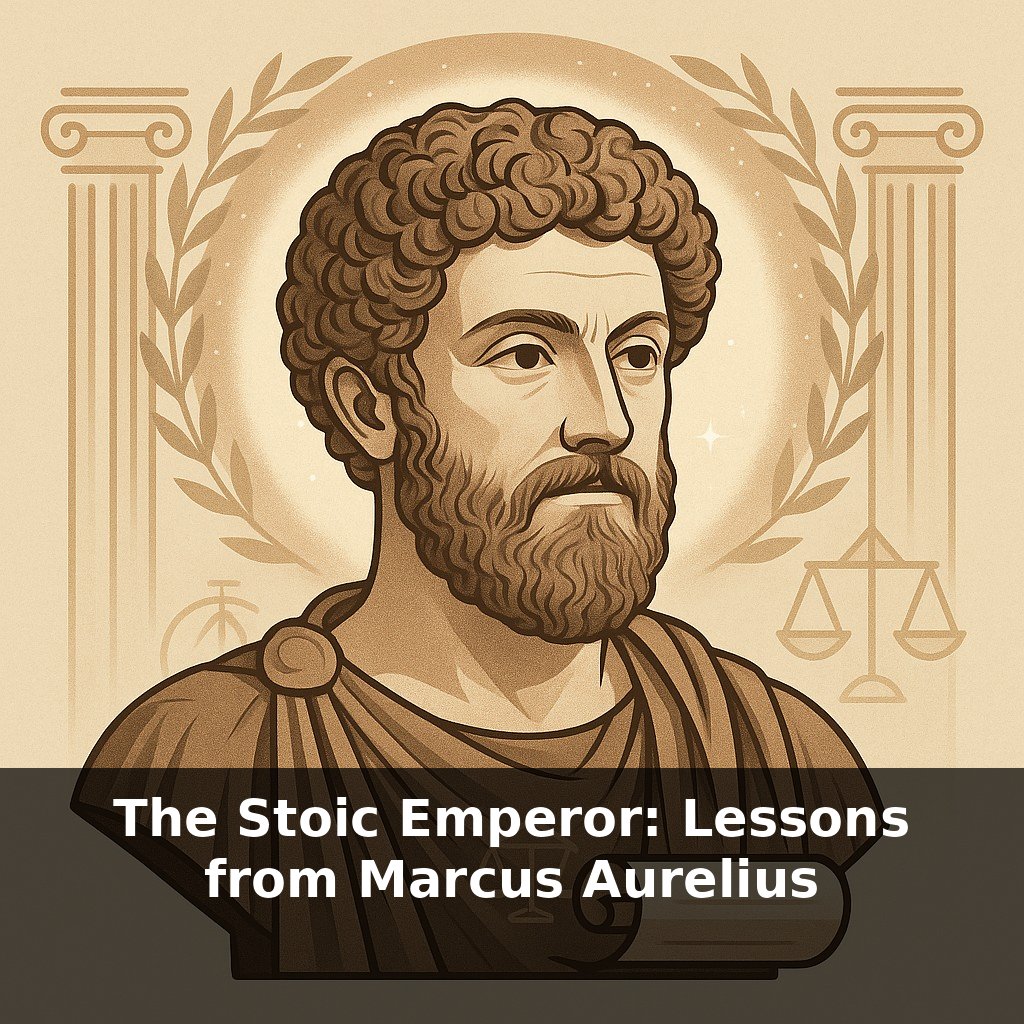
In this episode, we’ll connect three threads that rarely sit at the same table: Stoic philosophy, modern decision science, and your daily work reality. You’ll see how ideas from Marcus Aurelius now show up in Fortune 500 leadership programs, why psychological safety can boost team innovation by more than a quarter, and how daily reflection measurably reduces decision fatigue.
Think of this as upgrading the “operating system” behind your choices—not to remove emotion, but to put wisdom in the driver’s seat.
Most of us were never actually taught how to choose at work—we just absorbed whatever our first manager modeled. That’s like learning to cook only by watching the busiest person in the kitchen: you’ll pick up speed, but not necessarily taste or safety.
Here, we’re interested in something more deliberate: decisions that are both clearer in your own head and easier to explain to others. We’ll pull from Stoic practices, behavioral research, and real team dynamics to design choices you’d be willing to defend a year from now—under scrutiny, with the emails on screen and the outcome already known.
Modern workplaces quietly reward one habit more than almost any other: knowing what is *actually* under your control when stakes feel high.
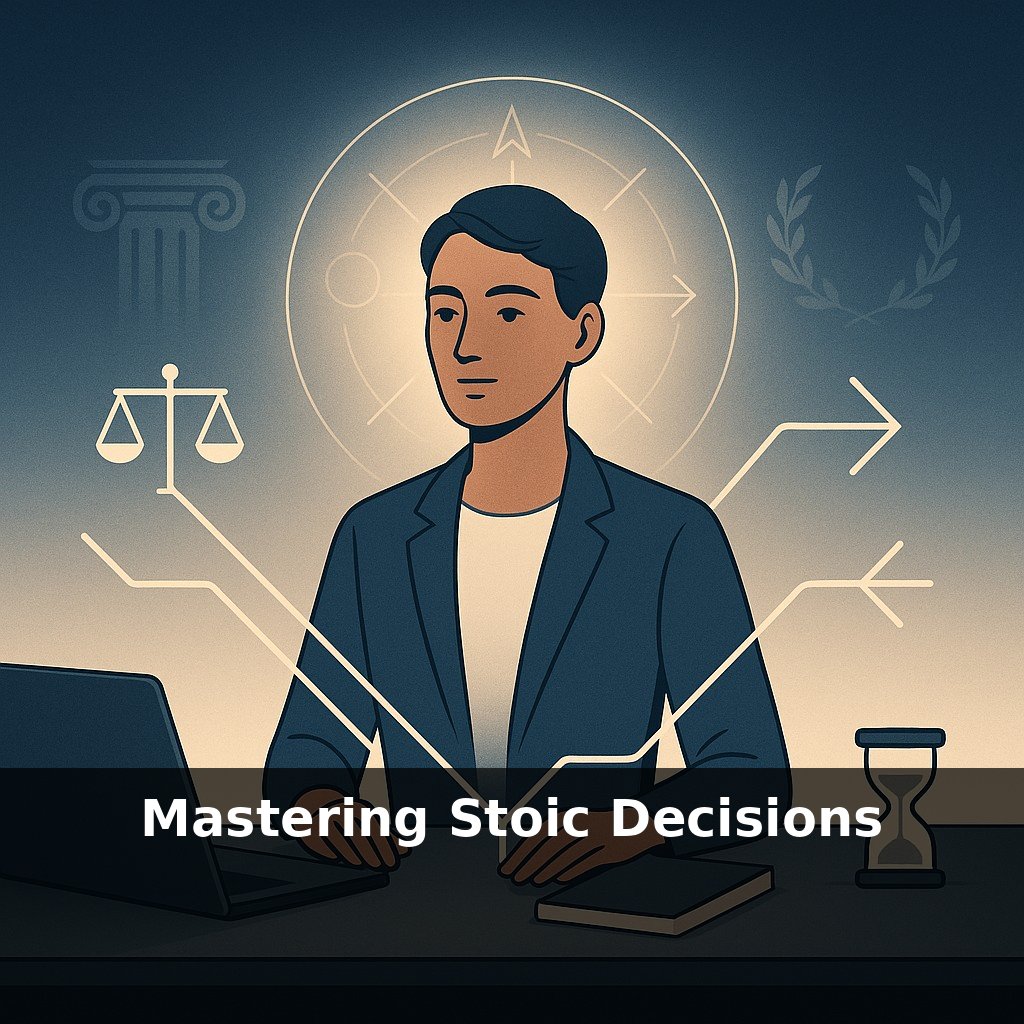
This is where the Stoic “Dichotomy of Control” stops being a slogan and becomes a practical filter. When a tough call lands on your desk, there are usually three layers tangled together:
- Outcomes you can’t guarantee (market response, a client’s mood) - Variables you can strongly influence (quality of proposal, clarity of rollout plan) - Inner stance you fully own (your effort, honesty, preparedness)
Most people mentally treat all three as if they’re equally controllable, then blame themselves for everything that goes wrong. The Stoic move is different: accept that the top layer is a forecast, not a promise, and shift your energy downwards—toward what you can actually shape.
In cognitive psychology terms, this interrupts “illusion of control” and reduces overconfidence. In daily terms, it shrinks the decision to a sharper question: *Given these uncertainties, what’s the most virtuous move I can stand behind?* Now ethics is not a vague ideal; it becomes a decision constraint: certain shortcuts are simply off the table, no matter the pressure.
This is where values speed decisions instead of slowing them. If your team has explicitly agreed, for example, “We never hide known risks from clients,” then dozens of small choices vanish. You don’t burn energy debating whether to raise the awkward issue; you’ve already decided in advance what “the kind of people we are” will do.
Behavioral economists might call this a “pre-commitment device.” Stoics would just say you’re training character. The effect is similar: less mental bargaining, more consistent choices.
To bring in the “view from above,” consider stepping outside the local drama of a decision. Look at today’s choice as if you were seeing your entire career as a time-lapse video: will this move look like a small, principled step in a clear direction—or a jagged detour you’ll be explaining away later? That distance often reveals when fear, ego, or people-pleasing are secretly steering.
Notice how these elements intersect: a clear sense of control keeps you realistic, explicit virtues keep you honest, and perspective prevents small anxieties from dictating big moves. Together, they form a quiet discipline: you’re not chasing the perfect outcome; you’re committed to the most honorable process available to you now.
In a product meeting, a Stoic-style filter might sound like this: “We can’t control whether competitors copy this, but we *can* control how transparently we test it with customers and how honest we are about limitations.” Suddenly, debate shifts from “Will this win the market?” to “What’s the cleanest way to learn and the fairest way to ship?”
Think of a manager deciding on layoffs. One option quietly cuts the most vulnerable contractors; another shares the pain across the exec team’s bonuses and a broader hiring freeze. The first might look clever in a spreadsheet; the second will age better in that “year-from-now” review of your own character.
Or take a cross‑functional conflict: sales wants a discount, finance resists. Instead of politicking, someone asks, “If our names were attached to this policy in a public memo, would we still support it?” That “view from above” shrinks theatrics and amplifies shared standards.
Over time, these small, value‑constrained choices act like subtle trail markers in a forest—each one modest, but together they define a path you can actually retrace and defend.
AI copilots will soon sit beside you in every meeting, quietly nudging options and trade‑offs. The real advantage won’t be who has the smartest tool, but who trains themselves to question its suggestions. Think of it like hiking with a GPS that sometimes guesses: useful, but you still read the terrain. Teams that pair these tools with explicit virtues and shared “red lines” will handle crises faster, hire more wisely, and recover trust more easily when experiments go wrong.
When today’s choice feels blurry, treat it like adjusting a camera lens: twist from “What will they think tomorrow?” toward “What story do I want this to tell a year from now?” That tiny refocus trains a bias‑resistant habit. Your challenge this week: before any big yes or no, write one sentence: “I’ll be proud of this because…” Then decide.