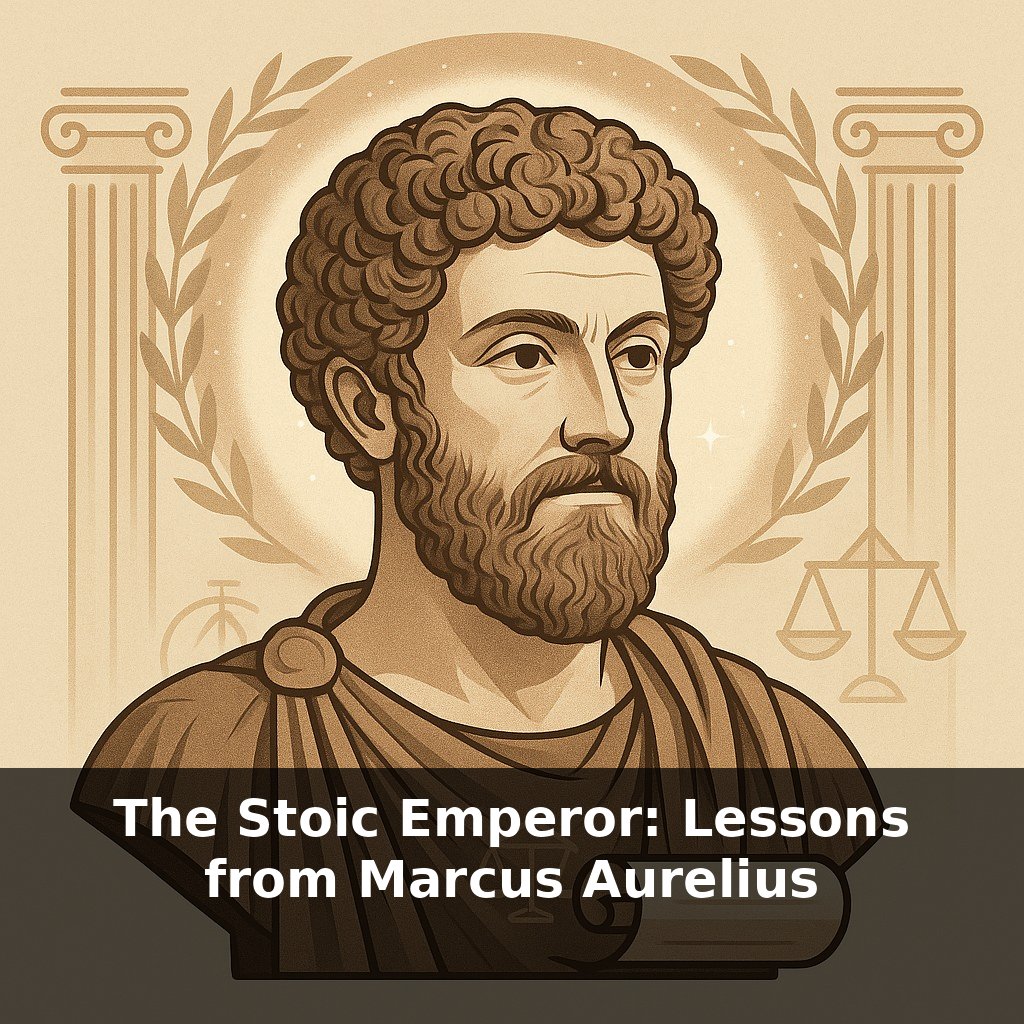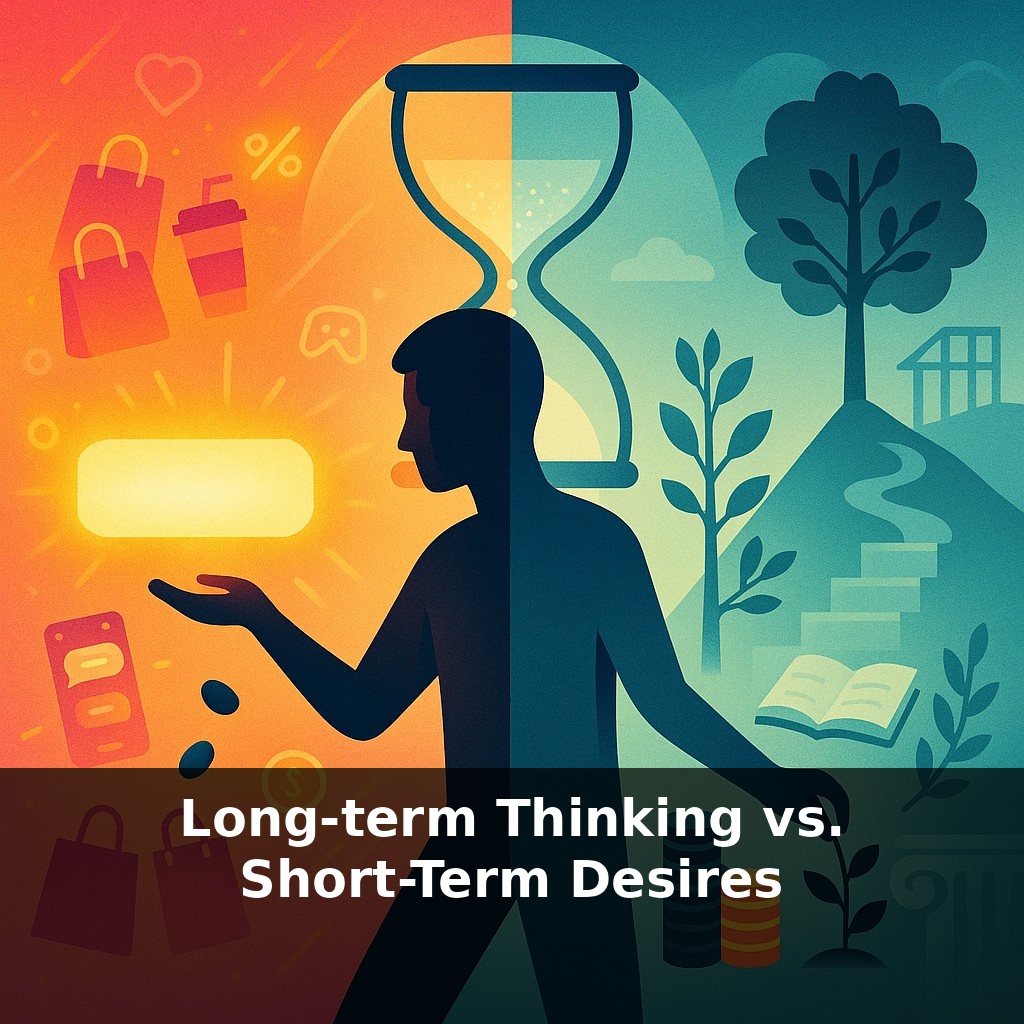
Seneca said, “Life is long if you know how to use it.” Now hear two futures: in one, you keep hitting “buy now” on every urge; in the other, you keep saying “not yet” to build something bigger. Same day, same person—completely different decade ahead. Which future are you feeding?
A classic experiment shows most people grab $50 today instead of $100 a year from now. They’re not stupid; their brain is just rigged to shout “now” louder than “later.” The Stoics noticed the same tug-of-war—what they called raw *hormê* pulling against *logikos*, the calmer voice of reason. Modern scanners now literally see this conflict: one network lights up for instant hits, another for patient plans. The problem isn’t that you lack discipline; it’s that you’re letting the loudest system drive. Seneca’s twist was radical: stop asking, “What feels good?” and start asking, “What makes this scene worth performing well?” That shift—from mood to mastery—lets you treat each small choice less like a snack and more like a brushstroke on a canvas you’ll have to look at for years.
But knowing there’s a tug-of-war in your head doesn’t yet tell you how to decide in the moment when the notification pings, the dessert arrives, or the “limited-time offer” flashes. Stoics didn’t just preach restraint; they built mental training to stretch attention toward the horizon. Modern science quietly agrees: the more you rehearse seeing downstream consequences, the less persuasive that “right now” shine becomes. This is where *prosoche* and *premeditatio malorum* stop sounding abstract and start becoming tools you can pull out right between a craving, a click, and a choice you’ll wake up with tomorrow.
A Stoic would say your problem isn’t desire—it’s a voting system where the shortest‑sighted part of you keeps winning elections. Modern experiments show how skewed that vote is: when people choose for “right now,” brain regions linked to quick reward dominate; when they choose for “later,” planning regions come online. The catch: the “now” circuitry is automatic; the “later” circuitry is opt‑in. You have to *call it to the meeting*.
That’s where attention training becomes less spiritual and more tactical. Each time you pause before reacting, you give the planning system a few extra milliseconds to boot up. Those milliseconds matter. In studies of delay discounting, simply asking people to think about what they’d do with the future money nudges choices toward the larger, later reward. No sermon. Just a slightly longer look at “later.”
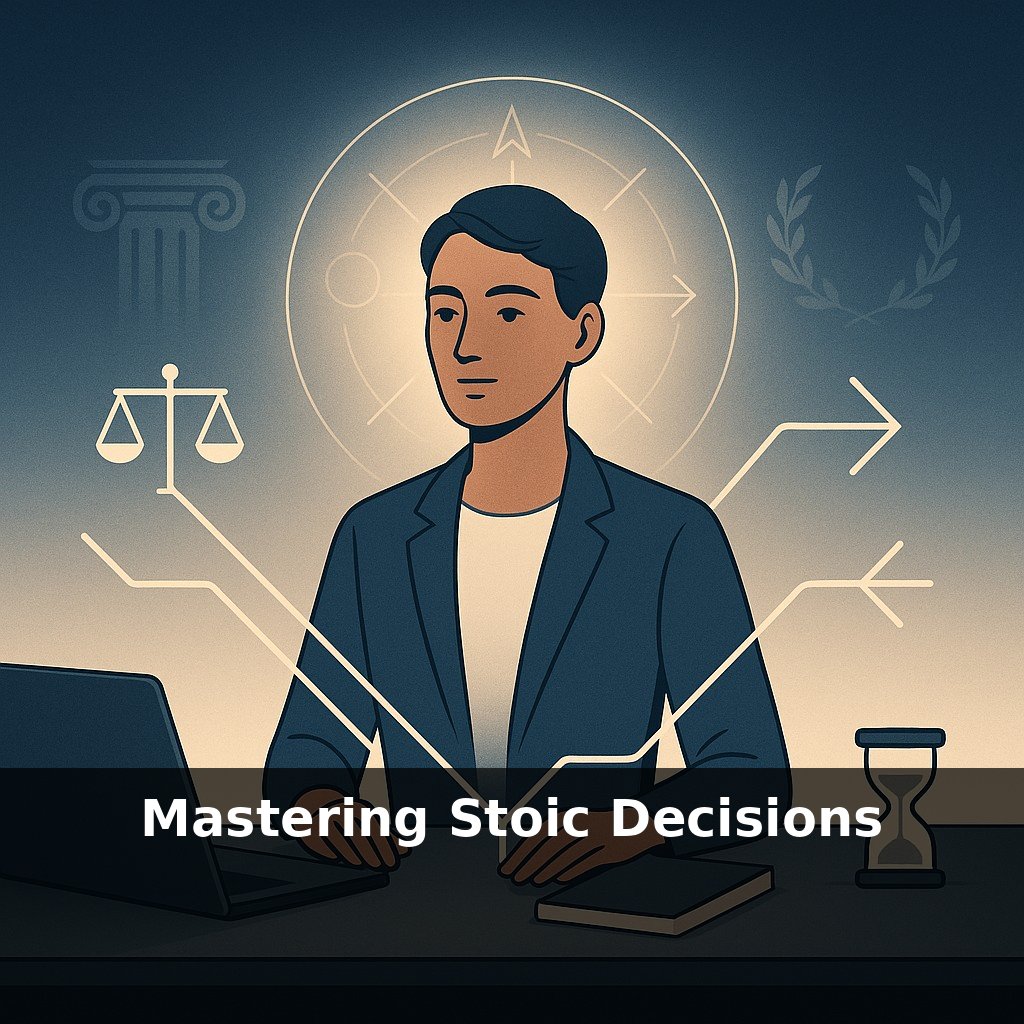
The Stoic move is to make that longer look a habit. Not heroic self‑denial, but a tiny sequence you run when something shines: 1. Name what’s happening. “Short‑term hit detected.” 2. Extend the timeline. “How does this play out in a week? A year?” 3. Compare scenes, not feelings. “Which version of me would I respect more?”
This is also where negative visualization earns its keep. Cognitive scientists call a similar move “prospective simulation”: mentally walking through possible outcomes recruits the same planning networks you use for navigation. You’re not scaring yourself straight; you’re running a dress rehearsal for consequences so they feel less abstract and more like tomorrow’s weather report.
Crucially, long‑term thinking doesn’t mean permanent self‑deprivation. Data on wellbeing consistently show that people report more satisfaction from progress toward valued goals than from isolated spikes of pleasure. Seneca’s “good performance” maps neatly onto what psychologists now call “meaningful engagement”: using your skills in service of something that outlasts the moment.
Think of it like a composer revising a score: cutting one pretty note here so the whole piece lands harder later. Each time you trade a small, easy comfort for a quieter, durable gain, you’re not just being “disciplined”; you’re re‑weighting your internal voting system so the long view keeps a seat at the table.
The next time a notification tempts you, treat it like a street vendor calling your name while you’re walking toward an important meeting. You don’t have to wage war on vendors; you simply notice, nod, and keep your direction. That tiny act of remembering where you’re headed is the mental “muscle” you’re training.
A founder deciding whether to chase a flashy feature or fix a boring bug does something similar. One path gets applause now; the other prevents a meltdown next quarter. The most resilient companies quietly pick the unglamorous fix, again and again, until robustness becomes their edge.
Artists do this too. A painter may love a vivid color that doesn’t fit the composition. Scraping it off feels like a loss in the moment, yet it protects the integrity of the whole piece. You can treat daily choices this way: not “Do I want this?” but “Does this fit the picture I’m actually trying to create?” Over time, that question shifts which options even feel attractive.
A hyper-personalized feed already knows which clip keeps you scrolling; soon, wearables and AR layers may adapt in real time to each micro‑craving. As more choices are pre-shaped this way, raw willpower shrinks in value and structured habits matter more. Long-term orientation could become a kind of “collective immune system”: communities that ritualize checking second- and third-order effects may weather shocks better than those optimized only for click-through.
So the question shifts from “How do I resist this?” to “What am I quietly training myself to want?” Each small choice is like tuning an instrument: skip a few lazy notes, and over time the melody changes. Your challenge this week: notice one moment a day where you swap a quick win for a sturdier gain—and just write down what it bought you.