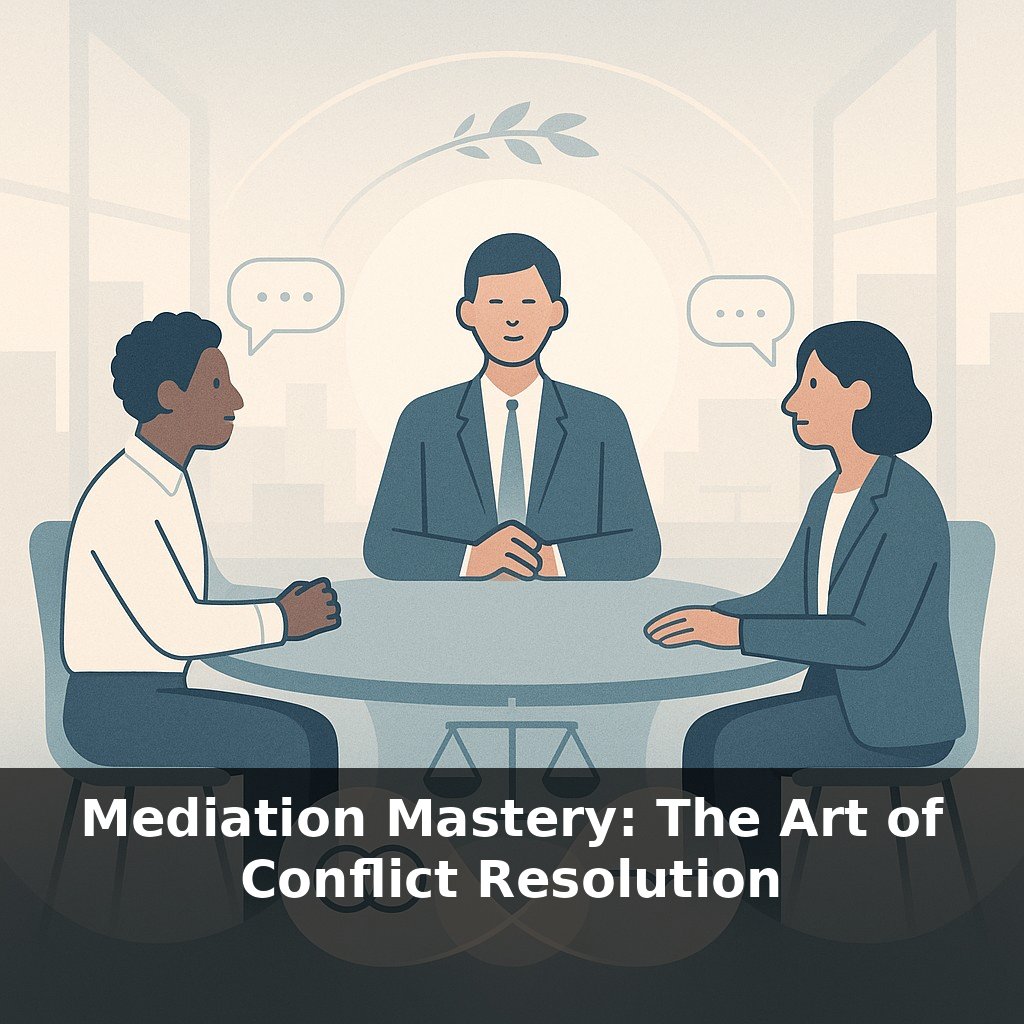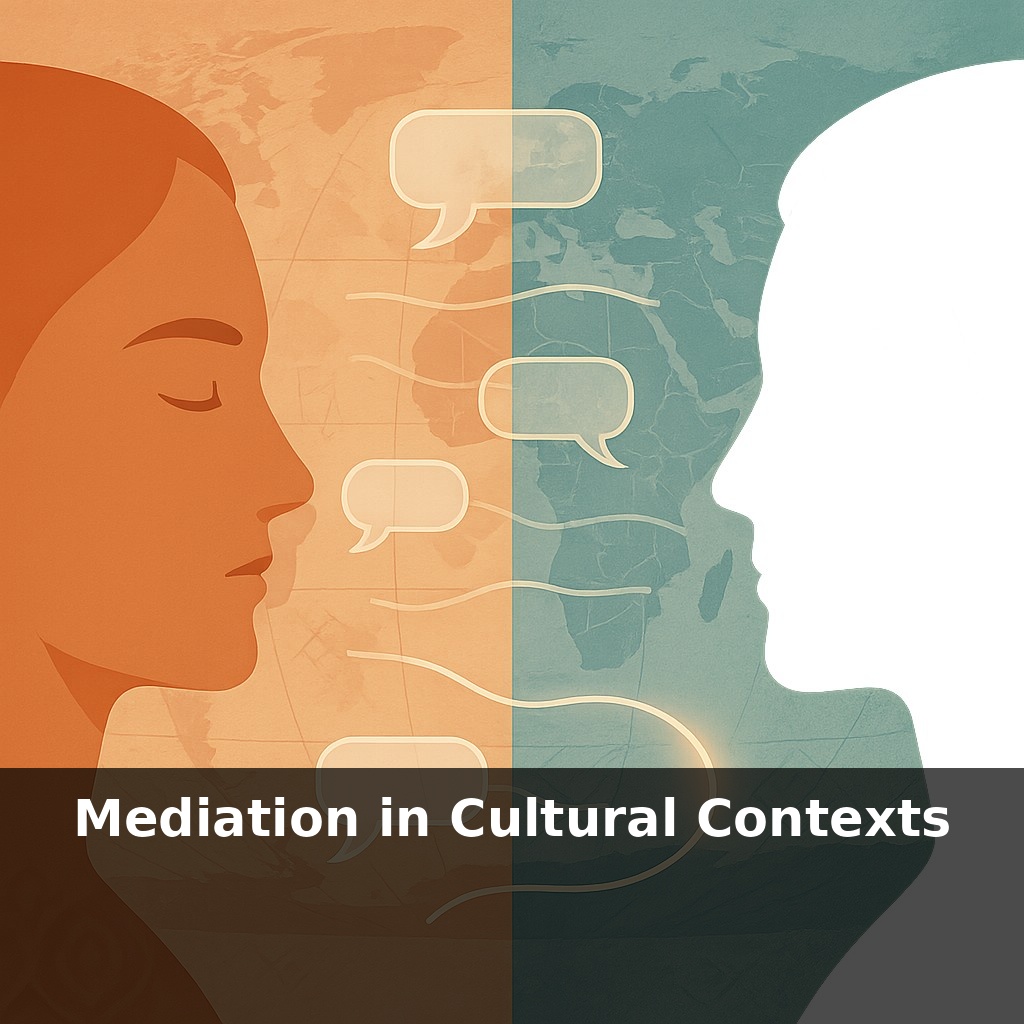
Nearly half of professional mediators say culture is their biggest barrier—yet most mediation training still treats culture as an afterthought. In this episode, we’ll step into conflicts where both sides speak “perfect English” and still completely miss what the other is really saying.
Forty-eight percent of mediators in a recent survey blamed “culture” as the single biggest barrier to settlement—yet most conflicts don’t announce, “Hi, I’m cultural.” They show up as “She’s being rude,” “He’s hiding something,” or “They’re not negotiating in good faith.” In this episode, we’ll move past the vague idea that “people are just different” and zoom in on the subtle, practical signals that actually derail cross-cultural mediation: how silence is read, how “no” is delivered, how respect is shown—or withdrawn.
We’ll unpack why a direct question that works flawlessly in one context can shut down an entire room in another, and how face-saving tools, high-context listening, and co-mediators can turn stalemates into movement. Think of it as learning to switch between communication “operating systems” without crashing the whole program.
Think of this episode as stepping into a room where three clocks tell three different times—and everyone insists theirs is correct. One party thinks fast decisions show professionalism; another reads speed as recklessness and prefers lengthy pauses, side consultations, and visible consensus-building. Layer on power distance, attitudes toward authority, and unspoken hierarchy, and you start to see why identical words can carry opposite intentions. We’ll explore how seasoned mediators quietly map these hidden “time zones,” then adjust pace, sequencing, and who speaks when—without calling anyone out or taking sides.
When you walk into a cross-cultural mediation, you’re not just entering a dispute—you’re stepping into a collision of hidden rulebooks about what “conflict,” “respect,” and even “agreement” are supposed to look like. The trap is assuming there’s one correct script and everyone else is just “difficult.” Skilled mediators start by asking a quieter question: “According to *their* script, what would a respectful, safe conversation look like?”
This is where pre-mediation cultural assessment earns its keep. Not a superficial checklist of “X culture likes stories, Y culture is direct,” but targeted curiosity: Who usually speaks for the group? What counts as commitment—a handshake, a written document, a public statement? Is emotion in the room seen as honesty… or loss of control? The answers shape everything from room layout to agenda order.
Consider how process can either clash with, or echo, people’s value systems. In some settings, starting with joint sessions feels transparent and fair; elsewhere, private caucuses first are essential so no one risks public embarrassment. In hierarchical cultures, you may need to quietly confirm who actually has authority to settle before the meeting, rather than discovering mid-session that the apparent decision-maker is really a messenger.
Rituals and storytelling aren’t “cultural decorations”; they’re delivery systems for legitimacy. The Kenyan post-election process didn’t just invite elders to talk—it used the *form* of storytelling circles to signal, “This process belongs to you.” In corporate disputes, you might see a softer version: opening with a brief acknowledgment of shared history, or allowing each side to narrate how the relationship started before discussing how it broke.
A mediator in these contexts is less like a referee enforcing one rulebook and more like a software architect designing an interface where two incompatible systems can still exchange data. You’re constantly asking: What kind of setting, pacing, and sequencing will let both parties show dignity *in their own terms*, without forcing them into a mold that feels like a loss before negotiations even begin?
The more deliberately you design the process around these questions, the less you’ll have to “fix” once the conflict is already inflamed.
In practice, this can look surprisingly small on the surface. A mediator in a family business dispute notices that one side tells long, winding stories before answering anything concrete; the other side jumps straight to numbers and deadlines. Instead of forcing both into a single rhythm, she splits the agenda: first a “narrative round” where no one can interrupt, then a “decision round” where everyone must be concise. Suddenly, the storytellers feel heard and the pragmatists finally see a path forward.
Or take a workplace conflict between a regional manager and a headquarters team. Before they meet, the mediator quietly checks who each side informally turns to for reassurance. During the session, those informal anchors are seated strategically and invited to summarize what they’re hearing. This simple move stabilizes the room more than any clever question could.
Your challenge this week: notice one interaction where people seem “out of sync”—different pacing, turn-taking, or comfort with emotion—and sketch two alternative process designs that might allow *each* style to function at its best.
As cross-border disputes multiply, mediators will quietly become “systems designers” for global cooperation. AI tools may soon flag when a phrase that sounds neutral in one language lands as sharp in another, or suggest alternative framings that preserve face for all sides. Expect settlement tables to include data dashboards alongside coffee and notepads, helping parties see patterns in emotion and concession the way pilots see weather on a radar—something to navigate, not to fear.
Treat this work as an ongoing field lab: each dispute you enter can expand your map of human negotiation patterns. Over time, you’ll notice recurring “moves” the way a seasoned chess player recognizes openings. The real shift isn’t in mastering every custom; it’s in training yourself to keep asking, “What else might be true in *their* world?”
Here’s your challenge this week: Before your next cross‑cultural meeting or conflict conversation, spend 15 minutes mapping the cultural dimensions at play (e.g., high vs. low context, direct vs. indirect communication, individualist vs. collectivist) for yourself and the other party, then write a one-paragraph “translation strategy” for how you’ll adapt your language and tone. During the actual conversation, deliberately use at least three culture-bridging moves mentioned in the episode—such as explicitly naming assumptions, asking one clarification question before responding, and summarizing the other person’s perspective in their own terms. After the interaction, rate yourself (1–5) on each move and decide one concrete adjustment you’ll make for your very next cross-cultural exchange.