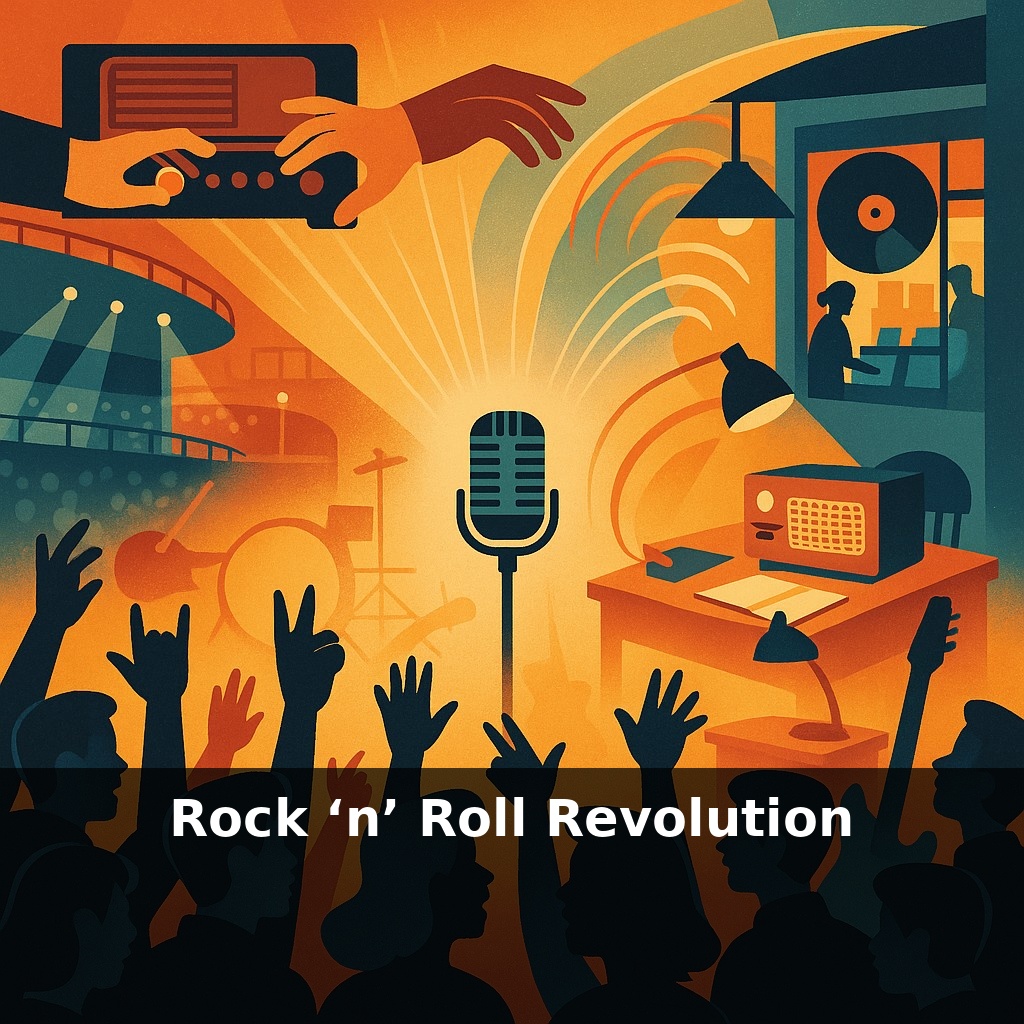
A single concert in Cleveland was shut down after just one song because too many teenagers showed up. In this episode, we step into that overcrowded arena, follow the buzz from cheap transistor radios, and ask: how did a noisy new sound start rewriting the rules of youth itself?
Those teenagers didn’t just swarm concerts; they quietly rewired daily life. Suddenly, homework time had a soundtrack, family radios became battlegrounds, and small-town record shops turned into social hubs where kids traded gossip along with 45s. Rock ’n’ Roll slipped into routine moments—bus rides, diner jukeboxes, after-school dances—and stretched them, the way a long summer evening seems to resist sunset.
This wasn’t only about volume or speed; it was about who got to choose the mood of a room. Parents still owned the house, but teens started programming its soundscape. In classrooms, teachers noticed new slang, new hairstyles, restless tapping to an invisible backbeat. In city halls and church basements, adults argued over “corrupting influences,” while promoters saw ticket lines and smelled opportunity.
In this episode, we’ll track how that tension turned a passing fad into a permanent fault line.
Soon, dollars started marching in time with the backbeat. A rising teen market—worth billions by decade’s end—gave record labels, radio stations, and instrument makers a reason to chase youth tastes instead of ignore them. Deejays like Alan Freed pushed boundary-crossing playlists, packing dance floors with mixed crowds that quietly defied local customs. Guitar makers answered with sleeker, louder models like the Fender Stratocaster, turning stage lights into invitations for bolder sounds. In this shifting landscape, owning your songs—like Chuck Berry did—wasn’t just business; it was a rare claim to power in a divided industry.
When Elvis Presley’s first album sat on top of the Billboard chart for 10 weeks in 1956, it wasn’t just a sales victory; it was a signal that the center of gravity in American culture had lurched toward the youth market. A format once reserved for grown‑up pop singers and jazz bands now held a 21‑year‑old from Memphis whose voice carried traces of Black gospel shouts and country laments in the same breath.
What crackled through those grooves was more than a catchy rhythm. To many white listeners, Elvis sounded shockingly “new,” but Black audiences heard familiar church cadences, blues phrasing, and rhythm & blues grit. The novelty was that this hybrid sound was suddenly blasting from national television, stitched into variety shows, and beamed into living rooms that had rarely heard Black music at all. The medium—not just the message—was starting to integrate.
On the bandstand, the technology pushed that shift further. Electric guitars had existed for years, but the mid‑’50s Fender Stratocaster gave players a sleek, mass‑produced tool built for bending pitch and sustaining notes in ways older dance‑band instruments couldn’t match. Guitarists could make a single note cry, swoop, and snarl, cutting through drums and shouting crowds. That extra expressiveness let solos feel closer to a human voice—pleading, teasing, bragging—perfect for a generation testing its boundaries.
Meanwhile, behind the scenes, deals on paper shaped who would be remembered. Chuck Berry’s choice to write his own songs and keep publishing rights gave him leverage that most Black artists were denied. When “Maybellene” or “Johnny B. Goode” spun on the radio, he wasn’t just the performer; he was the legal author. That ownership meant royalties, but it also meant narrative control: his lyrics about cars, school, and small‑town dreams defined what “teen life” sounded like before sociologists had a name for it.
Yet rock’s reach wasn’t uniform rebellion. Not every parent was horrified. Some admired the tight musicianship of Berry’s guitar runs or Little Richard’s piano fireworks. Older record executives, far from waging a moral crusade, quietly counted profits as teen dollars poured into singles, concerts, and fan clubs. The same adults who might scold a son for ducktail hair might also invest in the label printing his favorite 45.
Think of the 1950s scene like a train station at the moment new tracks are being laid: the old timetable of ballroom, crooner pop, and big band still exists, but suddenly there’s a louder, cheaper line leaving every hour—aimed straight at teenagers. A low‑wage Saturday job could now buy a ticket: a 45 single, a seat at a local dance, a transistor radio slipped into a jacket pocket. That portability meant you didn’t need permission to listen; you just needed batteries.
Bands adapted fast. Local country groups added drum kits and turned up their amps; church singers tried weekend gigs at roadhouses. Even clothing shops took cues from stage wear—flashy jackets, pencil skirts, and pegged pants filtered from performers to school hallways. Politicians, noticing crowds at integrated shows, quietly studied turnout the way labels studied jukebox reports. And overseas, young kids in Liverpool and Hamburg leaned over crackling broadcasts, hearing not just songs but a blueprint, sketching their own bands before they ever touched a guitar.
Rock’s real legacy is less about volume than about “remix thinking.” Once teens saw that familiar pieces—rhythms, clothes, even rules—could be rearranged, the idea spread like a street‑corner rumor. Scenes in Tokyo, Lagos, and São Paulo soon bent rock to local stories, treating it like open‑source code. That same instinct shapes today’s AI mashups and genre‑blurring playlists: audiences expect to co‑author culture, not just receive it, turning every listener into a potential editor.
Rock’s shockwaves never really stopped; they just changed frequencies. The same current that once jumped from jukeboxes now hums through streaming feeds and bedroom studios, where teenagers splice beats like collages. Your challenge this week: trace one song you love back through its influences, like following a river to its spring.