Right now, roughly a third of the world’s recorded music money goes to artists who don’t belong to the big labels. On your playlist, they sit side‑by‑side with superstars. But here’s the twist: the “outsiders” quietly changed what the entire industry sounds like.
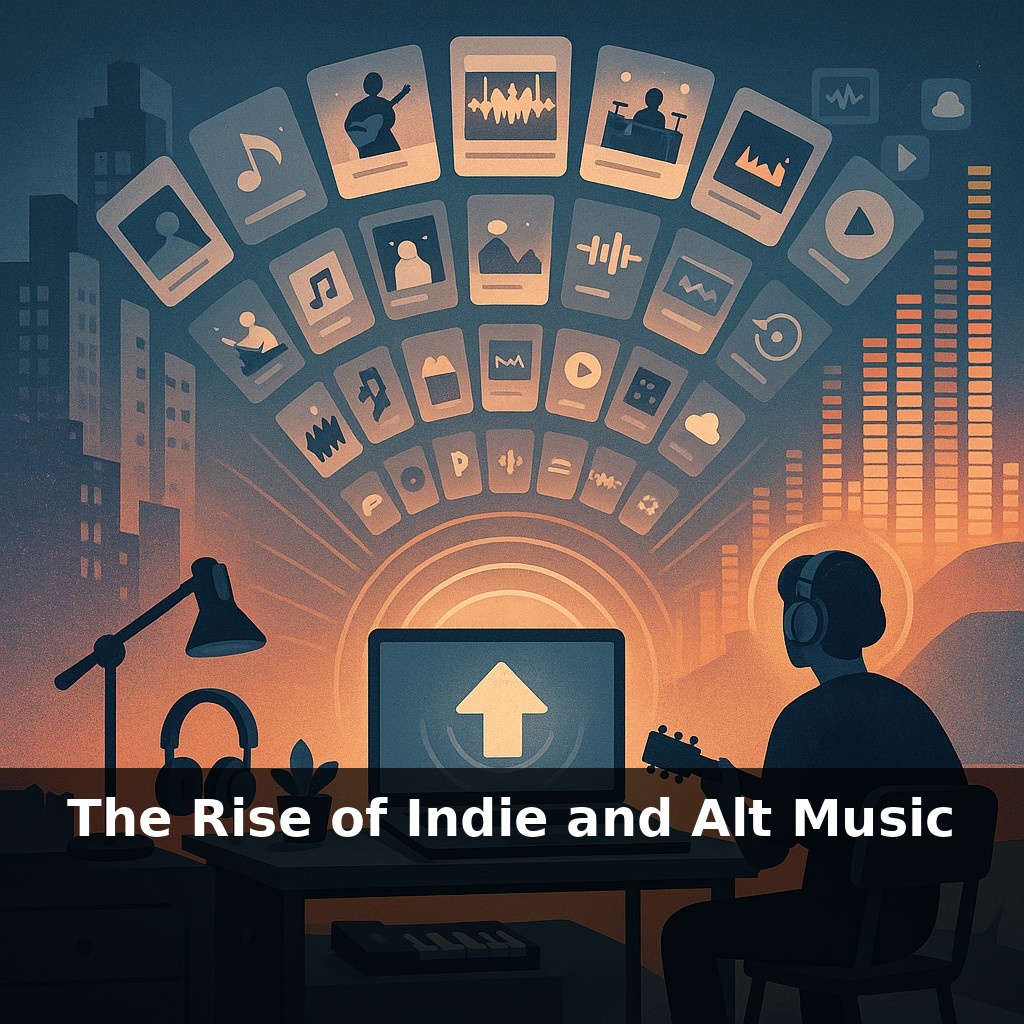
Think about how casually you can release a song today: a laptop, a cheap mic, a distributor login, and your track can land on the same platforms as global stars. That frictionless upload button is the culmination of decades of quiet rebellion. In the late 70s and 80s, bands were dubbing cassettes by hand, mailing them to zines and college stations, chasing any signal that could carry their sound beyond a local venue. Now, the “gate” is mostly gone—but the crowd outside it has exploded. Streaming, crowdfunding, and social media didn’t just widen the door; they turned every bedroom into a potential control room. The real story isn’t that more music exists—it’s that more *kinds* of careers exist, from Bandcamp lifers to streaming-only chart breakers, each rewriting what success can sound like.
In the 70s and 80s, “independent” wasn’t an aesthetic; it was a practical necessity. Major labels simply weren’t interested in noisy punk kids, experimental weirdos, or genre-blurring misfits clogging up their catalogues. So small labels sprang up around scenes the way food stalls cluster around a busy street corner—each serving a distinct flavour the big chains ignored. College radio DJs slipped these records between polished hits, zines mapped tiny networks of bands and venues, and mail‑order lists turned spare bedrooms into miniature distribution hubs. Step by step, a parallel infrastructure grew, quietly training fans to look beyond the charts.
When alternative rock finally crashed into the 1990s mainstream, it looked like a contradiction in motion. Bands that had grown up on tiny stages and small-label ethics were suddenly shifting millions of units. Nirvana’s *Nevermind* alone moved around 30 million copies, blasting an abrasive, unfriendly-to-radio sound into shopping malls and TV ads. For a moment, the word “alternative” described the centre of pop culture rather than its fringes. The success sent two messages at once: yes, weird, non‑formulaic music could sell—and no, commercial success didn’t automatically resolve the tension between freedom and control.
Behind that story is a quieter shift in tools. In the early 90s, a decent home‑studio rig could easily cost more than $10,000. Owning one was like owning a private printing press. Now, for under $1,000, an artist can record, edit, and mix at a level that once required booking professional time. The gear isn’t just cheaper; it’s more forgiving, packed with presets and tutorials that let curiosity substitute for formal training. A teenager experimenting after school has access to sonic palettes that would have shocked most 80s producers.
Money flows have bent to match. On platforms like Bandcamp, roughly 82% of each sale goes back to the artist, and collectively those payouts passed $1 billion by 2023. That doesn’t mean every project is profitable, but it changes the calculus of risk. A small, devoted audience can sustain an artist far longer than a single shot at a blockbuster hit. Chance the Rapper’s *Coloring Book* charting on the Billboard 200 as a streaming‑only release in 2016 underlined the point: you no longer have to press a single physical copy to play in the same statistical arena as the majors.
Meanwhile, the definition of “indie” keeps fraying. Some independents stay fiercely small; others partner with majors through distribution or licensing deals, treating big companies as service providers rather than bosses. The line between “selling out” and “scaling up” is less about paperwork than about who calls the creative shots. It’s closer to a long, winding trail than a fork in the road—artists can step onto, off of, and around the major‑label path as their goals change, leaving a tangle of routes for the next wave to follow.
Indie today isn’t a single sound; it’s a set of tactics that keep mutating. One band might treat Bandcamp like a limited‑run gallery, dropping carefully sequenced albums with detailed liner notes and high‑quality vinyl for a small circle of superfans. Another leans into TikTok‑sized experiments—tiny hooks, half‑finished ideas—using audience reactions as a feedback loop to decide what becomes a “real” song. A producer who once would’ve ghost‑written for pop acts can now release beat tapes under their own name, licensing tracks to gamers, podcasters, or YouTubers without asking anyone’s permission. And then there are artists who move like travellers through different cities: a split EP with a Japanese noise label one month, a sync deal with a Netflix drama the next, a self‑released live album after that. The connective tissue isn’t genre or career ladder—it’s the habit of treating every tool, from a merch drop to a playlist pitch, as something you can bend to match your own weird map.
Indie’s next chapter may feel less like climbing a chart and more like tending a small, evolving ecosystem. As web3 experiments mature, fans could hold tiny royalty slices the way neighbours share a community garden plot. Algorithms will keep carving out micro‑genres so specific they feel like bespoke mixtapes. House tours, pop‑up shows and low‑impact travel may turn scenes into loose constellations of living rooms and backyards, linked by data but grounded in real‑world trust.
In the end, indie’s rise isn’t just an industry story; it’s a habit of mind. Artists treat each release like a zine, a pop‑up exhibit, a secret gig whispered between friends. Listeners, in turn, become scouts and co‑curators, passing links the way people once traded bootleg CDs. The “next big thing” shrinks into thousands of small, vivid worlds you can wander through at will.
Start with this tiny habit: When you open your music app, add exactly ONE indie or alt track from outside the top charts (like a Bandcamp “new & notable” pick or a playlist called something like “Fresh Indie” or “Alt Underground”) to a new playlist called “My Indie Experiments.” Don’t worry about whether you’ll love it—your only job is to save it. Later, when you’re doing something low-focus (washing dishes, scrolling, commuting), hit play on that playlist and let those saved tracks run in the background.