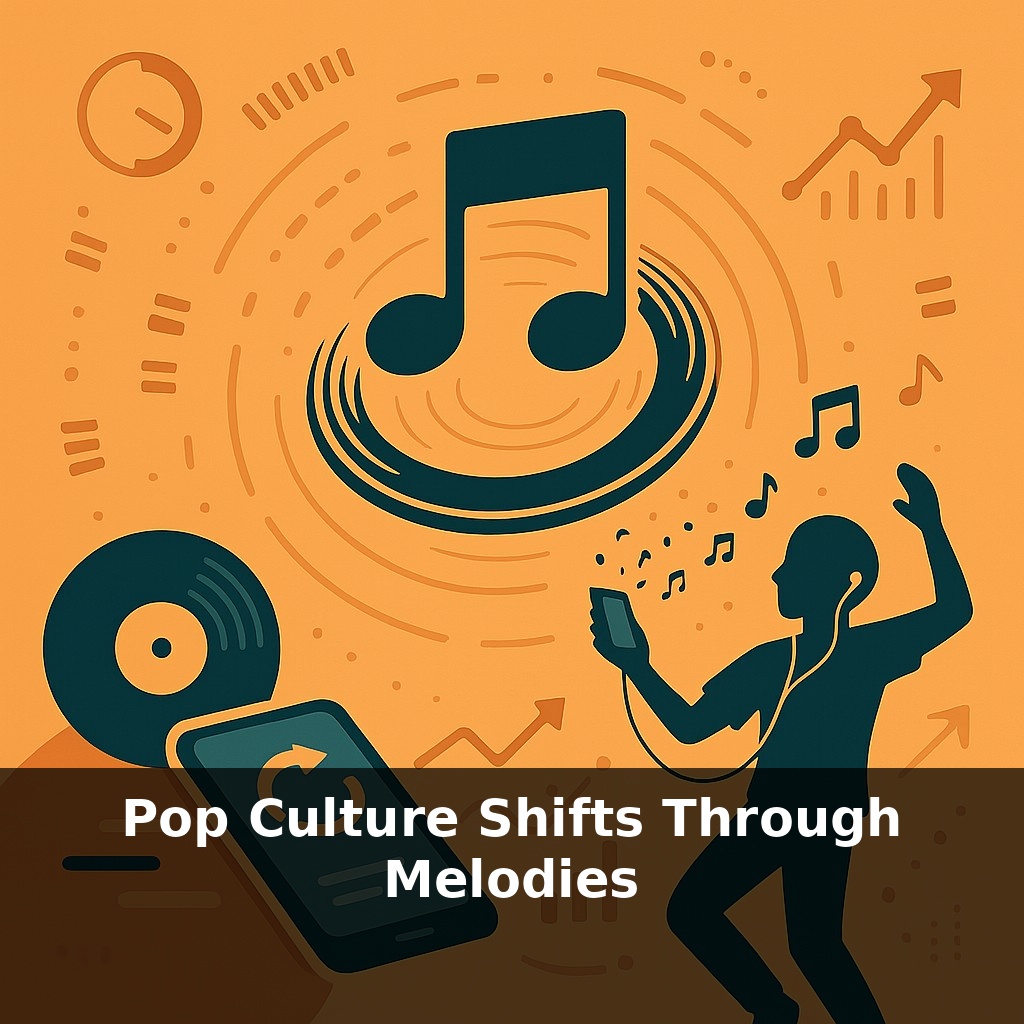
Somewhere right now, a song under 30 seconds long is changing what pop music sounds like. A teenager dances to a looping hook, a producer rewrites their chorus to fit a trend, and a record label panics—because suddenly, the shortest melodies are steering the biggest stars.
The strange part is: nothing about the *bones* of pop has really changed. We still get verse-chorus structures, big hooks, and songs that rarely overstay the 3–4 minute mark. Yet the *forces* shaping those bones are almost unrecognizable from even a decade ago. In the 80s, a global hit like Thriller spread through MTV and record stores; today, more than 100,000 new tracks hit Spotify every single day, all jostling for a few seconds of your attention on an endless scroll. Chart power no longer belongs only to radio programmers or TV networks—since 2013, every replay, skip, and half-finished stream leaves a fingerprint on Billboard rankings. That means your casual background listening has real weight, nudging which sounds labels chase next and which underground scenes get dragged into the spotlight.
Now the real tension kicks in: the people making pop and the people measuring it are playing different games on the same board. Algorithms reward tracks that can prove their worth in under ten seconds; artists still dream of albums that unfold like chapters in a novel. Platforms slice songs into data points—skips, saves, replays—while listeners experience them as memories, moods, or background color on a commute. Genres blur as easily as playlists: a country hook rides a trap beat, a K‑Pop chorus hits like arena rock, and a bedroom producer quietly competes with stadium tours.
The strange thing about this flood of data is how *unevenly* it lands on the music itself. Some elements of pop mutate at high speed; others barely budge. Production is the quickest to flip. When Michael Jackson released *Thriller* in 1982, the “cutting edge” was analog tape wizardry and early drum machines. Today, a hit can be built on a laptop in a bedroom using the same free synth presets that thousands of other producers are trying out that week. A single viral texture—a distorted 808, a pitched‑down vocal, a clacky snare—can suddenly show up in hundreds of new tracks within days, because everyone is sharing the same tools and reference points online.
Lyrics move a little slower, but they clearly track what an era is anxious or excited about. Cold War dread bled into 80s pop; post‑9/11 uncertainty echoed through the 2000s; now you hear climate anxiety, burnout, and hyper‑online romance. Listen back‑to‑back to Barry McGuire’s “Eve of Destruction,” Beyoncé’s “Formation,” and Billie Eilish’s catalog and you get a time‑lapse of how protest, identity, and mental health entered the pop vocabulary. None of these erase pop’s taste for escapism; they just sit alongside the party tracks, like different panels in the same comic strip.
The *where* of pop has changed even more dramatically than the *what*. For decades, “global” pop mostly meant American and British acts touring the world. Now K‑Pop groups like BTS can account for roughly one out of every thousand Spotify streams globally, Latin artists such as Bad Bunny can dominate year‑end charts while still singing almost entirely in Spanish, and Afrobeats stars like Burna Boy can headline festivals that once booked only rock or EDM. Instead of one center exporting to everyone else, you get multiple hubs—Seoul, Lagos, San Juan—trading ideas in real time.
You can hear these hubs colliding inside individual songs: a dembow rhythm under a trap hi‑hat pattern, an Afrobeats groove carrying a glossy pop topline, a K‑Pop bridge that suddenly breaks into EDM. It’s less a neat fusion and more like a crowded city intersection where different languages, fashions, and foods coexist on the same block. Pop keeps its familiar frame—big hooks, emotional directness—but the colors filling that frame are coming from many more places than before.
Listen closely to a few big songs from the past five years and you can almost *hear* how they’re engineered for this new environment. Intros shrink or disappear so vocals hit immediately; choruses sneak in early, then reappear in chopped‑up form, perfect for a 10‑second clip. A rapper might tease a “leaked” verse on socials, then change it before the official release once they see what line people latch onto. Producers watch which tempo ranges keep listeners from skipping and quietly shift new tracks a few BPM to match.
Genres that thrive now often share one trait: they’re easy to slice into memorable, self‑contained moments. A single dance break, ad‑lib, or chant can travel farther than the song that birthed it. Instead of writing just for radio or tours, artists write for a mosaic of possible futures—reaction videos, fan edits, gaming streams, stadium chants. Like a painter layering colors that look different under morning or evening light, they’re composing melodies that can survive being chopped, looped, and re‑contextualized across a dozen platforms.
Thriller’s sales and BTS’s streaming share hint at pop’s next puzzle: attention is finite, but creation is exploding. As AI tools lower barriers, you might hear convincing “new” songs from artists who never entered a studio—or are entirely virtual. Fans could co-write hooks, vote live on setlists, or spawn canonized remixes, blurring who counts as the “real” author. Pop may start to feel less like a finished product and more like a wiki page: constantly edited, never truly complete.
Pop’s “moving target” might soon feel more like a moving crowd: artists, fans, and even code all tugging on the same song. Instead of a framed painting, think of a street mural—layered, tagged, revised overnight. The next “Thriller” may not be a single classic album, but a chain of evolving versions that each generation briefly claims as its own.
Here’s your challenge this week: Pick one pop song from each of three decades mentioned in the episode (for example, an 80s synth-pop hit, a 90s R&B anthem, and a 2010s streaming-era track) and listen to all three back-to-back in one sitting. As you listen, pause after each song and say out loud what specific cultural mood or moment it reflects (like consumerism, rebellion, social media anxiety, etc.), and then replay just the chorus to notice how the melody “sells” that mood. Before the week ends, create a 10-song playlist that traces a single pop-culture shift discussed in the episode (like the move from radio dominance to TikTok virality) and share it with at least one friend, asking them which song feels like the “turning point” in that shift.