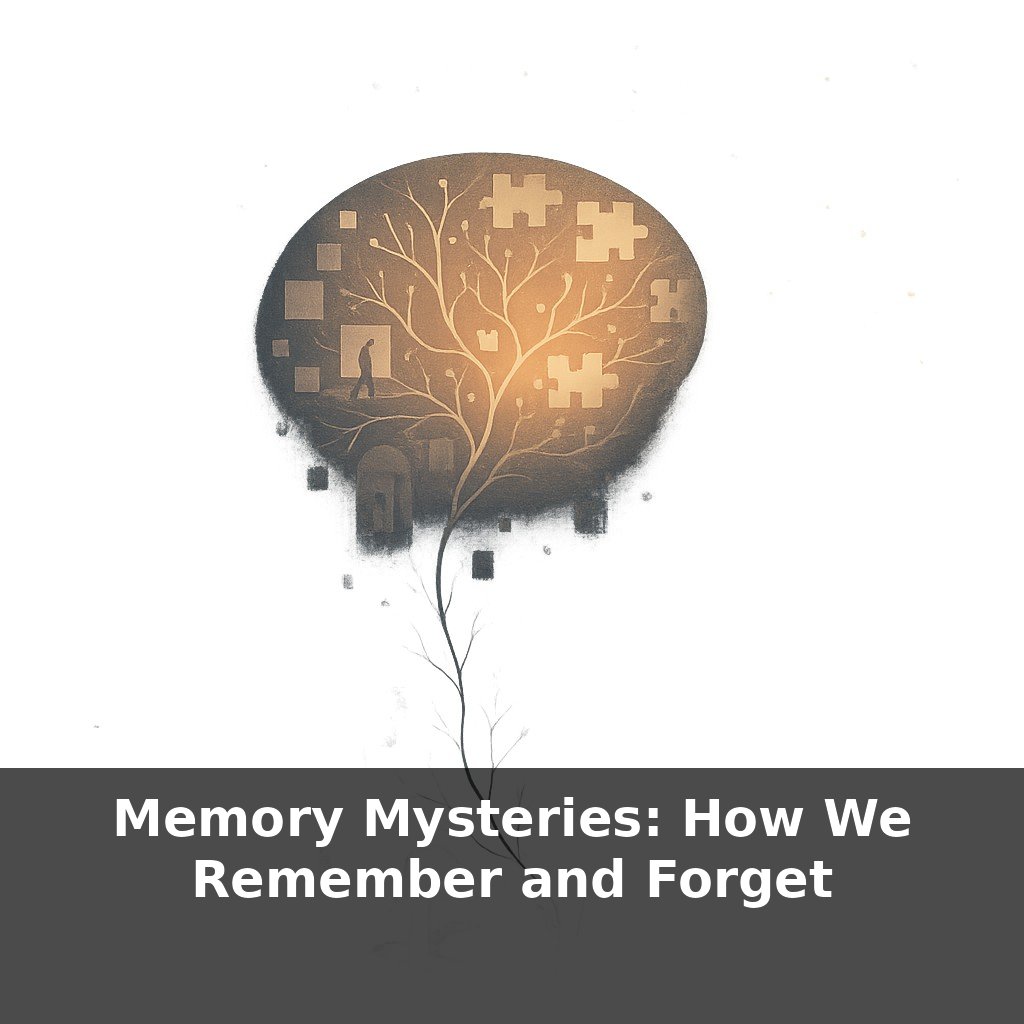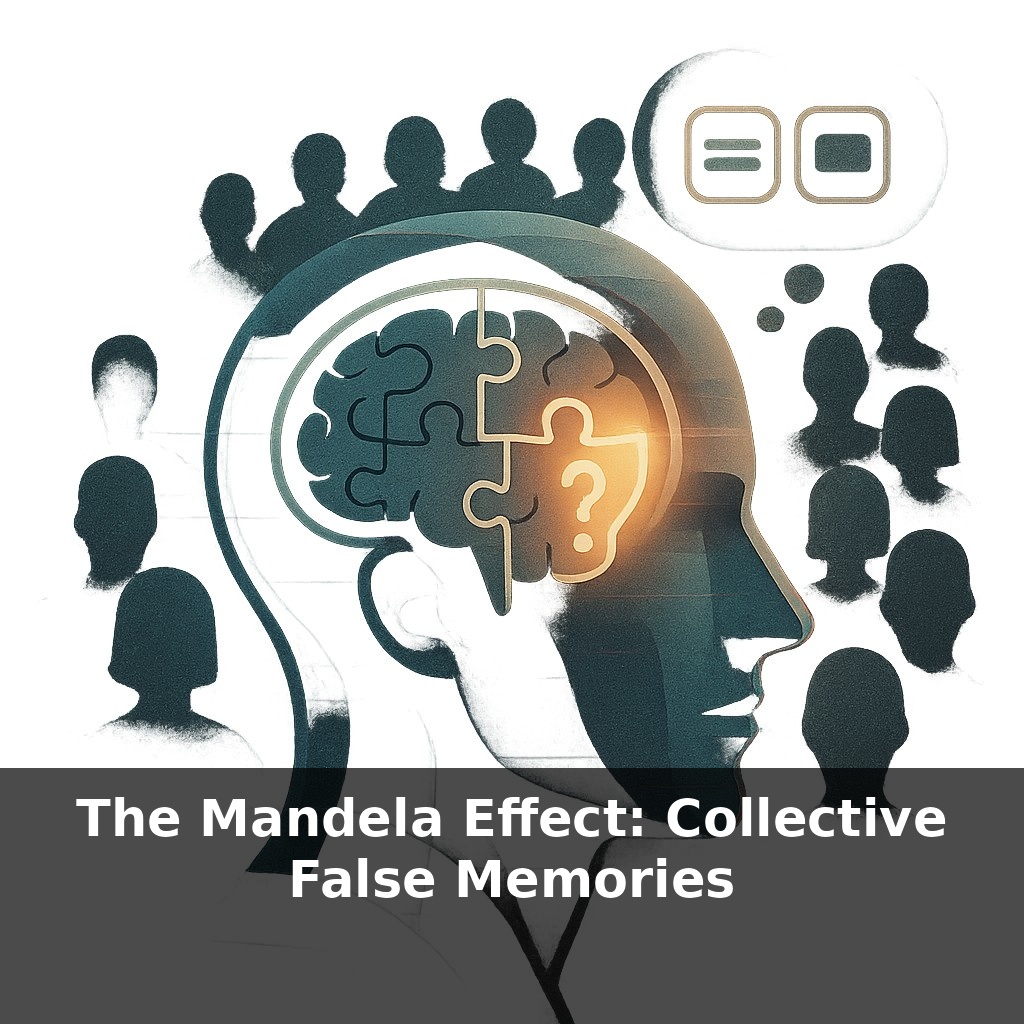
About half the people in one classic memory experiment confidently recalled a word that was never shown to them. Today, we’ll step into that unsettling space where crowds remember the same thing… that never actually happened. And ask: how can so many of us be so sure—and so wrong?
So how do these shared glitches in recall grow from private error into viral certainty? Cognitive psychologists point to three powerful forces working together. First, our minds constantly reconstruct details to keep a tidy storyline, smoothing over gaps with what *should* be true. Then social proof steps in: when you see thousands of people online insisting they “remember it this way,” your brain treats that chorus like corroborating witnesses. Finally, the internet acts as an industrial-scale echo chamber, rapidly copying and pasting the same distorted detail across forums, memes, and videos until it feels ubiquitous and therefore “real.” The Mandela Effect isn’t just a quirk of individual recall; it’s a feedback loop where personal recollections, group narratives, and algorithms collide—and sometimes quietly overwrite the historical record.
Online, this goes beyond quirky debates over cartoon logos or movie quotes. It starts to brush up against history, news, and even justice. When millions “remember” Nelson Mandela dying in prison decades before his real death in 2013, they aren’t just wrong about a date; they’re revealing how fragile our sense of the past can be. Add algorithms that boost the most emotionally charged posts, and quietly bury corrections, and you get a strange outcome: the most *vivid* version of an event can beat the most *accurate* one in the court of public opinion.
Think about the specific *shape* these mistakes take. In lab studies like the classic DRM experiments, people don’t recall random nonsense—they confidently “remember” a word that fits the theme of the list they actually saw. If you studied “bed, rest, awake, tired, dream,” there’s a good chance you’ll later swear “sleep” was there too. Up to 70% of participants fall for that non-presented lure. The error isn’t chaotic; it’s eerily *reasonable*.
Outside the lab, the same pattern shows up. The movie quote becomes “Luke, I am your father” because it works better as a stand‑alone line. The cartoon logo grows extra curls or letters because the embellished version looks more “right” to our pattern-hungry brains. These are memory’s shortcuts—compressing details into tidy, familiar packages.
What turns these private shortcuts into public puzzles is how we check our recall. Instead of going back to sources, we often go to each other. A 2019 University of Chicago study showed that simply reading other people’s mistaken recollections online didn’t just nudge beliefs; it boosted readers’ confidence in the *same* error by about 30%. The moment you think, “Oh good, it wasn’t just me,” your uncertainty shrinks—and your willingness to revise the memory shrinks with it.
Now layer on digital traceability. Posts, screenshots, and comments freeze early misrememberings in place, so later viewers encounter them as if they were evidence. Over time, a cluster of similar errors starts to look like corroboration rather than a common bias. That feeling of “everyone remembers this” becomes its own kind of data point, even when no reliable record backs it up.
In that sense, memory works a bit like editing a shared doc in the cloud: every time a story is retold, small “edits” can accumulate, and if enough people accept those edits, they become the default version most of us see.
The search boom for “Mandela Effect” since 2015 shows how visible this pattern has become. But the deeper story isn’t about one politician or a handful of movie lines; it’s about how easily a society built on stories can drift away from what actually happened, while feeling more certain than ever.
Consider how this plays out beyond movie quotes. A witness line-up, for instance, doesn’t just test recall; it can quietly coordinate it. If one person gasps or hesitates at a particular face, others may feel a subtle nudge toward the same choice—and later “remember” that this was always their independent judgment. Jurors hearing confident but distorted testimony can leave the courtroom with a shared, but inaccurate, storyline that feels like consensus rather than convergence on an error.
Online fandoms offer a softer version. A misheard lyric in a pop song gets posted as a joke, then repeated in comments, fan art, and parody videos, until the mistaken line becomes the “real” one in community memory. Years later, when the artist performs the correct words, some fans feel almost betrayed, as if *their* version has been overwritten. That emotional jolt is a clue: our attachment isn’t just to facts, but to the versions of reality we’ve built together.
Search histories, location logs, and body‑cam footage are quietly becoming society’s “black boxes,” ready to challenge future bouts of collective certainty. Yet as AR layers captions on statues and live overlays on protests, tomorrow’s disputes may shift from *what* happened to *which* version was “live.” Policymakers are already exploring cryptographic watermarks for news video and generative media, while ethicists debate whether therapies that soften trauma might also blur our shared timeline.
So the puzzle isn’t just that we misremember; it’s that we can misremember *together* and then build systems, laws, and relationships on top of that wobbly ground. Treat any strong recollection like a draft, not a verdict. The more we get used to saying “this is how I remember it—let’s check,” the less power these collective mirages will have.
Before next week, ask yourself: 1) “Which ‘Mandela Effect’ examples from the episode (like the Berenstain Bears spelling or the ‘Luke, I am your father’ quote) do I *still* feel certain are true, and what happens if I deliberately go look up the real evidence right now?” 2) “Next time I confidently ‘remember’ a news story, logo, or movie line, what specific steps will I take—like checking an old photo, article, or clip—to test whether my memory matches reality?” 3) “Who in my life can I invite into a 10‑minute ‘memory challenge’ this week, where we each pick one shared memory (a childhood event, a family story, a brand logo) and then fact‑check it together to see where our recollections differ?”